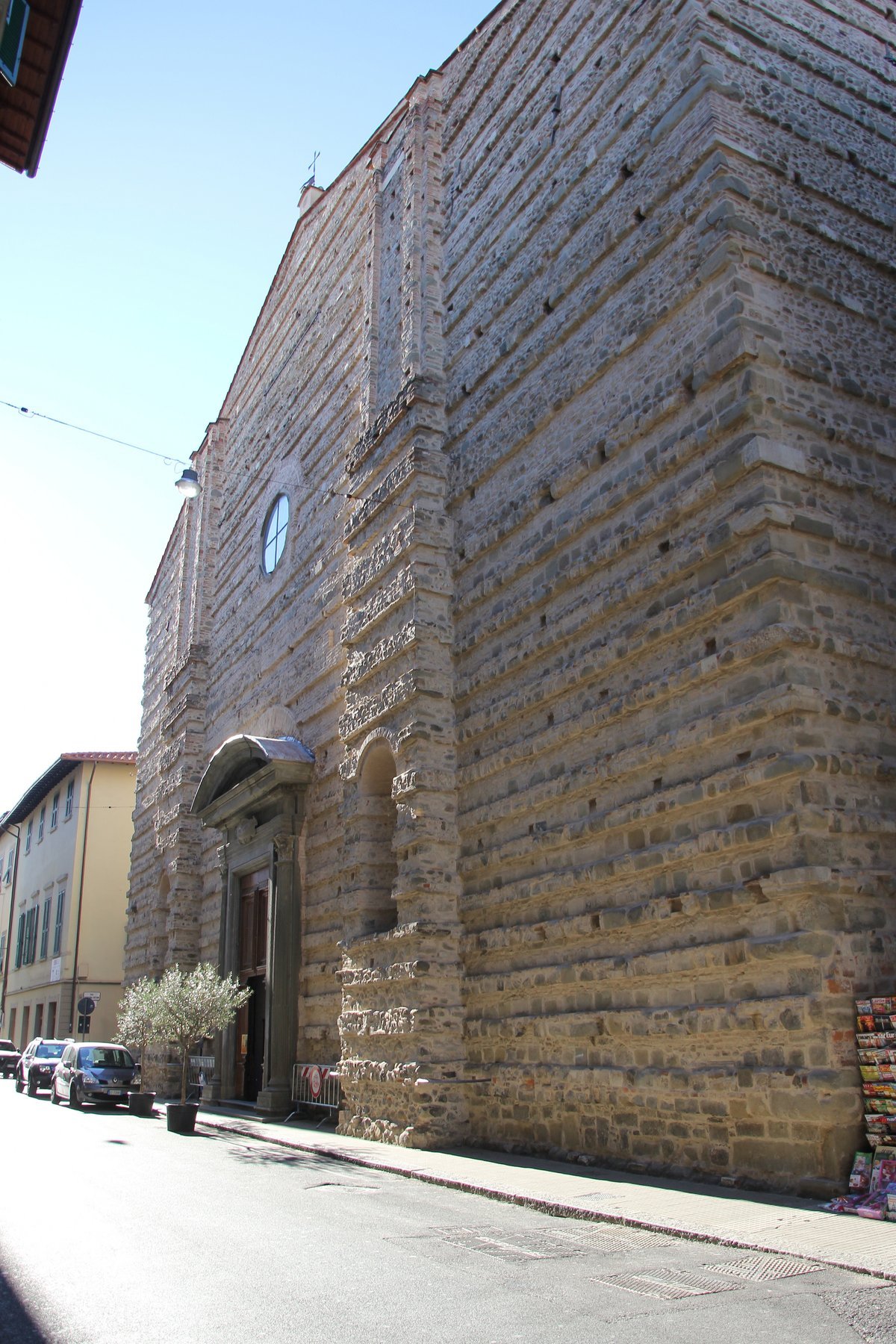
The Basilica of Our Lady of Humility is the spiritual and architectural heart of Pistoia. Here, you can admire Giorgio Vasari’s monumental dome, the third most important in Italy, and discover the story of the miraculous fresco that began to weep in 1490. A place of devotion and art, with free admission.
• Vasari’s Renaissance dome, 59 meters high
• The 1490 miraculous fresco on the high altar
• Treasury with ex-votos and sacred furnishings
• Free entry and flexible hours
Introduction
Arriving in Pistoia, you can’t help but notice that imposing dome rising above the rooftops. It is the Basilica of the Madonna of Humility, a Renaissance jewel with an octagonal plan that houses a miraculous fresco. Here, in 1490, the Madonna is said to have shed tears, and since then it has become the heart of the city’s devotion. Giorgio Vasari’s dome, the third most important in Italy, dominates the scene at 59 meters high. Stepping inside is like diving into the 16th century: the harmony of forms, the light filtering through the rose windows, the silence broken only by visitors’ footsteps. A place where art and faith blend perfectly.
Historical Background
Everything began on July 17, 1490, when a fresco of the Madonna of Humility – the Virgin seated on the ground breastfeeding Jesus – began to emit a transparent liquid from her forehead. The event, during the struggles between the Panciatichi and Cancellieri families, was considered miraculous. To honor it, it was decided to build a new temple. Work started in 1495 under the design of Giuliano da Sangallo, later continued by Ventura Vitoni from Pistoia. The dome was entrusted to Giorgio Vasari in 1561, completed in 1568 with the help of Bartolomeo Ammannati. The basilica was consecrated in 1582. The miracle is still remembered every July 17, feast of the co-patroness of Pistoia.
Vasari’s Dome: Third Largest in Italy
It’s not every day you find yourself beneath a dome that rivals those of Florence and Rome. The dome of the Madonna dell’Umiltà, designed by Giorgio Vasari, is the third most important in Italy for size and artistic value. With a diameter of about 25 meters and a height of 59 meters, it is inspired by Brunelleschi’s dome. Vasari began it in 1561, but static issues were resolved by Bartolomeo Ammannati, who added iron rings. From the outside, its silhouette dominates the Pistoia skyline; inside, it makes you feel small, but in a good way. The light filtering from the lantern creates an almost mystical atmosphere. It is the city’s architectural symbol.
The Miraculous Fresco and the Madonna’s Treasure
At the center of the main altar, created by Pietro Tacca in 1612, is the fresco that started it all: the Madonna of Humility. The Virgin sits on the ground, bending over the Child, with a halo of twelve stars and the moon under her feet. Traces of the miraculous sweat are still visible today. Beside it, the Madonna’s Treasure holds centuries of devotion: sacred vestments, jewels, a silver ciborium by Giovan Battista Mariani, and a silver step donated by the Rospigliosi family. A wealth that rivaled the Treasure of Saint James. Each object tells a story of graces received.
Why Visit It
First: the dome. If you’re a fan of Renaissance architecture, seeing it up close is a unique thrill. Second: the atmosphere. Unlike other crowded churches, here you can enjoy the silence and beauty in peace. Third: the treasure. Not everyone knows that the basilica houses a collection of ex-votos and sacred furnishings of inestimable value, often overlooked by tourists. And it’s free, so you have no excuse.
When to Go
The best time? Late afternoon, when the low sun illuminates the dome from within, creating plays of light on the frescoes. If you prefer a quieter experience, go early in the morning, right after opening: you’ll almost feel the breath of history. Avoid Sunday mornings if you don’t want to mingle with worshippers during Mass. On July 17, the feast of the Madonna dell’Umiltà, the basilica fills with pilgrims, offering a unique opportunity to witness the celebrations.
In the Vicinity
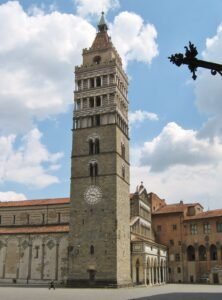
The basilica is just a stone’s throw from the Duomo di Pistoia (Cathedral of San Zeno), famous for its silver altar of San Jacopo. Don’t miss the adjoining Museo di San Jacopo, which displays goldsmith works and vestments. For a break, the historic center offers cafés and artisan shops. If you have time, the nearby Ospedale del Ceppo with its Renaissance frescoes is another must-see.