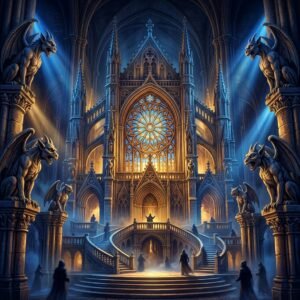
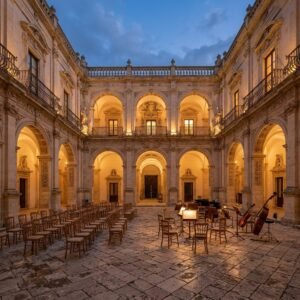
The Basilica of the Alms, in the heart of Catania’s historic center, is a Baroque jewel with a millennial history dating back to the 6th century. It offers an intimate and solemn atmosphere, ideal for a moment of reflection during city exploration.
- Baroque facade in white Syracuse stone with twisted columns and statues of saints
- Rich interiors with stuccoes, frescoes, polychrome marbles, and the main altar in mixed marbles
- Statue of the Madonna of the Alms, the city’s patron, as the focal point of devotion
- Central location just steps from Piazza Duomo, the Elephant Fountain, and Via Etnea
Introduction
Do you ever wander around Catania and feel almost overwhelmed by the chaos of the city center? Then, suddenly, you stumble upon a peaceful corner that makes you forget everything. That’s what happens with the Basilica dell’Elemosina. It’s not just a church; it’s an island of serenity in the heart of the city, with a Baroque facade that almost looks like a theatrical set. The first time I saw it, I was struck by how imposing yet welcoming it is. It’s not a monument that looks down on you; it invites you inside, into a world of art and spirituality that speaks of centuries of Catania’s history. It’s one of those places that, even if you’re not particularly religious, makes you stop and breathe. And let’s face it, in a city where Baroque is at home, this basilica has a character all its own, more intimate and cozy compared to other churches. It’s a place that captures attention without shouting, perfect for those seeking a moment of pause between a cannolo and a stroll down Via Etnea.
Historical Overview
The history of this basilica is much like that of Catania itself: a story of destruction and rebirth.
Its origins date back to the Byzantine period, around the 6th century, when a church dedicated to the Virgin Mary stood here. Then, like almost everything in the city, it was devastated by the 1693 earthquake that leveled Catania. But the people of Catania did not lose heart: they rebuilt it in Baroque style, entrusting the project to renowned local architects. It is not just a religious building; it is a symbol of the city’s resilience. Inside, it houses artworks that tell this story, such as 18th-century paintings and decorations that blend devotion and art. I like to think that every stone here has witnessed generations of worshippers, artists, and curious visitors. It is a place that has managed to reinvent itself without losing its original soul.
- 6th century: Foundation of the original Byzantine church.
- 1693: Destruction in the earthquake that struck Catania.
- 18th century: Reconstruction in Sicilian Baroque style.
- Today: Minor basilica and a spiritual and artistic landmark.
Art That Surprises You
Entering the Basilica of the Alms is like opening a Baroque art book, but without the heaviness of some museums. Here, art isn’t just to be admired, but to be experienced. The interiors are a triumph of stuccoes, gilding, and polychrome marbles that play with the light filtering through the windows. What struck me, in particular, was the contrast between the external sobriety and the richness of the interiors: it’s an unexpected surprise. There are works by Sicilian artists from the 18th century, such as paintings that tell sacred stories with an almost theatrical realism. I’m not an expert, but some of these canvases have details—an expression, a drapery—that make you stop and look. And then there’s the main altar, a masterpiece of marble inlays that almost seems like a jewel. It’s a place where every corner tells a story, without the need for lengthy captions. If you love Baroque art, you’ll find plenty to feast on here; if you’re not familiar with it, it’s an excellent introduction because it’s accessible and engaging. Personally, I got lost observing the details of the capitals, which seem almost animated.
A Corner of Everyday Spirituality
What makes the Basilica of the Almsgiving special, in my opinion, is that it’s not a museum closed in on itself. It’s a living place, where spirituality blends with everyday life. During my visit, I noticed faithful people coming in for a quick prayer, tourists in silent admiration, and even some students stopping to study in peace. There’s an atmosphere of contemplation that envelops you, without being oppressive. Sometimes, in more famous churches, this sense of intimacy is lost; here, however, it feels like being in a sacred living room. I particularly appreciated how the afternoon light illuminated the wooden pews, creating a warm and welcoming atmosphere. It’s a place where you can sit down and let go, even just for a few minutes. I don’t know if it’s because of its thousand-year history or the energy of the place, but when I left, I felt lighter. Perhaps that’s its secret: it doesn’t impose anything on you, it only offers a moment of peace. And in a vibrant city like Catania, that’s a precious gift.
Why Visit It
Why is it worth stopping here? I’ll tell you in a practical way. First, it’s a concentration of accessible and well-preserved Baroque art, without the crowds of other Catania monuments – perfect for those who want to admire masterpieces without stress. Second, it offers an authentic spiritual experience: it’s not just a postcard, but a place where locals live their faith, and you can feel this in the atmosphere. Third, it’s strategically located: it’s on Via Etnea, so you can combine the visit with some shopping or a stop at a nearby pastry shop. In short, it’s versatile: suitable for a moment of reflection, for artistic exploration, or simply as a stop on a city itinerary. I found it an excellent break between one rush and another, and I believe you’ll also appreciate how easy it is to fit into your plans.
When to go
The best time? In my experience, late afternoon, when the warm Sicilian sunlight streams through the windows and magically illuminates the interiors. The colors of the marbles and stuccos come alive, creating an almost golden atmosphere that alone makes the visit worthwhile. I would avoid the peak morning hours when it might be more crowded due to masses. In terms of season, Catania is beautiful year-round, but in spring or autumn the weather is perfect for walking to the basilica without sweating or freezing. In winter, it’s a cozy refuge from the cold—the interiors are well-heated. So, there’s no wrong time, but if you want to capture that special play of light, plan your visit for late afternoon. I was there in October and it was memorable.
In the Surroundings
After your visit, don’t just leave. Just around the corner, you’ll find Piazza Università, another Baroque gem with its historic buildings and elegant atmosphere – perfect for a photo or a break on a bench. If you’re in the mood for something sweet, just a few steps away are some of Catania’s best pastry shops, where you can taste authentic cannoli or granita. Another idea is to head towards the Teatro Massimo Bellini, not far away, to admire another symbol of the city and perhaps plan an evening at the opera. These are all experiences that blend well with the spirituality and art of the basilica, creating a rich but unhurried itinerary. Personally, I did it this way: basilica, a stroll in the square, and then a cannoli to end on a high note. It always works.