Evocative Introduction
Entering the Duomo of Pescia is like diving into centuries of faith and art. The Cathedral of Santa Maria Assunta, the spiritual heart of the city, welcomes you with its solemn atmosphere. The wide single nave, the Baroque stuccoes, the scent of incense… you can almost feel the weight of history. Then, as you raise your eyes, the dome embraces you. It is not just a place of worship: it is a living museum, where every chapel tells a story. Amid the artworks, a sigh of wonder escapes you. And if you are lucky, you might even attend a sacred music concert echoing through the vaults.
Historical Background
The origins date back to a pieve (rural church) from the 8th-9th century, already mentioned in 857. Consecrated in 1062 by the future Pope Alexander II, it suffered a fire in 1281 and was rebuilt. The
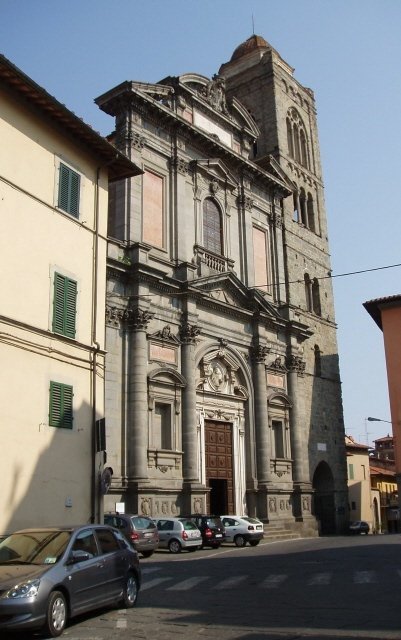
collapse of the dome in 1684 marked a turning point: architect Antonio Maria Ferri transformed it in Baroque style. In 1727 it became a cathedral. The neoclassical façade came only in 1895, designed by Giuseppe Castellucci, completed with the marble portal in 1933. Here is the essential timeline:
- 857 – first mention as pieve
- 1062 – consecration
- 1281 – fire and reconstruction
- 1684 – dome collapse and Baroque reconstruction
- 1727 – elevation to cathedral
- 1895 – neoclassical façade
- 2018-2019 – full restoration
Renaissance and Baroque Masterpieces
The Cappella Turini is a gem: designed by Giuliano di Baccio d’Agnolo, it houses a 17th-century copy of Raphael’s Madonna del Baldacchino (the original is at Palazzo Pitti). The funerary monument of Baldassarre Turini is by Pierino da Vinci, Leonardo’s nephew. In the left transept, since 2020, the glazed terracotta Triptych by Luca and Andrea della Robbia stands majestically. A riot of colors and devotion. Don’t miss the 17th-century high altar by Giuseppe Vaccà and Luigi Garzi’s Assumption of the Virgin in the apse. Every chapel hides a treasure, from Bottani’s Nativity of the Virgin to Gabbiani’s canvas.
Architecture: Bell Tower and Facade
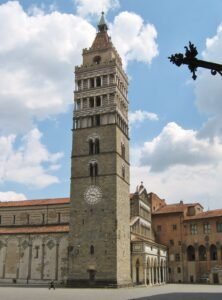
The bell tower, tall and slender, was built in 1306, possibly as a tower of the city walls. The Gothic mullioned windows and triple lancet windows make it elegant, while the small cupola on top dates from 1771. The Neoclassical facade in pietra serena stone, completed in 1895, is an example of harmony: Corinthian half-columns, broken pediments, and the city coat of arms. The marble portal from 1933 adds solemnity. Inside, the single nave with a groin vaulted barrel ceiling, structural members in pietra serena contrasting with white, and the dome at the crossing of the arms create an effect of brightness and verticality that draws the eye upward. A perfect balance between Baroque and Neoclassical.
Why Visit It
1. Unique Art: works by Raphael (copy), Della Robbia, Pierino da Vinci, Garzi – a concentration of masterpieces in a single church. 2. Spiritual Atmosphere: you will feel centuries of devotion, especially during festivals like that of Saint Allucio (October 23) or the Christmas nativity scene. 3. Recent Restoration: since 2019, the cathedral shines with new light, with modern liturgical furnishings in marble and mosaic that dialogue with the ancient. In short, an experience that unites faith, history, and beauty.
When to Go
The most magical time? December-January, for the nativity scene set up from December 8 to January 13, with soft lighting that enhances the Baroque stuccoes. But if you love music, mark late April-early May for the choral singing festival, or June-July for the concert in honor of Saint John the Baptist. In any season, the afternoon light filtering through the windows creates shadow plays on the artworks. Avoid the central hours in summer if you want to enjoy the cool quiet.
Around the Area
Just a few steps from the Duomo, the Church of Santa Maria Maddalena and the Church of San Michelino are worth a visit, two little gems of art and spirituality. If you are fascinated by medieval history, seek out the 12th-century tower near the Bishop’s Seminary. Moreover, strolling through the historic center of Pescia, you will discover artisan workshops and cafés where you can enjoy a break. All just a stone’s throw from the cathedral, on an easy route perfect for the curious traveler.