
The Museo dell’Opera del Duomo, located behind Santa Maria del Fiore, houses 750 works that tell seven centuries of Florentine art. Here you’ll find Ghiberti’s Gates of Paradise, Michelangelo’s Bandini Pietà, and Donatello’s wooden Magdalene. The combined ticket (from €15) also includes the Duomo, Baptistery, and Campanile.
Events nearby

10/09/2026 - 04/01/2027
03/06/2026 - 10/06/2026

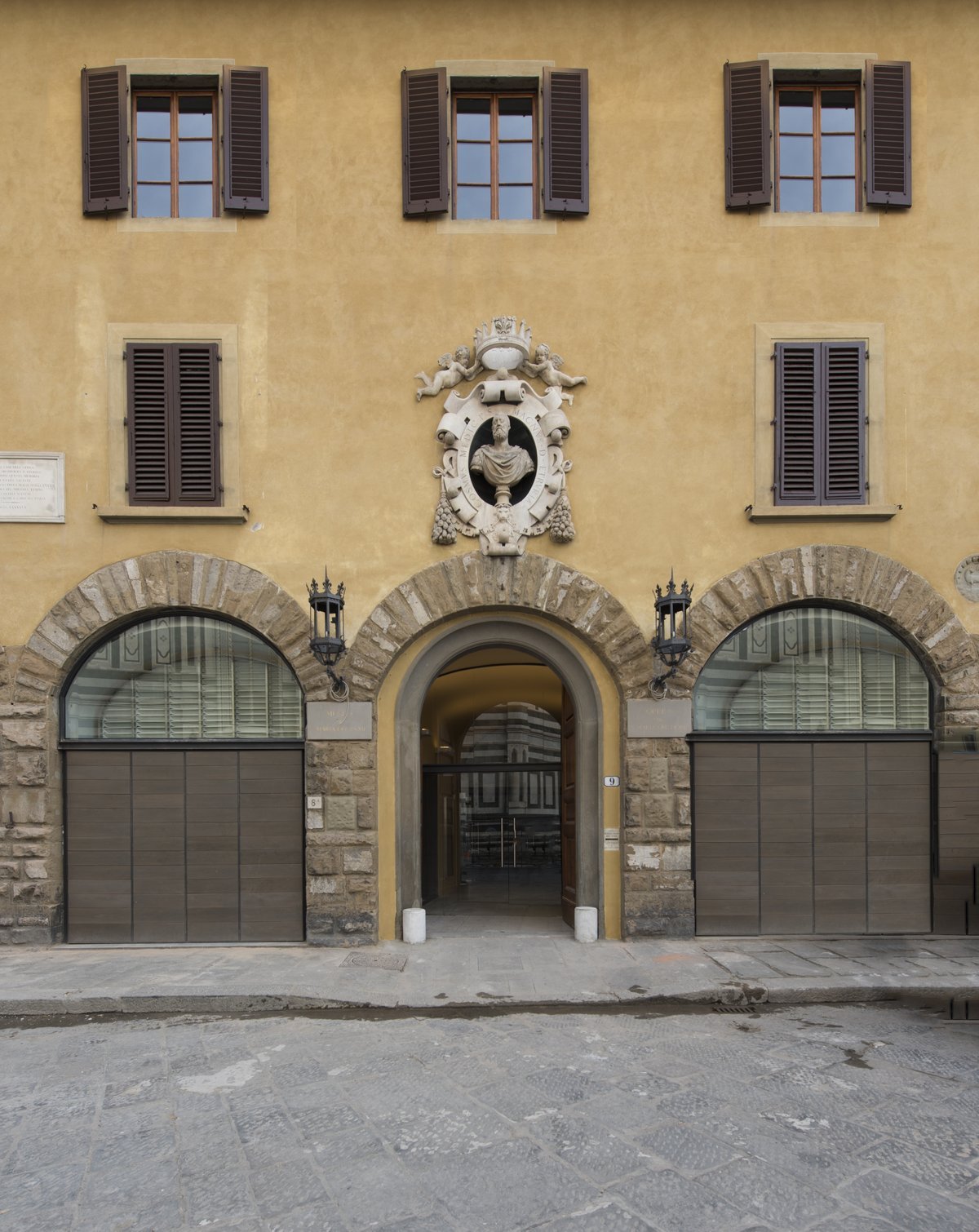
The 750 works of the Museo dell’Opera del Duomo in Florence: from the Gates of Paradise to Michelangelo’s Pietà, in a 28-room journey through the art and history of the monumental complex.
- Piazza del Duomo, Firenze (FI)
- Open in Google Maps
- View on Google Images Museo dell’Opera del Duomo a Firenze
Good to know
Museo dell’Opera del Duomo: A Dive into Florentine Art
Walking through the halls of this museum is like stepping into the most ambitious construction site of medieval and Renaissance Florence. Right behind the cathedral, you can still feel the scent of history. Here, where Brunelleschi and Michelangelo left their mark, over 750 works now call it home. Statues, reliefs, wooden models, and goldsmith pieces from the Duomo, the Baptistery, and Giotto’s Campanile. The route is vast: 28 rooms, three floors, 6,000 square meters. But there’s no need to feel overwhelmed: video installations and clear panels guide you at a leisurely pace. My advice? Start from the Paradise Room and let the life-sized reconstructed facade amaze you. It’s a spectacle few expect.
Historical Notes
The building that houses the museum is the same one where, since 1296, the Opera del Duomo managed the works of the cathedral. In the 15th century, Brunelleschi used the courtyard as a storage area for the materials of the Dome; Michelangelo, some decades later, sculpted the David there. The museum officially opened in 1891, but the turning point came in 2015: after three years of restoration, it reopened with an exhibition over 6,000 square meters. A history spanning seven centuries, also told through original documents and models. In summary:
- 1296: the Opera del Duomo was founded, tasked with building the cathedral.
- 1432: a location was created to preserve the removed works.
- c. 1500: Michelangelo sculpts the David in the courtyard.
- 1891: the museum opens to the public.
- 2015: reopening after the expansion by Adolfo Natalini.
The Hall of Paradise: The Facade Rediscovered
The museum’s crowning jewel is this monumental hall, which recreates the medieval facade of the Duomo at a 1:1 scale, dismantled in 1587. The original statues by Arnolfo di Cambio and his successors thus return to their place, offering a kind of time travel. At the center of the hall, separated by a glass case, is Lorenzo Ghiberti’s Gate of Paradise: ten gilded panels narrating stories from the Old Testament. It was Michelangelo himself who named it that. Raking light makes the gold and every detail shine. Walking among these statues is like witnessing the birth of a collective masterpiece.
Donatello and Michelangelo: Two Unmissable Masterpieces
There is a red thread linking the museum’s two most celebrated works: the Magdalene and the Pietà. Donatello’s Penitent Magdalene is a fifteenth-century wooden sculpture: an elderly woman, consumed by fasting and prayer, wrapped in her hair. She is certainly not a classical beauty, but she strikes straight to the heart. On the other side, Michelangelo’s Bandini Pietà (c. 1547-1555) tells a different, more intimate moment. Jesus is supported by Nicodemus, who bears the artist’s own face. Michelangelo carved it for his own tomb, then, dissatisfied, damaged it. Seeing the unfinished marble up close, the traces of the chisels, sends chills down your spine.
Why Visit It
Despite its big-name fame, this museum has something more: it shows you how a monument comes to life. It’s not just a container for statues, but the story of the longest construction site in Florence’s history. Here are the reasons not to skip it. First: the Donatello collection is the second largest in the world, featuring the Zuccone and the Sacrifice of Isaac. Second: the Room of Paradise lets you see the original façade of the Duomo, which no longer exists in the square today. Third: the itinerary is interactive, with videos and models explaining Brunelleschi’s Dome, suitable even for those who aren’t art experts.
When to Go
The best time, in my opinion, is early morning, before the groups arrive. In the silence, the Sala del Paradiso has an almost theatrical effect: the statues seem to wake up one by one. If you prefer warmer light and fewer crowds, try the end of the day, when the sun’s rays come through the windows and light up Ghiberti’s bronzes. For a quieter visit, avoid weekends and high season months, when the queue for the combined ticket gets longer. But even with the crowd, it’s worth it.
Nearby
Once you step out of the museum, you’re right in the heart of Piazza del Duomo. Your natural next stop is the Baptistery of St. John, with its golden mosaics and Ghiberti’s doors (mind you, the originals are actually in the museum). Then, if you have time, climb Giotto’s Bell Tower: the view over Brunelleschi’s Dome and the whole of Florence is absolutely stunning. Just a stone’s throw away, for a true flavor of the city, you can wander over to Palazzo Vecchio or explore the Galileo Museum. Every corner here is worth a photo.
Itineraries nearby

💡 Did You Know…?
As you walk through the courtyard, think that here Michelangelo rough-hewed the David and Brunelleschi piled up materials for the Dome. In the Bandini Pietà, Nicodemus’s face is Michelangelo’s self-portrait: he left it unfinished after striking it with a hammer. A place where art history is still alive.