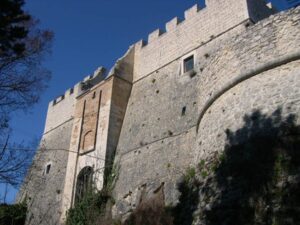
If you're looking for a Campobasso itinerary that lets you discover the heart of Molise in just one day, you're in the right place. This route will guide you through the city's historic center, starting from the imposing Monforte Castle that dominates the cityscape. You'll then descend through ancient streets to admire historic churches that preserve centuries of art and devotion. A concentrated journey through art and history that will help you appreciate the authentic identity of this often overlooked region. Ideal for those with limited time who don't want to miss out on the essence of the territory.
🗺️ Your trip at a glance
Campobasso encapsulates centuries of Molisan history within its compact historic center. From Monforte Castle to ancient churches, every corner tells a story. A perfect place for those seeking authenticity without tourist crowds.
- Ideal for: travelers with limited time looking for the essence of Molise through art and history.
- Highlights: concentrated walking itinerary, 6 stops with interactive map,
compact historic center,
authenticity without crowds.- For: history enthusiasts, medieval art lovers, and Samnitic archaeology fans.
Itinerary stops
Stop no. 1
Monforte Castle
 Our itinerary begins precisely at Monforte Castle, strategically positioned on the hill overlooking Campobasso. Built in the 15th century by the will of Nicola II Monforte, this fortress represents one of the best-preserved examples of Molise's military architecture. Its massive structure with corner towers and crenellated walls tells centuries of dominations and battles. Ascending along Viale delle Rimembranze, you're welcomed by the imposing presence of its local stone walls, offering a unique panoramic view of the city below and the surrounding mountains. The interior, though bare, preserves the austere atmosphere of medieval fortresses, with spacious halls and secret passages evoking stories of knights and commanders. The elevated position was no coincidence: it allowed complete control over the Biferno valley and communication routes toward the Apennines. Today, beyond its historical function, the castle occasionally hosts exhibitions and cultural events that enhance its role in the community.
- Viale delle Rimembranze, Campobasso (CB)
- Open in Google Maps
- View on Google Images

You should go if...
Stop no. 2
San Bartolomeo
 Ascending along Salita Santa Maria Maggiore, one encounters the Church of San Bartolomeo, an architectural gem dating back to the 12th century. Its local stone façade, characterized by a Romanesque portal and a rose window, tells centuries of Molisan devotion and artistry. Inside, visitors admire 15th-century frescoes and a Baroque altar, testaments to the different eras that have marked the city. The strategic location, in the heart of the historic center, allows one to grasp the connection between spirituality and daily life in Campobasso. This stop, after Castello Monforte, completes the journey through the symbols of Molisan identity, offering a moment of reflection between art and faith.
- Salita Santa Maria Maggiore, Campobasso (CB)
- Open in Google Maps
- View on Google Images
You should go if...
Stop no. 3
San Giorgio
 Not far from the Church of San Bartolomeo, you'll find yourself before the Church of San Giorgio, located in Largo Don Giovanni Battista. This sacred building, dating back to the 12th century, represents one of the most significant examples of Romanesque architecture in Molise. The façade, crafted from local stone, features a simple yet elegant portal, topped by a small rose window. Inside, traces of medieval frescoes depicting episodes from the life of the patron saint are preserved. With its essential structure and secluded position, the church offers a moment of quiet and reflection, allowing visitors to appreciate the authentic spirituality that characterizes Campobasso. This stop completes the journey through historic places of worship, enriching the understanding of Molisan identity through art and popular devotion.
- Largo Don Giovanni Battista, Campobasso (CB)
- Open in Google Maps
- View on Google Images
You should go if...
Stop no. 4
San Leonardo
 Leaving behind the Romanesque sobriety of San Giorgio, one encounters the Church of San Leonardo, located on Via Anselmo Chiarizia. This sacred building, dating back to the 13th century, stands out for its facade made of local limestone, characterized by a splayed portal and an elegant pierced rose window. Inside, cross vaults support a cycle of 14th-century frescoes depicting episodes from the life of the hermit saint, among which the representations of the liberation of prisoners stand out. The single nave, illuminated by single-light windows, preserves a Baroque altar in carved and gilded wood, added in the 18th century. The church, with its bell gable, dominates the surrounding urban fabric, offering a glimpse of Molise's artistic evolution from the Middle Ages to the modern era. This stop enriches the itinerary with an example of religious architecture that blends Romanesque and Gothic elements, highlighting the historical stratification of Campobasso.
- Via Anselmo Chiarizia, Campobasso (CB)
- Open in Google Maps
- View on Google Images
You should go if...
Stop no. 5
Museo Sannitico Palazzo Mazzarotta
 After visiting nearby San Leonardo, the itinerary continues with the Museo Sannitico Palazzo Mazzarotta, located at Via Anselmo Chiarizia, 12. Housed in an eighteenth-century palace, this museum boasts one of the most significant collections on Samnite civilization in Molise. The exhibition halls display archaeological finds ranging from the Iron Age to the Roman period, including decorated ceramics, bronze weapons, and burial goods from local necropolises. Particularly noteworthy are the funerary steles with Oscan inscriptions, which testify to the writing and social organization of the Samnite tribes. The layout, enhanced with educational panels and reconstructions, allows visitors to understand the evolution of this warrior people, from their origins to the wars against Rome. The visit concludes with a section dedicated to religious cults, featuring votive statuettes and terracotta ex-votos. This museum provides an essential insight into the culture that shaped Molise's identity, enriching the itinerary with a deep dive into the region's most ancient roots.
- Via Anselmo Chiarizia 12, Campobasso (CB)
- https://www.musei.molise.beniculturali.it/musei?mid=208&nome=museo-sannitico
- Open in Google Maps
- View on Google Images
You should go if...
Stop no. 6
Saint Anthony Abbot
 Concluding the Campobasso itinerary, Saint Anthony Abbot on Via Sant'Antonio Abate represents a jewel of Molisan spirituality. The church, with medieval origins, stands out for its facade made of local stone and the Romanesque portal that leads to an interior rich in artworks. Here, 15th-century frescoes stand out, including a Madonna and Child attributed to Abruzzese masters, and a Baroque altar with wooden inlays depicting the life of the hermit saint. The single nave, illuminated by narrow windows, creates an intimate atmosphere, while the crypt houses Lombard-era artifacts, bearing witness to unique historical layers. The church is linked to the tradition of the Feast of Saint Anthony in January, when the faithful light bonfires to bless animals and crops, a ritual that unites faith and peasant culture. Visiting this place means discovering an authentic piece of Campobassan identity, where art and devotion merge into an intense experience.
- Via Sant'Antonio Abate, Campobasso (CB)
- Open in Google Maps
- View on Google Images
You should go if...