
Ready to discover the hidden treasures of the Crotone Ionian coast? This 3-day itinerary will take you through medieval villages and imposing castles that dominate the Calabrian landscape. Starting from the majestic Santa Severina Fortress, considered one of Italy's most beautiful castles, you'll traverse perched villages and wild coastlines to the watchtowers of Isola di Capo Rizzuto. A perfect route for history lovers, military architecture enthusiasts, and those seeking breathtaking views over the Ionian Sea. You'll discover authentic villages where time seems to have stood still, castles that tell centuries of stories, and Ionian coastal views that will leave you breathless. A true journey into the heart of Calabria's most authentic and lesser-known regions.
🗺️ Your trip at a glance
A 3-day itinerary crossing the province of Crotone, combining visits to medieval castles, coastal towers, and historic villages with views over the Ionian coast.
- Ideal for travelers seeking authenticity and wanting to discover a Calabria off the usual tourist trails, enthusiasts of history and military architecture.
- Highlights: includes 9 stops with interactive maps, from the fortress of Santa Severina to the watchtowers of Isola di Capo Rizzuto, with breathtaking panoramas over the Ionian Sea.
- Perfect for those who love structured itineraries with precise stops and desire an experience that combines culture, history, and landscapes.
Itinerary stops
Day 1 - Stop no. 1
Diocesan Museum of Santa Severina
 The first day of the Crotone: Ionic Villages and Castles itinerary begins with the Diocesan Museum of Santa Severina, located at Piazza Campo 2. This museum, set up in the premises of the ancient bishop's seminary, preserves an artistic and liturgical heritage of considerable value. Among the most significant pieces stand out the 18th-century sacred vestments, liturgical silverware, and illuminated manuscripts from the cathedral. The collection also includes archaeological finds from the Byzantine era, testifying to the historical stratifications of the area. The modern and well-curated display allows visitors to fully appreciate works such as the reliquary of Saint Anastasia and the silk-embroidered chasubles. The visit offers a comprehensive overview of the devotion and sacred art that have characterized Santa Severina over the centuries.
- Piazza Campo 2, Santa Severina (KR)
- https://www.museisantaseverina.it/
- Open in Google Maps
- View on Google Images

You should go if...
Day 1 - Stop no. 2
Andrea Carafa Castle
 Andrea Carafa Castle stands majestically in the historic center of Santa Severina, one of the best-preserved fortresses in Calabria. Built during the Norman period on earlier Byzantine structures, the castle features a quadrangular layout with four corner towers that accentuate its imposing presence. The strategic position on a rocky spur offers exceptional panoramic views of the Neto Valley and the entire medieval village. Inside, visitors can admire the noble halls, prisons, and central courtyard, while recent restorations have enhanced the original architectural elements. The tour route also includes the Diocesan Museum located nearby, creating a comprehensive cultural itinerary. The structure represents a significant example of medieval military architecture in Calabria, with subsequent interventions that have enriched its history.
- Via Libertà, Santa Severina (KR)
- Open in Google Maps
- View on Google Images
You should go if...
Day 1 - Stop no. 3
Caccuri Castle
 After leaving Santa Severina, the route continues towards Caccuri Castle, located along Provincial Road 32 of Santa Raina. This fortified complex dates back to the 11th century and features an articulated structure with square towers and perimeter walls that adapt to the hilly terrain. The elevated position offers exceptional panoramic views of the surrounding valley and nearby villages. Inside, you can distinguish the residential areas, water collection cisterns, and service rooms, while recent restoration work has enhanced the original architectural elements. The castle frequently hosts cultural events and temporary exhibitions, enriching the area's tourist offerings. It represents an example of Norman military architecture with subsequent Angevin and Aragonese modifications.
- Strada Provinciale 32 di Santa Raina, Caccuri (KR)
- Open in Google Maps
- View on Google Images
You should go if...
Day 2 - Stop no. 1
Le Castella Castle
 After leaving Caccuri Castle, the second day of the itinerary begins with Le Castella Castle, located in Isola di Capo Rizzuto on Via Mediterraneo. This imposing fortress rises on a small island connected to the mainland by a thin strip of sand, creating an iconic image. The structure dates back to the 15th century and was built to defend the coast from pirate raids. Inside, visitors can admire the perimeter walls, watchtowers, and rooms once used as storage and garrison quarters. The cliffside position overlooking the sea offers breathtaking views of the Capo Rizzuto Marine Protected Area, making the visit a unique experience blending history and nature. It represents an example of Aragonese military architecture, with subsequent reinforcement works during the Spanish period.
- Via Mediterraneo, Isola di Capo Rizzuto (KR)
- Open in Google Maps
- View on Google Images
You should go if...
Day 2 - Stop no. 2
Old Tower
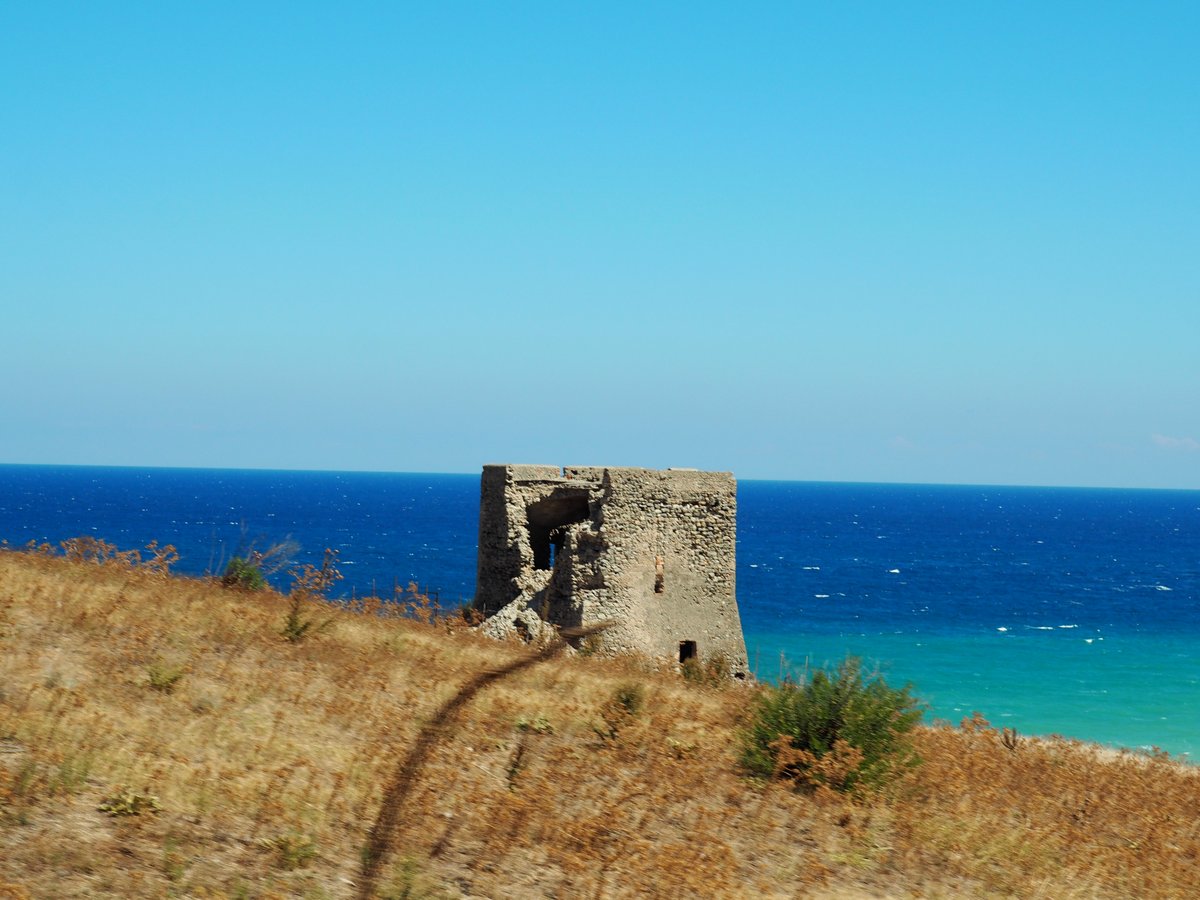 The second stop of the second day brings us to Old Tower, located along Via dell'Isola di Tyris in Isola di Capo Rizzuto. This imposing defensive structure dates back to the 16th century and was part of the surveillance system against Saracen raids that characterized the entire Ionian coast of Calabria. The tower rises on a rocky spur overlooking the sea, offering breathtaking panoramic views of the Capo Rizzuto Marine Protected Area. Its massive architecture made of local stone testifies to the military engineering of the era, with thick walls that have withstood the centuries. Today it represents one of the privileged observation points for admiring the sunset over the Ionian Sea, while its isolated location provides an atmosphere of authentic tranquility.
- Via dell'Isola di Tyris, Isola di Capo Rizzuto (KR)
- Open in Google Maps
- View on Google Images
You should go if...
Day 2 - Stop no. 3
Ricca Castle
 After admiring Torre Vecchia, the route continues towards Ricca Castle, located on Via San Marco in Isola di Capo Rizzuto. This 16th-century manor represents one of the best-preserved examples of Renaissance military architecture in Calabria, built at the behest of the Ricca family as a fortified residence. The structure is characterized by its imposing local stone walls and quadrangular layout with corner towers, elements that testify to its dual defensive and residential function. The building dominates the surrounding territory, offering exceptional views of the Ionian coast and the Capo Rizzuto Marine Protected Area. Currently, the castle is open to visitors and preserves many original elements intact, including the monumental entrance portal and Renaissance windows. Its slightly elevated position allows visitors to fully appreciate the integration between military architecture and Mediterranean landscape.
- Via San Marco, Isola di Capo Rizzuto (KR)
- Open in Google Maps
- View on Google Images
You should go if...
Day 3 - Stop no. 1
Carafa Castle
 The third day of the itinerary begins with Carafa Castle in Cirò, located on Viale Pasquale Galluppi. This 16th-century fortified complex, commissioned by the powerful Carafa family, stands out for its architecture that blends military and residential elements. The cylindrical towers and local sandstone walls define the exterior, while inside, noble rooms with cross-vaulted ceilings and monumental fireplaces are preserved. The strategic hilltop position offers exceptional panoramic views over the Cirò DOC vineyards and the Ionian Sea. Currently, the castle is open to visitors and occasionally hosts cultural events, allowing appreciation of both the architectural structure and the surrounding landscape.
- Viale Pasquale Galluppi, Cirò (KR)
- Open in Google Maps
- View on Google Images
You should go if...
Day 3 - Stop no. 2
Amalfitani Castle
 The Amalfitani Castle rises in the heart of Crucoli, along Via Roma, offering a well-preserved example of Calabrian medieval architecture. Built in the 15th century, this manor was the residence of the Amalfitani family, who shaped its appearance with crenellated towers and inner courtyards. Today, visitors can admire the local stone walls and biforate windows that tell centuries of history. The recently restored building occasionally hosts art exhibitions and cultural events, making it a vibrant hub for the community. From its terraces, the view stretches over the surrounding hills and the Ionian Sea, a panorama that enchants visitors. This castle is an ideal stop for those seeking an authentic immersion in Crotone's history, away from the more beaten paths.
- Via Roma, Crucoli (KR)
- Open in Google Maps
- View on Google Images
You should go if...
Day 3 - Stop no. 3
Acerenthia
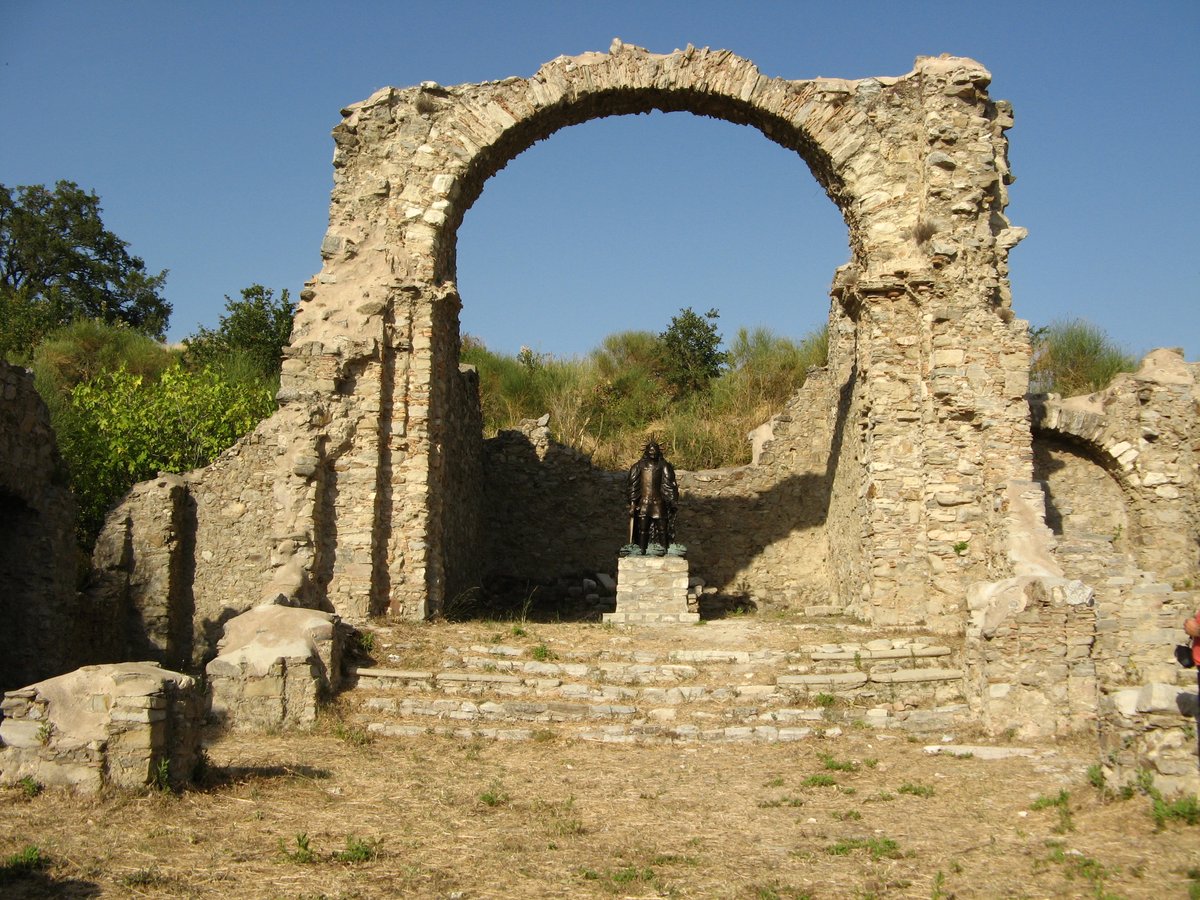 The Acerenthia archaeological site is located along Provincial Road 26 Pantalitiche in Cerenzia and represents one of the most significant sites for understanding Byzantine history in Calabria. Founded between the 9th and 10th centuries, this fortified city was an important administrative and religious center until its abandonment in the 15th century. Today, visitors can observe the ruins of the perimeter walls, the foundations of dwellings, and the remains of the Cathedral of San Teodoro. The elevated position offers panoramic views of the Neto Valley, allowing one to imagine the strategic importance of this settlement. Less frequented than other attractions in the province, the site preserves an authentic atmosphere and tells centuries of dominations through its artifacts.
- Strada Provinciale 26 Pantalitiche, Cerenzia (KR)
- Open in Google Maps
- View on Google Images
You should go if...


