
Agazzano Castle, in the heart of Emilia-Romagna, combines a 13th-century medieval fortress with a 16th-century Renaissance palace, featuring perfectly preserved interiors and Italian gardens. Open to the public for guided tours, it remains privately owned and offers an authentic experience in a lived-in historic residence.
- Frescoed halls with original period furnishings, including the Armory Room and the Ballroom
- Italian gardens with boxwood hedges, flower beds, and panoramic views over the Val Luretta
- History of noble families such as the Anguissola and Gazzola, with anecdotes shared during tours
- Strategic location near Piacenza, ideal for a dive into the past without straying far from main transport routes
Events nearby
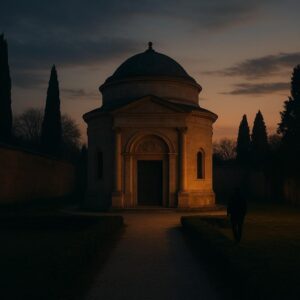
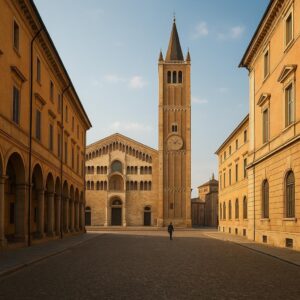

Guided Tour of Agazzano Castle in Piacenza: Interiors with Original Furnishings, 18th-Century Frescoes, Panoramic Italian Gardens, and History of the Anguissola and Gazzola Families
- Via del Castello, Piacenza (PC)
- Open in Google Maps
- View on Google Images Castello di Agazzano a Piacenza
Good to know
Introduction
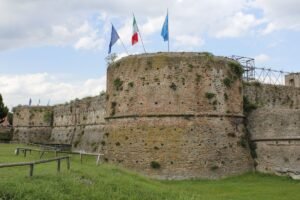
The Castle of Agazzano stands imposingly among the Piacenza hills, a jewel that blends medieval severity with Renaissance elegance. Approaching from the village center, the sight of the square keep and round towers immediately captivates, promising a journey back in time. This isn’t just a monument to admire from the outside: here you truly step into the rooms where the Counts Anguissola and Marquises Gazzola lived, with period furnishings that narrate centuries of history. The lovingly maintained Italian gardens offer picturesque glimpses of the Emilian countryside, while the intimate atmosphere of the surrounding village completes the experience. It’s one of those places where history can be felt firsthand, without needing lengthy explanations.
Historical Overview
The earliest records of the castle date back to the 13th century, when it was built as a defensive fortress by the Scotti family. In the 15th century, it passed to the Anguissola family, who transformed it into a noble residence by adding the elegant Renaissance palace. It was during this period that the complex assumed its current appearance, with the medieval keep flanked by the residential wing. In the 18th century, the Marquises Gazzola further expanded the palace, enriching it with frescoed halls and the family chapel. During World War II, the castle suffered damage, but subsequent restorations have preserved its original character intact. Today, it remains privately owned but is open to the public for visits that highlight its heritage.
- 13th century: construction as a fortress by the Scotti family
- 15th century: transformation into a noble residence by the Anguissola family
- 18th century: expansion and embellishment by the Gazzola family
- 20th century: conservation restorations and opening to the public
The Interiors: Between Furnishings and Frescoes
Crossing the castle’s threshold means entering a world of original furnishings that recount the daily life of Emilian nobility. In the Armory Hall, you can admire sixteenth-century armor and swords, while the Ballroom impresses with its coffered ceilings and monumental fireplaces. Particularly significant is the family chapel with eighteenth-century frescoes dedicated to Saint George, the family’s patron saint. Each room preserves period furniture, paintings from the Emilian school, and everyday objects that make the visit especially vivid. The historic library, with its ancient volumes, completes the picture of a residence that was a center of culture and power for centuries.
The Gardens: Geometry and Panoramas
The castle’s Italian-style gardens are a perfect example of how humans have shaped nature according to precise aesthetic principles. Boxwood hedges create exact geometric patterns around the flowerbeds, while gravel pathways lead to panoramic viewpoints overlooking the Luretta Valley. Here you’ll find typical plants of the Piacenza region, such as heritage roses and aromatic herbs, alongside eighteenth-century statues that adorn the walkways. The garden is not merely decorative: until a few decades ago, it provided fruit and vegetables for the family, as evidenced by the centuries-old fruit trees. From the main terrace, you can enjoy exceptional views of the surrounding hills, especially at sunset.
Why Visit
Three concrete reasons make Agazzano Castle an unmissable stop. First: it’s one of the few castles in Emilia-Romagna still inhabited and perfectly preserved, where you can breathe an authentic atmosphere. Second: the opportunity to see original furnishings in every room, from four-poster beds to period kitchens, offers a rare glimpse into noble life. Third: the panoramic position overlooking the Piacenza hills provides unique photographic opportunities, especially from the garden terrace. Unlike many museum-like castles, here you get the impression of being a guest in a genuine historic residence.
When to Go
The best time to visit the castle is during spring mornings, when the slanting light enhances the volumes of the towers and the gardens are in full bloom. During this period, the atmosphere is particularly evocative, with the soft colors of the hills providing a backdrop to the severe architecture. Autumn afternoons also offer special emotions, when the golden leaves in the gardens create chromatic contrasts with the castle’s stone. Avoid the midday hours of summer days, when the heat can make the garden visit less pleasant.
In the Surroundings
The experience is complemented by two locations thematically connected to the castle. Just a few kilometers away lies the Rivalta Castle, another perfectly preserved fortress that offers an interesting architectural comparison. For food and wine enthusiasts, a stop at the Romagnoli Winery in Gragnano Trebbiense allows you to taste DOC wines from the Piacenza hills, such as Gutturnio and Malvasia, in a setting steeped in ancient winemaking traditions.
Itineraries nearby

💡 Did You Know…?
Legend has it that the castle is home to a ghost, that of a 16th-century lady who appears on full moon nights. Additionally, during restoration work, traces of a secret passage were uncovered, connecting the private rooms to the chapel, perhaps used for quick escapes in times of danger. The gardens conceal rare essences planted centuries ago, such as antique roses and magnolia trees that bloom in spring.