Bergamo Alta: A One-Day Walking Itinerary Through Venetian Walls and Panoramic Views


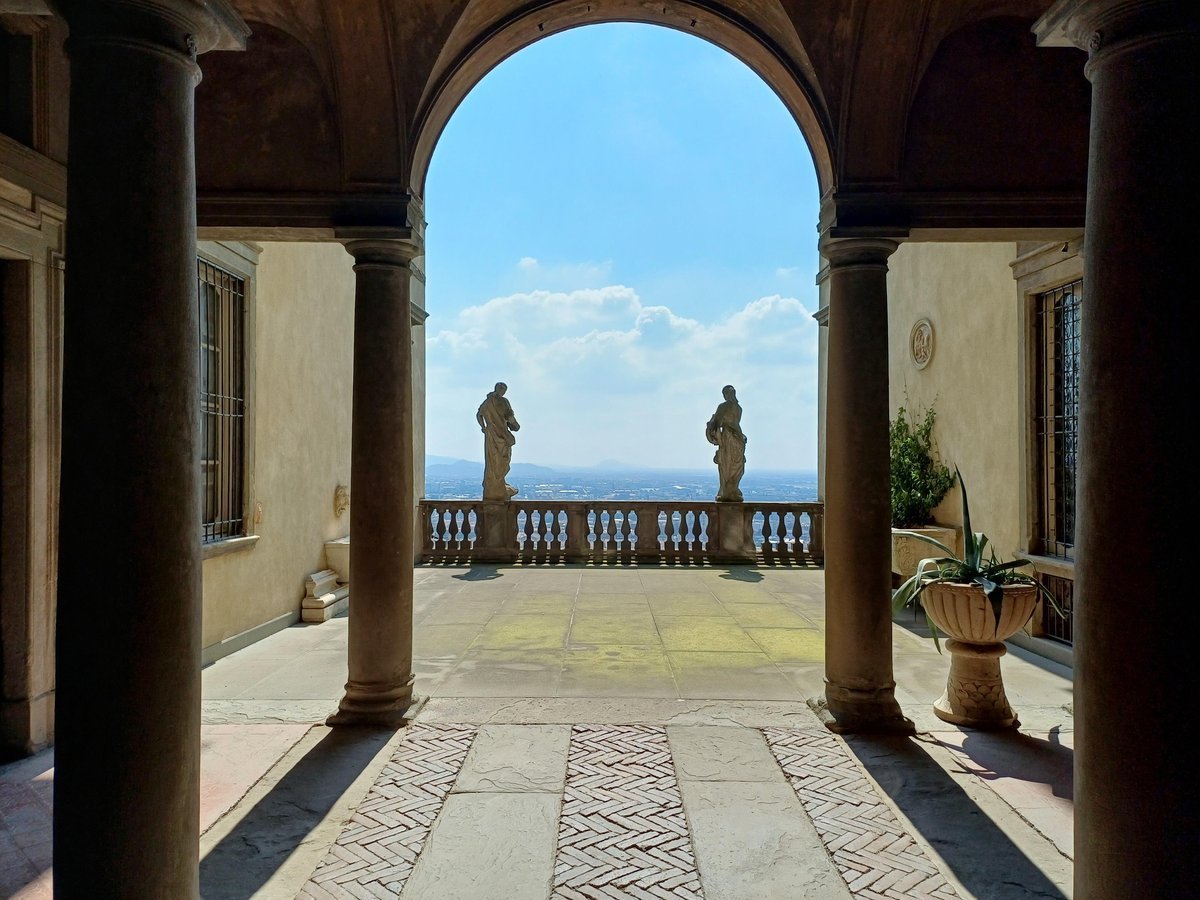
If you only have one day to discover Bergamo, this walking itinerary in the Città Alta is perfect for you. Starting from San Vigilio Castle, the city's highest point, you'll admire breathtaking views before descending along the ancient Venetian walls. You'll stroll through medieval alleyways, Renaissance squares, and arrive at the Rocca, where the view over the lower city is simply spectacular. A route that will make you fall in love with Bergamo in just a few hours, ideal for a Bergamo Città Alta one-day itinerary that combines history, art, and unforgettable vistas.


Events nearby


🗺️ Your trip at a glance

Explore Bergamo Alta in one day with a walking itinerary that starts at Castello di San Vigilio and ends at Porta San Giacomo, passing through the Venetian walls and the city's iconic landmarks.

  • Ideal for travelers looking for a city break rich in history and art, with breathtaking panoramas and a well-structured route to optimize time.
  • Key highlights: includes 29 stops with an interactive map, from medieval fortifications to Renaissance museums and churches, without overlooking authentic corners away from the crowds.
  • Perfect for those who love walking and discovering on foot, with stops suitable for families, history and art enthusiasts, and travelers seeking immersive experiences.

Itinerary stops


Destinations nearby


Stop no. 1

San Vigilio Castle

San Vigilio CastleThe San Vigilio Castle marks the perfect starting point for exploring Bergamo Alta, perched atop the hill reachable by the historic funicular. This medieval fortress, built by the Venetians in the 16th century, offers spectacular panoramas over the lower city and the Prealps, with the opportunity to walk along the well-preserved walls. Its strategic position makes it a unique observation point where you can breathe in Bergamo's defensive history. Climbing up here in the morning means avoiding the crowds and enjoying the best light for photography. The castle, with its towers and moat, tells centuries of dominations, from the Romans to the Visconti, making the visit a plunge into the past that ideally prepares you for discovering the rest of the Upper Town.

You should go if...

Those who choose this stop are travelers seeking the historical essence of Bergamo, lovers of elevated places to capture the soul of a city from above, away from the hustle and bustle of the main streets.

San Vigilio Castle

Stop no. 2

Church of San Vigilio

Church of San VigilioAfter exploring the Castle of San Vigilio, descend along the Salita dello Scorlazzone to reach this 12th-century Romanesque church. Its strategic position offers spectacular panoramic views over the lower city and the Orobic Prealps. Inside, admire the austere single nave and the 14th-century frescoes, including the prominent one of San Vigilio, the patron bishop of Bergamo. Less crowded than other sites in Bergamo Alta, the church allows you to experience the authentic atmosphere of the medieval village. It's an ideal spot for a contemplative break, away from the tourist bustle, where history merges with the landscape.

You should go if...

Those who visit San Vigilio are travelers seeking historical essence beyond the most beaten paths, appreciating silence and panoramas without haste.

Church of San Vigilio

Stop no. 3

Lorenzo Rota Botanical Garden of Bergamo

Lorenzo Rota Botanical Garden of BergamoLeaving behind the spirituality of San Vigilio, the Lorenzo Rota Botanical Garden emerges as a biodiversity refuge just steps from Colle Aperto. This scientific garden, founded in 1972, hosts over **1,200 botanical species**, many of which are endemic to the Orobic Prealps. Walking along the paved paths, you'll discover themed flowerbeds dedicated to local spontaneous flora, a historic rose garden, and a collection of medicinal plants. The elevated location offers **unexpected views** over the rooftops of Bergamo Alta and the plains, making the visit both a botanical and landscape experience. Ideal for a refreshing break, the garden combines environmental education and natural beauty in a unique setting.

You should go if...

Those who choose the Botanical Garden are curious travelers, drawn to nature and science, seeking moments of tranquility away from the crowds while appreciating the richness of local biodiversity.

Lorenzo Rota Botanical Garden of Bergamo

Stop no. 4

Sant'Alessandro Gate

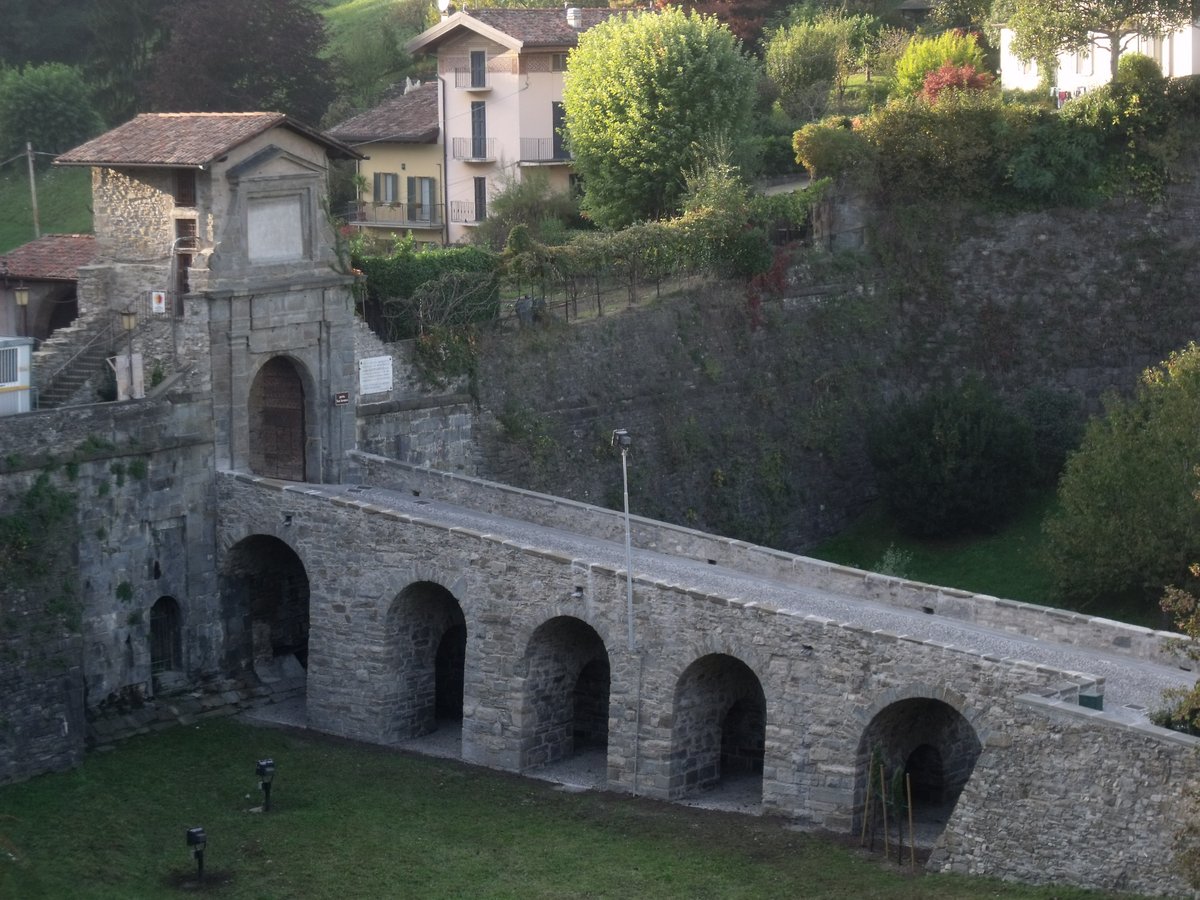
Sant'Alessandro GateAfter the refreshing break at the Botanical Garden, Sant'Alessandro Gate stands as a monumental passage through the Venetian walls, built in 1575 based on Pietro Maria Bagnadore's design. This gate, dedicated to the city's patron saint, is the only one of the four main gates that opens directly onto the valley, offering breathtaking glimpses of the plains and the first Orobic foothills. The structure still preserves the original drawbridge and the chain slots, testaments to the 16th-century defense system. Crossing it, you immediately sense the contrast between the intimate atmosphere of the upper town and the openness towards the paths leading to San Vigilio Castle. A place that tells centuries of history through its solid architecture and the panoramic views it offers.

You should go if...

Those who visit Sant'Alessandro Gate are travelers attentive to military history and Renaissance architecture, seeking to understand how the walls shaped the city's life.

Sant'Alessandro Gate

Stop no. 5

Adalberto Tower

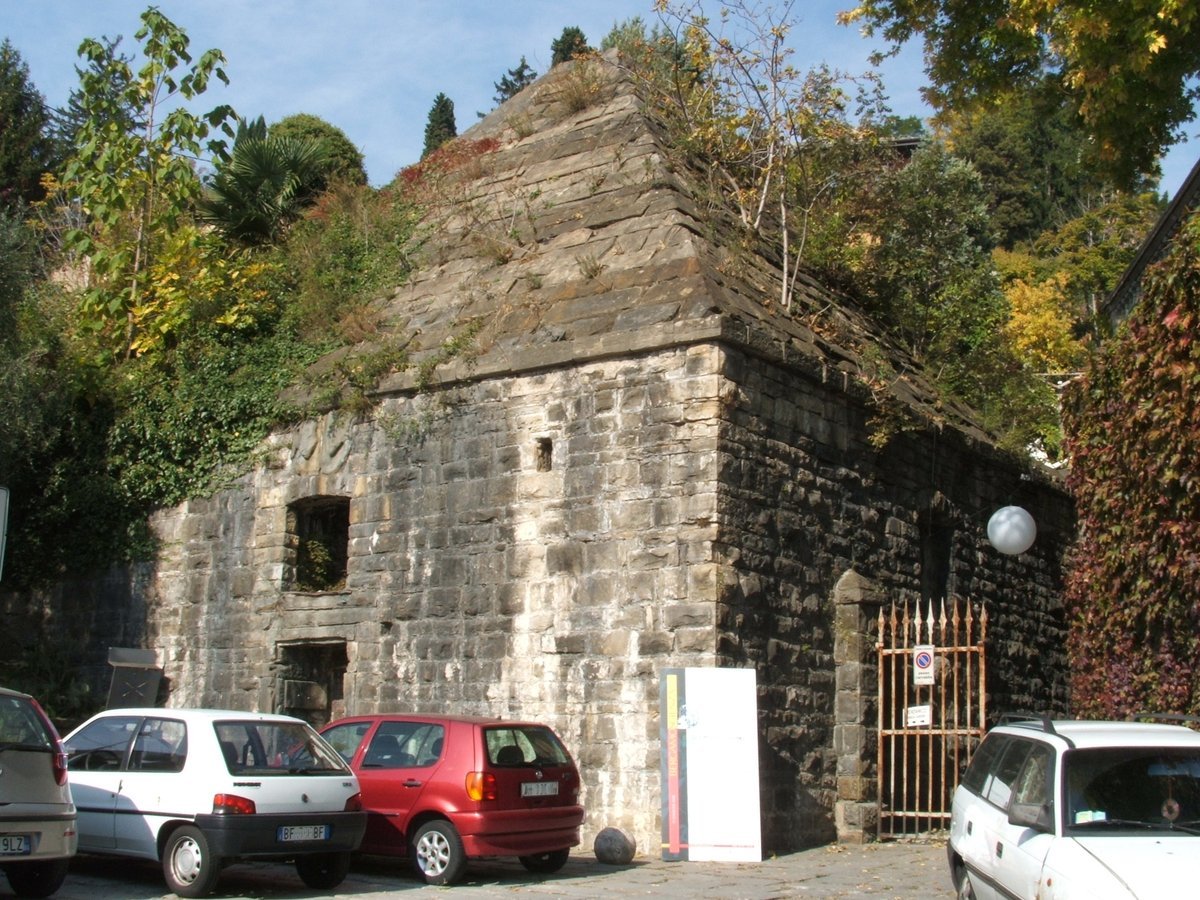
Adalberto TowerLeaving behind the imposing Porta Sant'Alessandro, you enter the Adalberto Tower Passage, a secluded alley that leads to one of the most distinctive towers of the Venetian walls. Built in the 16th century as part of the defensive system, this tower stands out for its strategic position, allowing you to closely observe the structure of the walls and their architectural details. Climbing the few steps to the base of the tower, you discover a privileged observation point over the lower city, with a view that embraces the rooftops of Bergamo and the first hills. The tower, less known than others, retains an authentic and intimate atmosphere, far from the crowds. Here, you can appreciate the original materials such as local stone and arrow slits, witnesses to centuries of history. An ideal place for a moment of reflection, immersed in the silence that envelops this corner of Bergamo Alta.

You should go if...

Those who choose to visit Adalberto Tower are curious travelers who love discovering the lesser-known details of the fortifications and seeking quiet corners to admire the landscape.

Adalberto Tower

Stop no. 6

Civic Archaeological Museum

Civic Archaeological MuseumAfter admiring the Adalberto Tower, head towards Piazza della Cittadella, where the Civic Archaeological Museum welcomes visitors in a historic building that was once part of the city's military complex. This museum houses an extraordinary collection of artifacts ranging from prehistoric times to the Roman era, with everyday objects, coins, and tools that illustrate the lives of Bergamo's ancient inhabitants. Among the most significant pieces are the Roman-era funerary steles and burial site grave goods, offering an intimate glimpse into past customs and beliefs. The clearly organized and accessible rooms allow visitors to follow the city's evolution through the centuries, with explanatory panels that contextualize each discovery. An ideal place for those who want to explore Bergamo's most remote roots, away from the more crowded routes.

You should go if...

Visitors to the Civic Archaeological Museum are travelers attentive to history, seeking to understand a place's origins through authentic artifacts and the stories they tell.

Civic Archaeological Museum

Stop no. 7

E. Caffi Civic Museum of Natural Sciences

E. Caffi Civic Museum of Natural SciencesJust outside the Civic Archaeological Museum, you'll find the E. Caffi Civic Museum of Natural Sciences, located right next door in Piazza della Cittadella. This museum offers a completely different perspective on the region, focusing on the natural richness that characterizes the valleys and mountains of Bergamo. The collections range from zoology to paleontology, with exhibits that include local fossils, minerals, and an extraordinary variety of taxidermied animals. Particularly fascinating is the section dedicated to insects, showcasing the entomological diversity of the area, and the one on mammals of the Prealps. The modern and interactive setup makes the visit accessible to everyone, with dioramas recreating natural environments and multimedia stations explaining the geological evolution of the territory. A perfect place for those who want to discover the other side of Bergamo - the wild and lesser-known one.

You should go if...

Those who choose to visit the Caffi Museum are nature-curious travelers seeking to understand the local ecosystem through scientific specimens and educational exhibits.

E. Caffi Civic Museum of Natural Sciences

Stop no. 8

Lantro Fountain

Lantro FountainLeaving behind the natural history collections of the Caffi Museum, you venture into the heart of Bergamo Alta to discover a hidden gem: the Lantro Fountain. Located in the evocative Becarino da Pratta Passage, this historic spring dates back to the medieval period and represents one of the few remaining examples of water supply from that era. Its structure made of local stone, with the characteristic rectangular basin and simple water jet, evokes an authentic and intimate atmosphere. What makes this place special is its secluded position, away from the main tourist flows, allowing you to capture a more intimate and everyday aspect of life within the walled city. The fountain was a crucial point for the neighborhood residents, who would come here to fetch water and socialize. Today, its silence and simplicity offer a moment of reflection during your exploration of Bergamo Alta, reminding us how even the humblest elements can tell centuries-old stories.

You should go if...

Those who stop at the Lantro Fountain are travelers attentive to details, who appreciate hidden history and seek authentic corners away from the crowds.

Lantro Fountain

Stop no. 9

Museum of Bergamo's Stories - San Francesco Convent

Museum of Bergamo's Stories - San Francesco ConventAfter stopping at the Lantro Fountain, head towards Piazza Mercato del Fieno to discover the Museum of Bergamo's Stories, housed in the former San Francesco Convent. This 14th-century complex, with its frescoed cloister and Gothic naves, recounts centuries of city life through archaeological finds, archival documents, and artworks. The exhibition halls guide visitors from Roman Bergamo to Venetian rule, with a focus on historical figures like Bartolomeo Colleoni. Particularly evocative are the preserved monastic cells, which offer a glimpse into Franciscan life. The museum is not just a collection of objects, but a compelling narrative that combines urban history and spirituality, making the evolution of Bergamo Alta tangible.

You should go if...

Those who choose this stop are curious travelers wanting to understand the soul of Bergamo, appreciating places where art and history converse in spaces rich with meaning.

Museum of Bergamo's Stories - San Francesco Convent

Stop no. 10

The Fortress

The FortressLeaving behind the historical narrative of the Convent of San Francesco, you reach The Fortress, an imposing 14th-century stronghold that dominates Upper Bergamo from Piazzale Brigata Legnano. Built at the behest of John of Bohemia and expanded by the Visconti family, this military citadel offers one of the city's most spectacular panoramas, embracing both the ancient core and modern Lower Bergamo in a single sweeping gaze. Climbing the rampart walkways and visiting the Historical Museum housed within its interior chambers reveals centuries of defensive strategy, from crossbows to bombards. The surrounding park, with its 19th-century cannons still aimed toward the plain, provides the perfect setting for contemplative pause. Here, history isn't just something to read about—it's something to experience through 360-degree views that remain etched in memory.

You should go if...

Those who visit The Fortress are explorers seeking powerful emotions, lovers of places where history can be touched with your own hands and your gaze can roam freely across the horizon.

The Fortress

Stop no. 11

Park of Remembrance

Park of RemembranceFollowing the thrilling experience at the Rocca, the Park of Remembrance offers a moment of quiet and reflection. This green space, located right behind the fortress, is dedicated to the memory of the fallen from the world wars, with commemorative stones dotting the path. The park unfolds across a natural terrace that provides spectacular views over Lower Bergamo, allowing you to appreciate the contrast between the modern city and the historic core enclosed by the Venetian walls. Here, among well-kept flowerbeds and shaded benches, you'll breathe in a secluded atmosphere, far from the main tourist flow. It's the ideal spot for a restorative break, where you can observe the flight of the kestrels nesting in the walls and catch architectural details of the lower city that escape notice from other perspectives.

You should go if...

Those who choose this stop are reflective travelers, who appreciate moments of pause to absorb the genius loci and seek authentic corners away from the more beaten paths.

Park of Remembrance

Stop no. 12

Church of San Michele al Pozzo Bianco

Church of San Michele al Pozzo BiancoLeaving the Parco delle Rimembranze behind, you immerse yourself in the Church of San Michele al Pozzo Bianco, a place of worship that safeguards often-overlooked artistic treasures. Its sober facade conceals an interior rich with Renaissance frescoes, including notable works by Lorenzo Lotto and Giovan Battista Moroni. The pictorial cycle dedicated to the Life of the Virgin is particularly evocative, with scenes unfolding along the walls in a visual narrative of rare intensity. The church, located on Via Porta Dipinta, owes its name to an ancient spring water well that once supplied the area. The atmosphere is intimate and secluded, far from the crowds of Piazza Vecchia, allowing you to appreciate the 15th-century architectural details and the tranquility of an authentic corner of Bergamo Alta. Here, you can still breathe in the essence of a devout community that has shaped this space over the centuries.

You should go if...

Those who stop here are visitors attentive to sacred art, seeking lesser-known masterpieces and moments of contemplation away from the main tourist flows.

Church of San Michele al Pozzo Bianco

Stop no. 13

Church of Sant'Agata nel Carmine

Church of Sant'Agata nel CarmineContinuing along Via Bartolomeo Colleoni after visiting San Michele al Pozzo Bianco, you'll come across the Church of Sant'Agata nel Carmine, a religious building that bears witness to the presence of the Carmelites in Bergamo since the 15th century. Its brick facade, typical of Lombard architecture, conceals a single-nave interior where the 17th-century frescoes by Carlo Ceresa and the Baroque decorations of the main altar stand out. The chapel dedicated to Sant'Agata houses relics and artworks linked to the cult of the Catania martyr, while the adjacent cloister, now part of the convent complex, offers a quiet corner away from the tourist bustle. Less known than the monuments in Piazza Vecchia, the church allows you to discover the spiritual legacy of the Carmelite friars through canvases and sacred furnishings that tell centuries of devotion in the Città Alta.

You should go if...

Those who visit this place are curious explorers of Bergamo's religious history, drawn to the minor artistic details and the intimate atmosphere of a site off the beaten path.

Church of Sant'Agata nel Carmine

Stop no. 14

Church of San Salvatore

Church of San SalvatoreLeaving behind the sobriety of Sant'Agata nel Carmine, the Church of San Salvatore reveals itself as an architectural surprise along Via San Salvatore. This religious building, founded in the 12th century but extensively remodeled during the Baroque period, stands out for its gray stone facade that contrasts with the surrounding plasterwork. The single-nave interior houses 15th-century frescoes from the Lombard school, including a notable Madonna and Child attributed to the workshop of Jacopino Scipioni. The side chapel dedicated to Saint Joseph features a 17th-century polychrome marble altar, while the small adjacent cloister, accessible only on special occasions, preserves traces of medieval loggias. Rarely visited by mainstream tourist flows, the church offers an authentic experience of contemplation just steps from Piazza Duomo, allowing visitors to discover historical layers often overlooked.

You should go if...

Those who choose this stop are travelers attentive to minor artistic testimonies, who appreciate discovering places where history is read through little-known architectural and pictorial details.

Church of San Salvatore

Stop no. 15

Piazza Duomo

Piazza DuomoArriving at Piazza Duomo after visiting the Church of San Salvatore, you find yourself in the beating heart of religious and artistic life in Bergamo Alta. The square, dominated by the majestic facade of the Duomo di Sant'Alessandro, also hosts the Basilica of Santa Maria Maggiore and the famous Cappella Colleoni. The architecture of the Duomo, rebuilt in the 15th century with subsequent interventions until the 19th century, displays a neoclassical facade that conceals an interior rich in artworks, including the wooden choir by Andrea Fantoni. Next door, the Basilica of Santa Maria Maggiore impresses with its Romanesque-Gothic exterior and Baroque interiors, featuring Florentine tapestries and the funeral monument of Gaetano Donizetti. The stone-paved square creates an intimate atmosphere, emphasized by the Contarini Fountain at its center, a gathering point for tourists and locals alike. Here you breathe in the city's historical stratification, with buildings spanning from the Middle Ages to the Renaissance, offering a comprehensive view of Bergamo's artistic evolution.

You should go if...

Those who stop in this square are visitors seeking the cultural essence of Bergamo, appreciating the sacred art and architecture that tell centuries of history in a single space.

Piazza Duomo

Stop no. 16

Basilica of Santa Maria Maggiore

Basilica of Santa Maria MaggioreLeaving Piazza Duomo behind, you enter the Basilica of Santa Maria Maggiore through the Portal of the Red Lions, a majestic entrance that leads to a surprisingly Baroque interior. The church, founded in 1137 as an ex-voto for the end of a plague, houses treasures such as the 16th-century Florentine tapestries depicting Marian stories and the funerary monuments of illustrious figures, including that of composer Gaetano Donizetti. The exterior in Lombard Romanesque style, with its ornate apses and protruding porch, contrasts with the richness of the interiors, where Giovanni Angelo Sala's stuccoes and Andrea Fantoni's presbytery stand out. One detail not to be missed is the Colleoni Chapel, accessible from the right side, which with its polychrome marbles completes the artistic experience of this sacred place.

You should go if...

Those who visit the basilica are art and history enthusiasts, drawn by the fusion of architectural styles and the works that narrate centuries of Bergamasque devotion and culture.

Basilica of Santa Maria Maggiore

Stop no. 17

Colleoni Chapel

Colleoni ChapelRight next to the Basilica of Santa Maria Maggiore, the Colleoni Chapel stands out with its facade of red, white, and black marbles—a masterpiece of Lombard Renaissance commissioned by the condottiero Bartolomeo Colleoni as his personal mausoleum. Built by Giovanni Antonio Amadeo between 1472 and 1476, the structure replaced the basilica's sacristy and impresses with its decorative richness: a pierced rose window, statues, and bas-reliefs depicting biblical and mythological episodes. Inside, beyond the sarcophagus of the condottiero and his daughter Medea, visitors can admire frescoes by Giambattista Tiepolo and a Baroque presbytery with gilded stuccoes. The chapel, an example of private patronage in a religious context, completes the artistic journey of Piazza Duomo with its elegance and connection to Bergamo's military history.

You should go if...

Those who choose this stop are travelers attentive to Renaissance art, fascinated by stories of power and the architectures that define the identity of Bergamo Alta.

Colleoni Chapel

Stop no. 18

Bergamo Cathedral

Bergamo CathedralLeaving the opulent Colleoni Chapel behind, the Bergamo Cathedral presents itself with its neoclassical façade, completed only in 1889 based on a design by Giuseppe Cusi. Dedicated to Saint Alexander, the city's patron saint, the building stands on an ancient worship site, as evidenced by the Romanesque remains visible in the crypt. Inside, the single nave with side chapels houses precious works: notable are Giambattista Tiepolo's Martyrdom of Saint John the Bishop in the Crucifix Chapel and the tomb of Cardinal Guglielmo Longhi, a 14th-century work by Ugo da Campione. Also remarkable are the inlaid wooden choir and the dome frescoed by Carlo Innocenzo Carloni. The cathedral, the religious heart of Bergamo Alta, offers a journey through centuries of devotion and artistic patronage, with an intimate atmosphere that invites discovery of its lesser-known treasures.

You should go if...

Those who visit the Cathedral are curious explorers of Bergamo's Christian roots, drawn by the historical layers and artworks that narrate the city's faith.

Bergamo Cathedral

Stop no. 19

Cathedral Museum and Treasury

Cathedral Museum and TreasuryJust a few steps separate the Cathedral from its museum, a jewel that preserves centuries of Bergamasque ecclesiastical history. The Cathedral Museum and Treasury, located in Piazza Duomo, displays priceless liturgical objects, including medieval reliquaries, embroidered sacred vestments, and illuminated manuscripts. Notable highlights include the cope of Saint Charles Borromeo, a Renaissance textile of rare craftsmanship, and the cathedral treasury, with processional crosses and gilded silver chalices. The rooms, set up in historic spaces adjacent to the Cathedral, offer a journey spanning from the Lombard era to the Baroque period, with artifacts such as the 9th-century ivory casket and panel paintings from the Lombard school. A place for those who wish to delve into the devotion and art that have shaped Bergamo.

You should go if...

Those who stop here are travelers attentive to spirituality and sacred art, eager to discover the lesser-known masterpieces that enrich the city's heritage.

Cathedral Museum and Treasury

Stop no. 20

Piazza Vecchia

Piazza VecchiaLeaving behind the sacred treasures of the Duomo, you emerge into Piazza Vecchia, the Renaissance drawing room of Bergamo Alta that enchants with its architectural harmony. Dominated by the Palazzo della Ragione with its medieval portico and the Torre Civica (the Campanone), the square is surrounded by historic buildings like the Palazzo del Podestà and the Palazzo Nuovo, home to the Angelo Mai Library. At its center, the 18th-century Fontana Contarini adds a touch of elegance. This space, once the center of political power, now buzzes with cafes and visitors admiring the view of the Basilica di Santa Maria Maggiore through the arch of the Palazzo della Ragione. A place where every stone tells centuries of city history, from Venetian rule to the unification of Italy.

You should go if...

Those who choose this stop are travelers seeking the city's essence, lovers of open spaces where architecture becomes the backdrop for daily life.

Piazza Vecchia

Stop no. 21

The Great Bell Tower

The Great Bell TowerClimbing the 230 steps of the Civic Tower, known as the Great Bell Tower, you'll reach a privileged vantage point overlooking Piazza Vecchia and beyond. Built between the 11th and 12th centuries, this bell tower stands 52 meters tall and still houses the great bronze bell that, every evening at 10 PM, strikes 100 times—an ancient Venetian tradition announcing the closure of the city gates. From the summit, the view spans the rooftops of Bergamo Alta, the Venetian Walls, and on clear days, extends to the plains and Prealps. Inside, you can observe the clock mechanisms and historic bells, while the structure itself, with its stone base and open belfry, tells centuries of civic life. An experience that combines history, architecture, and breathtaking views, essential for anyone wanting to capture the soul of Bergamo from above.

You should go if...

Those who climb here are curious explorers, fascinated by historical details and aerial views that reveal the essence of an intact medieval city.

The Great Bell Tower

Stop no. 22

Palazzo del Podestà and Museo del Cinquecento

Palazzo del Podestà, Museo del CinquecentoRight opposite the Campanone, the Palazzo del Podestà overlooks Piazza Vecchia with its Renaissance facade that tells centuries of Venetian power. It houses the Museo del Cinquecento, where you can retrace Bergamo's events during the rule of the Serenissima through artifacts, ancient maps, and period documents. The interior halls preserve original frescoes and decorations, while the permanent exhibition illustrates how the city transformed under Venetian control, with particular attention to daily life and political institutions. A journey that winds through period furnishings, noble coats of arms, and testimonies of administrative justice, offering an in-depth look at a crucial period for Bergamo's identity. The visit concludes with the opportunity to admire the square from the palace entrance, a privileged observation point over the heart of Bergamo Alta.

You should go if...

Those who choose this stop are passionate about local history, interested in understanding Bergamo's Venetian roots through authentic documents and architectures that marked the city's governance.

Palazzo del Podestà, Museo del Cinquecento

Stop no. 23

New Palace

New PalaceLeaving the Podestà Palace behind, your gaze falls upon the New Palace, which dominates the northern side of Piazza Vecchia with its imposing white marble facade from Zandobbio. Built between the 17th and 18th centuries as the seat of the Municipality, it now houses the Angelo Mai Civic Library, one of Lombardy's richest book collections. Inside, the historic halls preserve original walnut shelving and Baroque decorations, while the archival holdings include rare manuscripts, incunabula, and documents tracing the city's history from the Middle Ages to the modern era. Among the most precious treasures are the Cimello Codex with 14th-century miniatures and the autographs of Gaetano Donizetti. The visit allows access to the Furietti Hall, where Bergamo's citizens gathered for public assemblies, and to admire the square from the spacious portico, a quiet corner perfect for observing the tourist bustle.

You should go if...

Those who stop here are connoisseurs of ancient paper, drawn by the scent of parchment and the chance to virtually leaf through texts that have shaped Bergamo's cultural identity.

New Palace

Stop no. 24

Contarini Fountain

Contarini FountainAs you cross Piazza Vecchia, your attention is drawn to the Contarini Fountain, strategically positioned at the center of the urban space. Donated in 1780 by the Venetian podestà Alvise Contarini, this white Zandobbio marble structure features an octagonal base topped by a circular basin with stylophore lions supporting the central column. The four masks from whose mouths water flows represent the seasons, while the sphere at the top symbolizes the power of the Serenissima. The fountain was not merely decorative but served as a water supply point for the inhabitants of Città Alta, becoming over time the focal point of Bergamo's social life. Observing it closely reveals sculptural details that narrate centuries of history, from Venetian rule to the Unification of Italy, making it a true open-air stone book.

You should go if...

Those who pause here are keen observers of architectural details, fascinated by the fusion of public functionality and Renaissance elegance that characterizes this civic monument.

Contarini Fountain

Stop no. 25

Gombito Tower

Gombito TowerLeaving behind the Renaissance elegance of Piazza Vecchia, you'll walk along Via Mario Lupo where the imposing Gombito Tower soars overhead, built in the 12th century by the powerful Ghibelline Suardi family. Standing 52 meters tall, this squared-stone structure represents one of the best-preserved examples of medieval architecture in Bergamo. The tower takes its name from the intersection (gombito) between the two main Roman roads that crossed the ancient settlement. During Visconti rule it served as a prison, while today it occasionally hosts temporary exhibitions. Its strategic position made it a crucial observation point for controlling the territory, and even today from the summit you can enjoy a unique panorama stretching from the rooftops of Città Alta to the Bergamo plains. The bravest visitors can climb the 263 steps of the internal staircase to reach the top, where the view amply rewards the effort.

You should go if...

Those who choose to visit this place are urban explorers seeking historical authenticity, fascinated by the medieval layers that characterize the urban fabric of Bergamo Alta.

Gombito Tower

Stop no. 26

Antescolis Fountain

Antescolis FountainNot far from the Gombito Tower, along Via Arena, you'll spot the Antescolis Fountain, a Renaissance gem often overlooked by the busiest tourist routes. Built in the 16th century, this fountain made of Sarnico stone features a circular basin topped by a central column adorned with floral motifs and the city's coat of arms. The name "Antescolis" comes from its ancient location "in front of the schools," referring to the medieval classrooms that once stood nearby. The fountain served as a water supply point for the neighborhood residents and pilgrims heading to the nearby Basilica of Santa Maria Maggiore. Today, its subtle charm and intimate atmosphere make it a delightful stop while exploring Città Alta, offering a moment of tranquility away from the hustle and bustle of Piazza Vecchia.

You should go if...

Those who pause here are travelers attentive to details, who appreciate lesser-known stories and seek authentic corners where they can breathe in the daily atmosphere of historic Bergamo.

Antescolis Fountain

Stop no. 27

Donizetti Museum

Donizetti MuseumAfter admiring the Fontana di Antescolis, continue along Via Arena to reach the Donizetti Museum, housed in the composer's final residence. This museum preserves a unique collection dedicated to one of the greatest opera composers of the 19th century: original manuscripts, personal letters, the piano he composed on, and even a cast of his face. The rooms trace Donizetti's international career through documents showcasing his triumphs in Naples, Paris, and Vienna, while period reconstructions immerse visitors in the creative atmosphere of the era. Particularly moving is the section dedicated to his final years, when illness forced his return to Bergamo. The museum is not just a tribute to the musician, but an emotional journey into the history of 19th-century Italian music, seamlessly woven into the cultural fabric of Città Alta.

You should go if...

This stop appeals to classical music enthusiasts eager to explore the roots of Italian opera, seeking the intimate connection between an artist and his hometown.

Donizetti Museum

Stop no. 28

San Pancrazio Fountain

San Pancrazio FountainLeaving the Donizetti Museum behind, a short stroll through the charming alleys of Città Alta leads to the San Pancrazio Fountain, located in the namesake small square. Dating back to the 16th century, this fountain is an example of Bergamasque Renaissance architecture, featuring a stone basin and an elegant mask spouting fresh water. Once a water supply point for local residents, it now offers a pleasant stop for visitors. Its secluded position, away from the main tourist flow, creates an intimate and authentic atmosphere. Observing the carved details, one can sense the connection to local history and the daily life of times past. It's a quiet corner where you can pause to admire the harmony of ancient stones and listen to the soothing sound of flowing water.

You should go if...

Those who stop here are curious travelers who appreciate hidden details, seeking less-trodden places to savor the authentic essence of Bergamo Alta, between history and everyday life.

San Pancrazio Fountain

Stop no. 29

Porta San Giacomo

Porta San GiacomoCrossing through Porta San Giacomo, you immediately immerse yourself in the historic atmosphere of Bergamo Alta. This gate, built in 1593, is one of the four main entrances to the Venetian walls and stands out for its elegant facade made of white Zandobbio marble, which contrasts with the local grey stone. Positioned along Via Sant'Alessandro, it once served as a checkpoint for those entering the city, guarded by sentries. Today, passing through it means crossing a symbolic threshold between modernity and the past, with its massive structure and pointed arch framing picturesque views. From here, your gaze stretches towards the inner alleyways, and turning around, you catch a glimpse of Bergamo Bassa in the distance. It's a place that tells centuries of history, remaining intact despite the passage of time.

You should go if...

Those who visit Porta San Giacomo are explorers attentive to transitions, seeking the exact point where the city changes its face and history becomes tangible.

Porta San Giacomo