
Grotta Paglicci is one of Europe’s most important archaeological sites, with human evidence dating back 35,000 to 10,000 years. The cave paintings of horses and human figures, created with red and black ochre, are among Italy’s oldest artistic expressions. The itinerary includes an open-air museum with reconstructions of the prehistoric environment.
- Paleolithic cave paintings of horses dated 30,000 years ago
- Complete human skeletons and flint tools from the Neanderthal era
- Open-air museum with reconstructions of prehistoric living environments
- Scenic trail with breathtaking views over the Tavoliere plain in Puglia
Events nearby



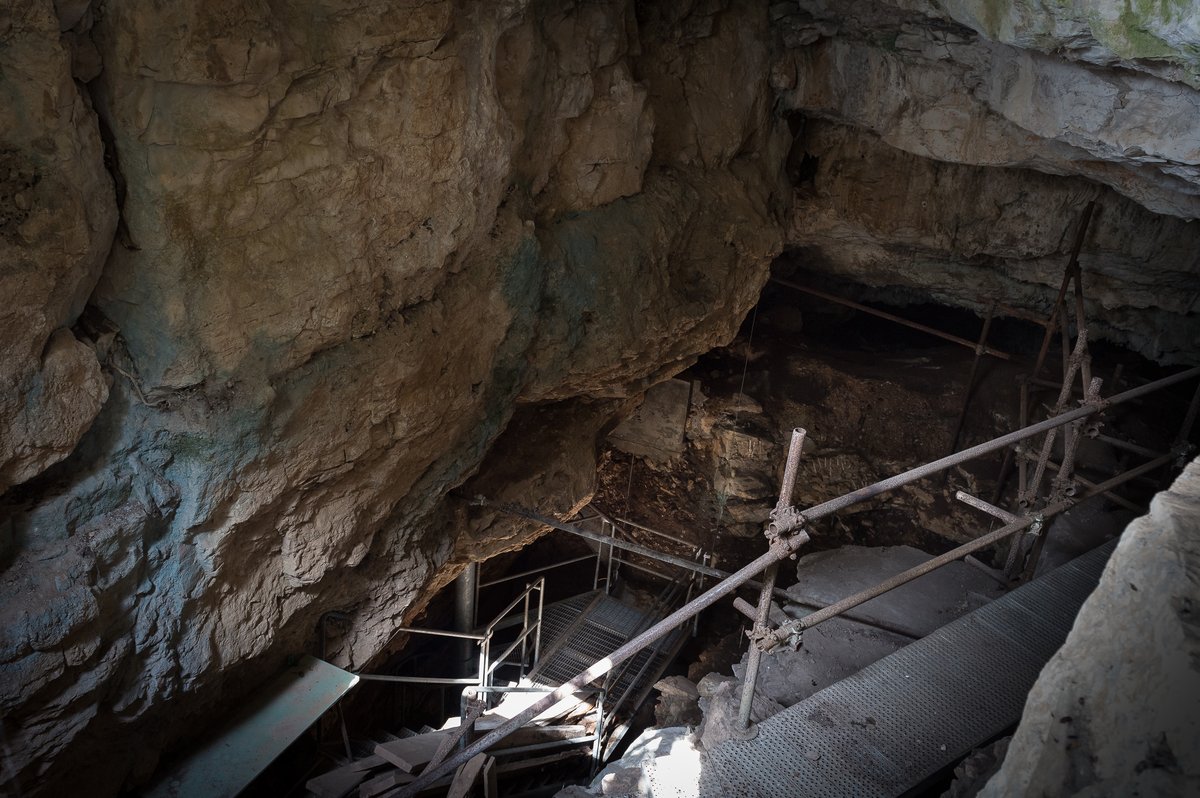
Grotta Paglicci in Rignano Garganico houses some of Italy’s oldest Paleolithic horse graffiti, complete human skeletons, and a reconstructed open-air museum. Accessible via a scenic trail overlooking the Tavoliere plain.
- Strada Provinciale 22 Borgo Celano, Foggia (FG)
- Open in Google Maps
- View on Google Images Grotta Paglicci a Foggia
Good to know
Introduction
Entering the Paglicci Cave is like stepping through a portal in time. You suddenly find yourself face to face with a distant past, where every wall tells stories of people who lived here 30,000 years ago. The atmosphere is dense, almost palpable: the cool air, the silence broken only by dripping water, the rock carvings emerging from the darkness. It’s not just a cave, but a prehistoric sanctuary that makes you feel small in the face of time’s immensity. Here, in the heart of Gargano, you touch the oldest roots of European humanity.
Historical Overview
The cave was continuously inhabited from the Middle Paleolithic to the Bronze Age. Excavations have uncovered complete human skeletons, flint tools and worked bones, along with remains of now-extinct animals such as mammoths. Radiocarbon dating confirms human presence between 35,000 and 10,000 years ago. The most remarkable discovery? The cave paintings depicting horses and human figures, among the oldest artistic expressions in Europe.
- 35,000 years ago: first evidence of human presence
- 20,000 years ago: creation of the cave paintings
- 1961: beginning of systematic archaeological excavations
- 1970s: discovery of the cave paintings
The Speaking Rock Art
The walls of Paglicci preserve a unique visual language in the Italian landscape. The graffiti, created with red and black ochre, depict galloping horses and negative handprints. These are not mere decorations, but true messages passed down through millennia. The technique of negative handprints – achieved by spraying pigment around the hand pressed against the rock – is particularly evocative because it makes you feel in direct contact with those ancient artists. Each figure tells a story of hunting, spirituality, and daily life during the Ice Age.
The Open-Air Museum
The visit to Paglicci doesn’t end at the cave. The journey continues in the surrounding area where the prehistoric living environment has been reconstructed. Here you can see up close how fire was lit with flint, how flint was knapped to create tools, and how animal hides were processed. It’s an immersive experience that completes your understanding of the site. The educational panels, clear and concise, explain every aspect of daily life for those ancient inhabitants of Gargano without requiring complicated explanations.
Why Visit It
Three concrete reasons not to miss Paglicci: first, it’s one of the few sites in Italy where you can see authentic Paleolithic cave art; second, the exceptional preservation of the artifacts allows you to truly understand how our ancestors lived; third, its location in Gargano National Park combines history and nature in a single experience. You don’t need to be an archaeologist to appreciate the thrill of standing where humanity left its first artistic traces.
When to Go
The best time to visit Paglicci is during the clear spring mornings or early autumn. The low-angled sunlight highlights the details of the cave’s rock engravings, creating shadow plays that make the figures appear even more vivid. Avoid days with heavy rain as moisture can make the entrance slippery. The internal temperature remains constant year-round, but the visual experience changes dramatically with the angle of natural light.
In the Surroundings
Complete your prehistoric experience by visiting the Civic Museum of Rignano Garganico, which houses many original artifacts from Paglicci. Just a few kilometers away, the Sanctuary of San Michele in Monte Sant’Angelo offers an intriguing contrast between ancient and modern spirituality. Both sites enrich your understanding of the long human history in this area of Gargano, showing how different historical periods have left their mark on the same territory.
Itineraries nearby



💡 Did You Know…?
Among the most extraordinary finds are the handprints of children imprinted in clay, perfectly preserved after millennia. Archaeologists have also uncovered complete Homo sapiens skeletons with burial goods, testifying to complex rituals. The cave was continuously inhabited for over 20,000 years, a record that makes it a unique archive of European prehistory.