Toirano Caves: A Journey Through Time Among Stalactites and Cave Bears

The Toirano Caves are a karst complex in the province of Savona that transports you to an underground world of rare beauty. With a constant temperature of 16°C, they are perfect for a visit in any season. The approximately one-kilometer guided tour will reveal:

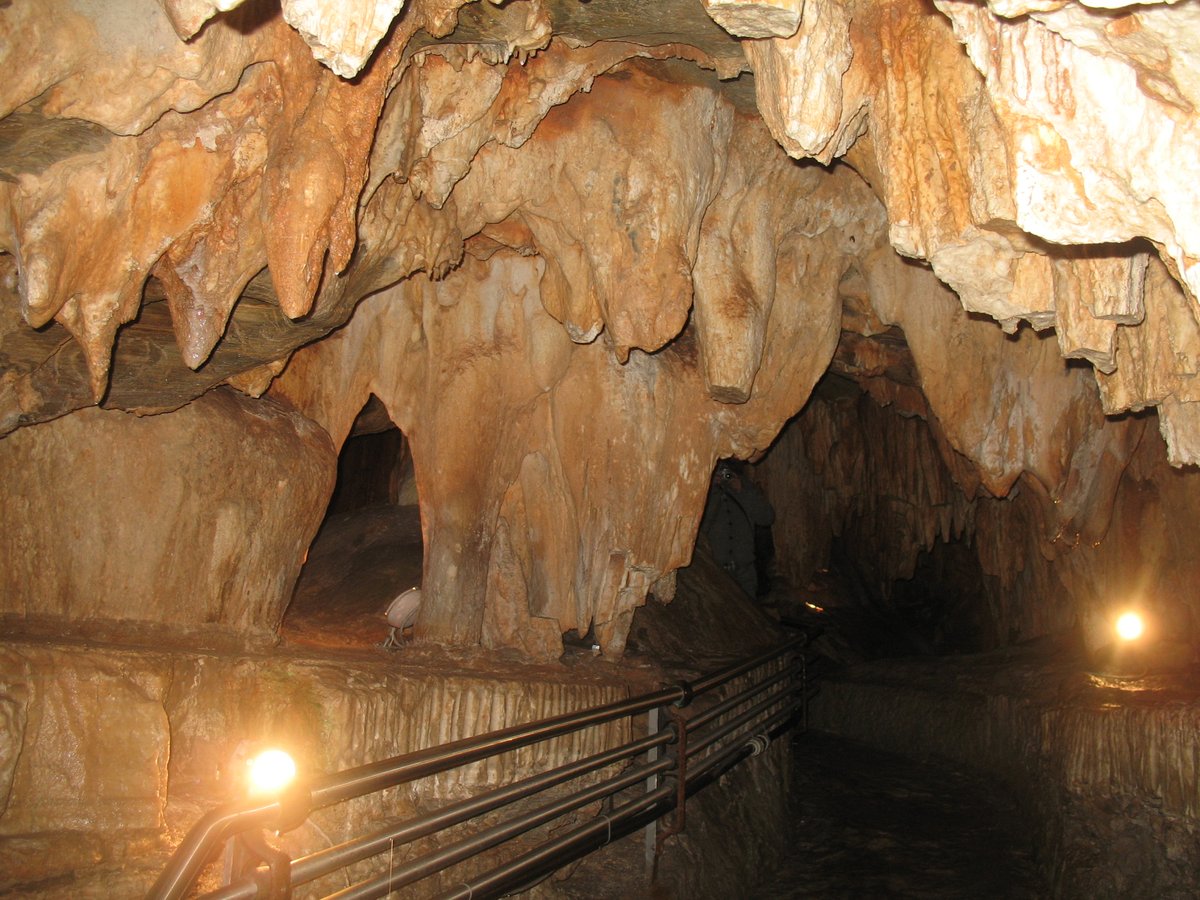
• The Hall of Mysteries with its limestone formations that resemble natural sculptures
• Prehistoric human footprints preserved in the mud for over 12,000 years
• The skeleton of a cave bear perfectly preserved in a niche
• The Crystal Lake reflecting stalactites like a mirror

Copertina itinerario Toirano Caves: A Journey Through Time Among Stalactites and Cave Bears
The Toirano Caves in the province of Savona offer an underground journey through millennia-old limestone formations and traces of prehistoric humans. A 70-minute guided tour through the Bàsura and Strega Caves.

Good to know


Introduction

Descending into the Toirano Caves is like stepping into a natural history book that unfolds as you walk. It’s not just a speleological visit; it’s an experience that makes you feel small in the face of time. The first thing that strikes you is the enveloping humidity and the silence broken only by the dripping water, which over millennia has sculpted stalactites and stalagmites into incredible shapes. The 70-minute guided tour takes you through the Bàsura Cave and the Witch’s Cave, two connected cavities that hold different treasures: on one side, the most spectacular limestone formations; on the other, traces left by prehistoric humans and cave bears. I especially remember the Hall of Mysteries, with those concretions that look like marble drapes. It’s a place that stays with you—damp and ancient.

Historical Background

These caves have not always been accessible as they are today. Their history as a tourist attraction is recent, but their past is incredibly long. The most remarkable discovery occurred in 1950, when some local boys found the entrance to the Bàsura Cave, which until then had only been known locally. Inside, speleologists discovered perfectly preserved human and animal footprints in fossilized mud, dating back over 12,000 years. Imagine: footprints of Stone Age children playing, and the majestic tracks of cave bears, extinct for millennia. The Witch’s Cave, on the other hand, was already known since the 19th century, but only as a local curiosity. Today, the two are connected in a single route, studied and equipped to allow us to walk where our ancestors once passed.

  • 1890: first explorations in the Witch’s Cave
  • 1950: discovery of the Bàsura Cave with prehistoric footprints
  • 1970s: beginning of organized tourist visits
  • Today: unified and LED-lit route to preserve the environment

The Corridor of Footprints

This was the part that moved me the most. In the Bàsura Cave, there’s a stretch of about twenty meters where the floor is dotted with fossil footprints. They’re not just simple marks: you can see the toes, the heel, sometimes the varying pressure of the step. Scholars have determined that they belong to a group of men, women, and children from the Upper Paleolithic, who ventured here perhaps for ceremonies or to seek shelter. Alongside them, the tracks of cave bears, enormous, scraping the ground. The guide points out how some human footprints overlap those of the bears, a sign they passed through later. Walking over them, on a suspended walkway, gives you a strange feeling of closeness. They’re not artifacts in a display case; they’re right where they were left. You feel the urge to touch, but it’s forbidden to preserve them: the mud has solidified into fragile rock.

The Calcite Cathedral

If the Corridor of Footprints is history, the Witch’s Cave is nature’s fantasy. Here, limestone formations steal the show with shapes that seem to have emerged from a storybook. There are columns as tall as trees, alabaster draperies that appear to sway (though they’ve been fixed for centuries), and pools of water so clear they reflect stalactites like a mirror. The name ‘Witch’s Cave’ comes from a formation resembling a face, but what struck me most was the so-called ‘Alabaster Cascade’, a pure white flow that seems frozen mid-air. The LED lighting, designed not to alter the microclimate, plays with shadows and enhances reflections. It’s such a surreal environment that you sometimes forget you’re underground. I recommend looking up too: the ceiling is an embroidery of stalactites as thin as needles.

Why Visit It

First: it’s one of the few sites in Italy where prehistory feels so tangible. You don’t have to imagine how cave dwellers lived: their footprints are right there, beneath your feet. Second: the visit is exceptionally well-managed. The guide (mandatory) explains without being dull, the route is safe and suitable even for non-adventurers, with stairs and handrails. Third: the combination of nature and history is perfect. In an hour and ten minutes, you move from the artistic forms of the cave to human traces, without tiring. And honestly, it’s an excellent alternative to the crowded beaches of the Riviera, especially on hot or rainy days. I went out of curiosity and left with the feeling of having seen something unique.

When to Visit

The caves are open year-round, but the experience varies significantly. In summer, the underground coolness offers relief from the Riviera’s heat, though it can get crowded, especially during peak hours. I prefer the shoulder seasons: in spring or autumn, perhaps early in the morning, there are fewer visitors and the atmosphere feels more intimate. In winter, the contrast between the cold outside and the constant warmth inside the caves (16°C) is pleasant, and the limestone formations appear brighter with reduced natural light. A word of advice: avoid days with heavy rain if you’re sensitive to humidity, as it feels more pronounced inside. But generally, any time is suitable because the climate underground remains consistent.

In the Surroundings

After exiting the caves, Toirano itself is worth a stroll: it’s a medieval hilltop village with narrow alleys and colorful houses, perfect for a coffee or to sample farinata, the typical Ligurian chickpea flatbread. Not far away, towards the sea, lies Borgio Verezzi, another village overlooking the Mediterranean with a theatrical historic center (hosting a festival in summer) and the Borgio Caves, less known but equally spectacular for the colors of their formations. If you prefer to stay on a prehistoric theme, about half an hour’s drive away is the Finale Ligure Archaeological Museum, which exhibits Paleolithic artifacts found in the area’s caves, completing the picture of what you saw in Toirano.

Itineraries nearby


💡 Did You Know…?

In the Bàsura Cave, the footprints and knee prints left in the mud by prehistoric humans during shamanic rituals are so well-preserved they seem freshly made. Archaeologists have identified at least 14 individuals, including children, who crawled through the hall now called the ‘Hall of Mysteries’. In the nearby Strega Cave, you’ll find the complete skeleton of a cave bear that took refuge here for winter hibernation, a testament to when these animals were the true masters of these caves.