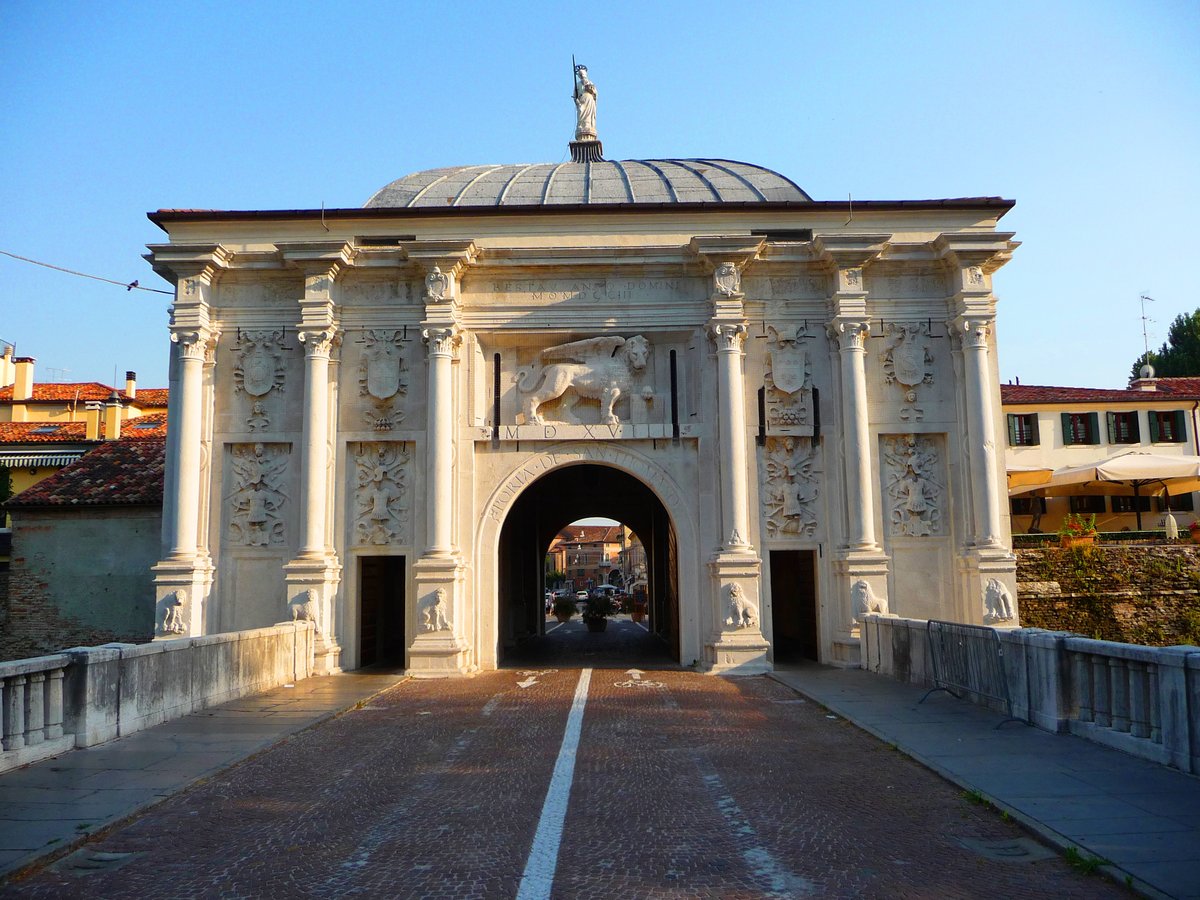
Porta San Tomaso Treviso: Renaissance arch from 1518 with Venetian coats of arms

Porta San Tomaso is a perfectly preserved historic entrance in the Venetian walls of Treviso, built in 1518. Passing through its Renaissance arch means stepping into the ancient heart of the city, just a short walk from the Cathedral and the banks of the Sile River. It is always freely accessible and offers a unique perspective on the city’s defensive system.

  • Renaissance triumphal arch from 1518 with original coats of arms of Venice and Treviso
  • Starting point for the 4 km pedestrian path along the Venetian walls
  • Strategic location at the beginning of Via San Tomaso, near the historic center
  • Structure made of red bricks and Istrian stone, an example of intact military architecture

Copertina itinerario Porta San Tomaso Treviso: Renaissance arch from 1518 with Venetian coats of arms
Porta San Tomaso is one of the four Venetian gates of Treviso, built in 1518 with a Renaissance triumphal arch and coats of arms of the Lion of Saint Mark. It serves as a starting point for walking along the city walls and reaching the historic center on foot.

Good to know


Introduction

As you arrive at Porta San Tomaso, you’re immediately greeted by the grandeur of one of Treviso’s best-preserved Venetian gates. It’s not just an entrance through the walls, but a true journey back in time: the Renaissance arch made of Istrian stone, the coats of arms of the Serenissima, and the architectural details transport you directly to the 16th century. Walking beneath its vault, you can almost hear the buzz of merchants and travelers who once passed through it. It’s a place that strikes you with its authenticity, away from the crowds of more beaten paths, perfect for those seeking a corner of history without frills.

Historical Notes

Porta San Tomaso was built in 1518 during Venetian rule, as part of Treviso’s defensive wall system. Designed by architect Fra’ Giocondo, it represents an example of Renaissance military architecture, with its rounded arch and the sculptures of the coats of arms of Venice and Treviso. Over the centuries, it has withstood wars and sieges, becoming a symbol of the city’s resilience. Today, it is one of the few historical gateways still perfectly intact, a silent witness to five centuries of history.

  • 1518: Construction during Venetian dominion
  • 16th century: Main entrance for those arriving from the north
  • Today: Preserved monument and tourist landmark

Architecture and Details

Looking closely at Porta San Tomaso, you’ll immediately notice the two stone coats of arms that stand out above the arch: that of Venice with the Lion of Saint Mark and that of Treviso. The structure is made of brick and Istrian stone, with a depressed arch portal typical of Venetian Renaissance architecture. On the sides, you can still glimpse traces of the original closing mechanisms. It’s interesting to note how the gate was conceived not only for defense but also as a calling card for those entering the city, with an attention to detail that speaks of Venetian pride.

Walk Along the Walls

From Porta San Tomaso, you can access the pedestrian path along the Venetian walls, a roughly 4 km loop that offers unique views of the city and the Treviso countryside. As you stroll along the walkway, you’ll pass by bastions, gun emplacements, and other historic gates, with panoramic views over Treviso’s rooftops and the waterways that flow through it. It’s an experience that combines history and nature, perfect for a relaxing walk away from the traffic. I recommend stopping at the observation points to take photos of the gate from above: the perspective is truly captivating.

Why Visit It

Visiting Porta San Tomaso is worthwhile for at least three concrete reasons. First, it’s a rare example of intact Renaissance military architecture, with details like the original coats of arms that have disappeared elsewhere. Second, it’s the ideal starting point for exploring Treviso’s Venetian walls, a historic circuit that lets you see the city from an unusual perspective. Third, it’s free and always accessible, with no queues or tickets, perfect for a quick stop even if you’re short on time. Plus, its location is convenient for reaching the historic center on foot in just a few minutes.

When to Go

The best time to visit Porta San Tomaso is at sunset, when the warm sunlight enhances the stone’s colors and creates shadow plays on the arch. In summer, avoid the midday heat, while in autumn and spring, the soft afternoon light makes the atmosphere even more magical. If you prefer tranquility, go early in the morning on weekdays, when there are no tourist groups and you can enjoy it in solitude. In winter, with a bit of fog, it takes on a mysterious aura that recalls its centuries of history.

In the Surroundings

After visiting Porta San Tomaso, I recommend exploring the historic center of Treviso, with its porticoes, squares, and canals that have earned it the nickname ‘Little Venice’. Just a few minutes’ walk away, you’ll reach Piazza dei Signori with the Palazzo dei Trecento and the Civic Tower. Another thematic experience is prosecco tasting at one of the nearby wine bars, to sample the iconic wine of the Treviso province. If you love art, don’t miss Tomaso da Modena’s frescoes in the Diocesan Museum, a short distance from the gate.

💡 Did You Know…?

Porta San Tomaso takes its name from the ancient Church of San Tomaso that once stood nearby, demolished in the 19th century. On the inner facade, one can still see the holes from the drawbridge chains, while the original structure included a defensive ravelin that has since disappeared. During Venetian rule, this gate was strategically important for controlling access from the northeast.