
🧭 What to Expect
- Ideal for a cultural weekend discovering Judicial Sardinia and its medieval history.
- Highlights: perfectly preserved 13th-century defensive towers and the Antiquarium Arborense with artifacts from Tharros.
- An authentic and off-the-beaten-path experience in a compact historic center that's easy to explore on foot.
- Includes an interactive map with the precise location of all main attractions.
Events nearby
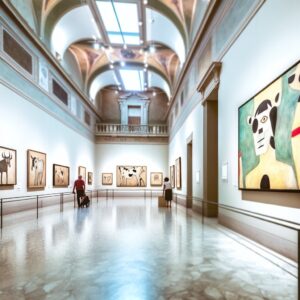
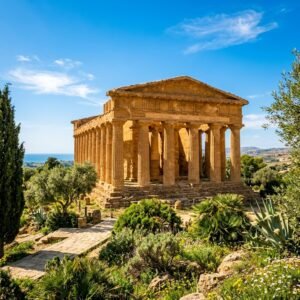
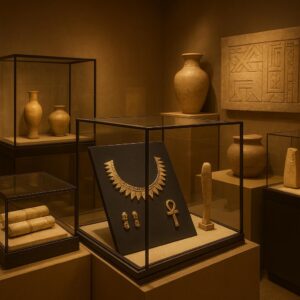
The City of Oristano welcomes you with its perfectly preserved medieval charm. The defensive towers that dot the historic center tell centuries of judicial history, while the Antiquarium Arborense houses unique artifacts from the ancient Kingdom of Arborea. Strolling through the city center means discovering an authentic dimension, far from mass tourism, where every corner reveals traces of the past. The city is compact and easy to explore on foot, ideal for a weekend discovering the most genuine Sardinia. Here you'll find well-preserved monuments and a culinary culture deeply rooted in local traditions.
Itineraries nearby


Antiquarium Arborense
- Piazza Giuseppe Corrias, Aristanis/Oristano (OR)
- http://www.antiquariumarborense.it/
- Open in Google Maps
- View on Google Images
- info@antiquariumarborense.it
- +39 0783 791262
 The Antiquarium Arborense is the archaeological museum that tells you the ancient history of Oristano and its territory. Located in Piazza Corrias, in the historic center, it is housed in the former convent of the Clarisse, a building that is worth a visit in its own right. The permanent collection is organized in chronological order and guides you through millennia of history, from Nuragic artifacts up to the Middle Ages. The highlights are undoubtedly those from the ancient city of Tharros: Punic ceramics, Roman coins, and everyday objects that let you imagine what life was like here 2,500 years ago. Don't miss the Punic funerary steles with their mysterious inscriptions and the Byzantine jewelry that demonstrate the importance of this area through the centuries. The museum is well organized and the labels are clear, perfect even for those who are not archaeology experts. The exhibition path naturally accompanies you from prehistory to the Judicate era, when Oristano was the capital of the Giudicato of Arborea. Many visitors are impressed by the reconstruction of a Punic tomb with its original grave goods. If you visit Oristano, this museum is essential to truly understand the roots of the city and western Sardinia.
Mariano II Tower
- Via Giuseppe Garibaldi, Aristanis/Oristano (OR)
- https://www.comune.oristano.it/it/vivioristano/citta/luoghi-del-passato/torre-di-mariano-ii-o-di-san-cristoforo/index.html
- Open in Google Maps
- View on Google Images
- info@antiquariumarborense.it
- +39 0783 791262
 The Mariano II Tower, also known as San Cristoforo Tower, is one of the most recognizable symbols of Oristano. Built in 1290 by order of Judge Mariano II de Lacon-Gunale, this imposing structure was part of the city's medieval defense system. The tower stands majestically at the entrance to the historic center, right along the ancient Pisan walls that once protected the city.
Today the tower is perfectly preserved and represents one of the few remaining examples of judicial military architecture in Sardinia. Its structure made of local limestone reaches 19 meters in height and features typical characteristics of the era: narrow arrow slits, Guelph-style battlements, and a slightly sloping base to better withstand sieges. Climbing the stone steps to the top rewards visitors with an exceptional panoramic view of Oristano's historic center and the surrounding plain.
The tower's strategic location along Corso Umberto makes it easily accessible during a walk through the center. It's interesting to note how this structure has survived through the centuries while maintaining its original function as a city gateway. The tower is open to visitors and represents an essential stop for anyone wanting to fully understand the medieval history of Oristano and the Judicate of Arborea.
Torre Portixedda
- Via Giuseppe Garibaldi, Aristanis/Oristano (OR)
- Open in Google Maps
- View on Google Images
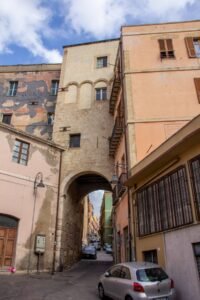
 The Torre Portixedda is one of the most fascinating remnants of Oristano's medieval defense system. Built in the 13th century during the period of the Judicates, it formed part of the Pisan walls that protected the city from external attacks. The tower is located right in the historic center, along Via Mazzini, and stands out for its massive structure made of local limestone.
The particularity of this tower lies in its strategic position: it controlled one of the main entrances to the city and represented a crucial point for the defense of the Sa Corongia district. Today, despite the centuries that have passed, it retains its austere charm intact. The visit allows you to appreciate Sardinian medieval construction techniques, with thick walls and arrow slits that tell centuries of history.
For those visiting Oristano, the Torre Portixedda offers an authentic glimpse of medieval life in the city. It integrates perfectly with the route of the other city towers, creating a historical itinerary that traces the events of the Judicate of Arborea. Its accessibility makes it a must-see stop for anyone wanting to fully understand the urban evolution of Oristano.
Torre Grande
- Go to the page: Torre Grande: Oristano's urban beach with fine sand and 16th-century Spanish Tower
- Piazza della Torre, Aristanis/Oristano (OR)
- Open in Google Maps
- View on Google Images
 Torre Grande is one of the most imposing coastal towers in Sardinia, built by the Spanish in the 16th century to defend the coast from pirate raids. Located right on the Oristano waterfront, this massive limestone structure rises over 18 meters high, offering a breathtaking panoramic view of the Gulf of Oristano and the island of Mal di Ventre. The tower was part of a defensive system that also included the nearby Torre Vecchia, which no longer exists today. Access to the top, via an internal staircase, allows visitors to admire the landscape stretching from the Cabras salt pans to the Capo San Marco promontory. The beach in front, with its fine sand and shallow waters, is perfect for a refreshing break after the visit. The area is particularly evocative at sunset, when the colors of the sky are reflected in the waters of the gulf. The tower is open year-round, though the best time to visit is from April to October, when weather conditions are more favorable. Don't forget your camera: the sunsets over the tower are among the most photographed in western Sardinia.