
If you have just one day to visit Cagliari, this walking itinerary will take you to discover its medieval towers and parks, with an included map to easily navigate. Start at the Torre dello Sperone, an ancient watchtower overlooking the Gulf, then continue along the coast to the Torre di Calamosca, perfect for a panoramic break. After lunch, immerse yourself in the greenery of the Giardini Pubblici, an oasis in the historic center, and end the day at the Tuvixeddu Archaeological Park, an area of great historical interest with Phoenician tombs and a nature trail. This 1-day itinerary combines history, nature, and breathtaking views, ideal for those who want to experience the essence of Cagliari in a few hours. The map will guide you step by step through the city’s unmissable spots.
🗺️ Your trip at a glance
An itinerary that encapsulates the best of Cagliari: historic towers, rejuvenating parks, and a dive into archaeology. Perfect for a stress-free walking exploration.
- Ideal for: travelers who love history and nature, in a compact yet comprehensive route.
- Highlights: panoramic medieval towers, urban gardens, and a unique archaeological park, all in one day.
- Why it’s different: combines two coastal watchtowers with a lesser-known archaeological park, with a map to avoid getting lost.
Itinerary stops
Stop no. 1
Spur Tower
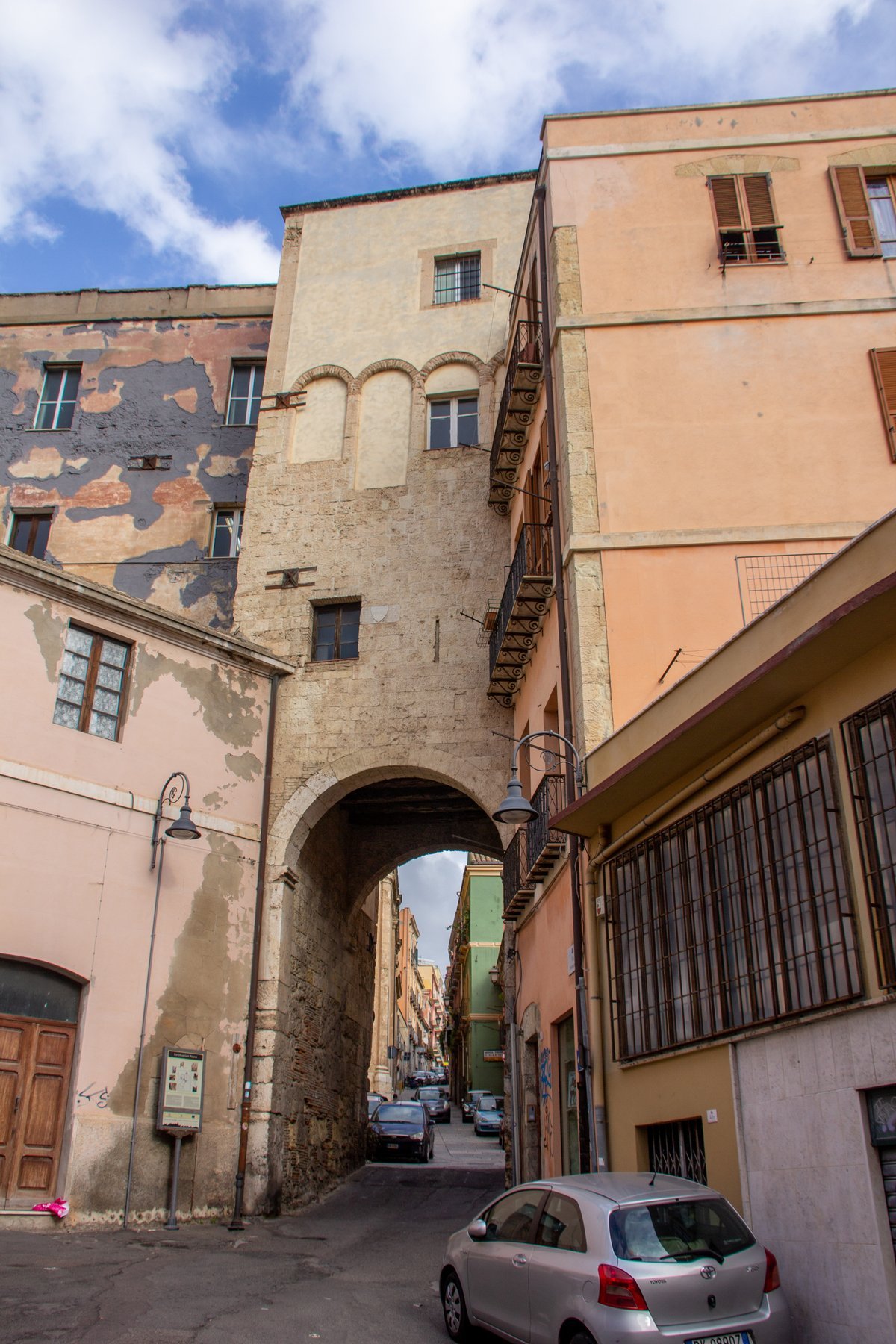 We begin the itinerary from a hidden gem: the Spur Tower, also known as the Alberti Tower. Built in 1293 by the Pisans, it is the oldest medieval tower in the city. Slightly over 20 meters tall, with a quadrangular plan, it rises above a round-arched gate that was once the fortified entrance to the Stampace district. Today it is almost embedded among modern buildings, but if you look carefully you will notice on the facade a Latin inscription recalling the Pisan captain Alberti and his family’s coat of arms. The tower is the only surviving one of Stampace’s three original gates, and its arrow slit tells centuries of defense. Strolling between Via Porto Scalas and Via Ospedale, you will feel as if you have stepped back in time, among limestone and blind loggias. A perfect start to discover the medieval face of Cagliari.
- Via Ospedale, Casteddu/Cagliari (CA)
- Open in Google Maps
- View on Google Images

You should go if…
Stop no. 2
Public Gardens: The Green Lung of Castello
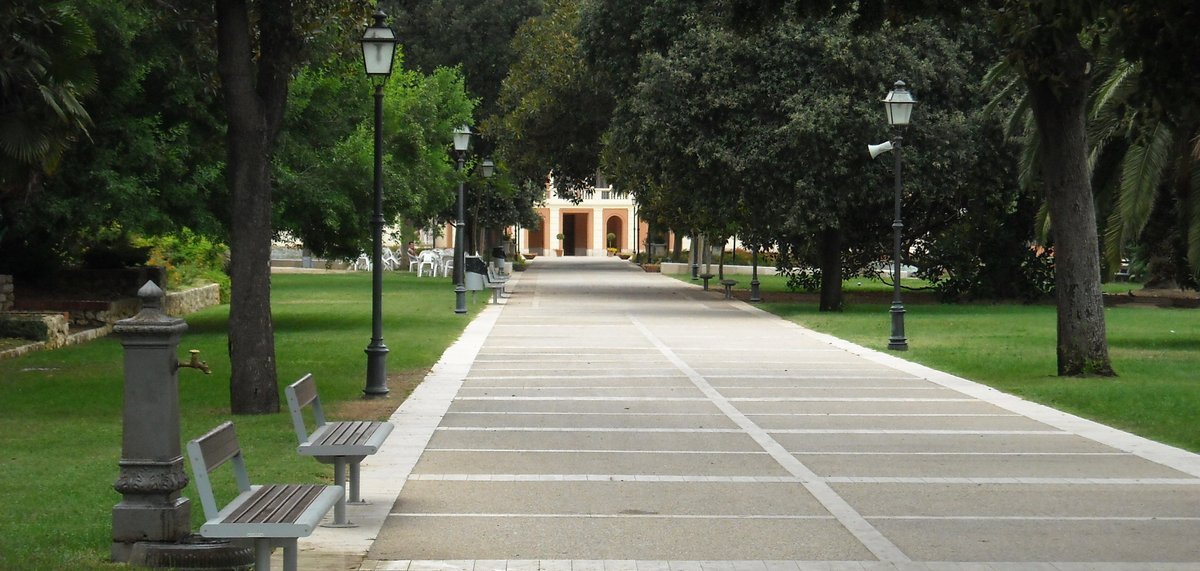 After exploring the medieval towers, a stop at the Public Gardens is a must. Inaugurated in 1840, they are the oldest urban park in Cagliari, spanning just over two hectares between the La Vega district and the castle. Here, in the shade of about sixty centenarian plants – including two majestic ficus magnolioides nearly 130 years old – you can breathe in a relaxed atmosphere. The three-hundred-meter central avenue is lined with fountains and sculptures: the marble statues of the four seasons, repeatedly vandalized, have recently been restored. The former gunpowder warehouse houses the Municipal Art Gallery, and from the perimeter wall you can spot pink flamingos in the Molentargius ponds. A small green gem where history, art, and nature blend together.
- Casteddu/Cagliari (CA)
- Open in Google Maps
- View on Google Images
You should go if…
Stop no. 3
Tuvixeddu Archaeological Park
 After leaving the Public Gardens, you’ll dive into the past at the Tuvixeddu Archaeological Park, the largest Punic necropolis in the Mediterranean. Here, on the hill overlooking the Santa Gilla lagoon, there are over a thousand pit tombs carved into the limestone rock between the 6th and 3rd centuries BC. Walking along the paths, you’ll notice the vertical shafts leading to burial chambers, some as deep as 11 meters. The wall paintings—such as those in the Tomba dell’Ureo and the Tomba del Sid—are unique in Sardinia, featuring astral symbols and warrior figures. The park is open daily with varying hours (from 6:00 am to 10:30 pm in summer) and entry is free. Unfortunately, recent history has been marked by cement quarries that destroyed part of the site, but restoration is now underway. A place that speaks of life, death, and resilience, waiting to be explored.
- Go to the page: Tuvixeddu: The Largest Punic Necropolis in the Mediterranean
- Via Falzarego 32, Casteddu/Cagliari (CA)
- Open in Google Maps
- View on Google Images
You should go if…
Stop no. 3
Tuvixeddu Archaeological Park
After leaving the Public Gardens, you’ll dive into the past at the Tuvixeddu Archaeological Park, the largest Punic necropolis in the Mediterranean. Here, on the hill overlooking the Santa Gilla lagoon, there are over a thousand pit tombs carved into the limestone rock between the 6th and 3rd centuries BC. Walking along the paths, you’ll notice the vertical shafts leading to burial chambers, some as deep as 11 meters. The wall paintings—such as those in the Tomba dell’Ureo and the Tomba del Sid—are unique in Sardinia, featuring astral symbols and warrior figures. The park is open daily with varying hours (from 6:00 am to 10:30 pm in summer) and entry is free. Unfortunately, recent history has been marked by cement quarries that destroyed part of the site, but restoration is now underway. A place that speaks of life, death, and resilience, waiting to be explored.- Go to the page: Tuvixeddu Archaeological Park: The Largest Punic Necropolis in the Mediterranean in Cagliari
- Via Falzarego 32, Casteddu/Cagliari (CA)
- Open in Google Maps
- View on Google Images
You should go if…
Stop no. 4
Calamosca Tower: Sentinel of the Gulf
 From the archaeological park, head down to the sea and you’ll find yourself facing the Calamosca Tower, one of the most imposing sentinels of the gulf. Built in 1638 by the Spanish, this truncated cone tower – 17 meters high with a base diameter of 21 meters – was equipped with large-caliber cannons, earning it the name ‘tower of arms’. But it was also the ‘tower of signals’, because from here luminous messages were sent to the Castle of Cagliari. In 1793, its fire helped repel the French fleet. Today the tower is inside a military area – you cannot enter – but its squat profile and the nearby lighthouse (from 1850) frame one of the most beautiful views of the city and the Gulf of Angels. The small beach of Calamosca, right below, is the perfect spot for a break: clear water and granite rocks. A tip? Bring your camera: at sunset, the light here is magical.
- Go to the page: Calamosca Tower: 1638 Spanish Tower with 360° Views Over the Gulf of Angels
- Viale Calamosca, Casteddu/Cagliari (CA)
- Open in Google Maps
- View on Google Images
You should go if…

