Nora is much more than an archaeological site: it’s a journey into ancient Sardinia, among Phoenicians, Punics, and Romans, with a still-active theater and breathtaking mosaics. All just steps from a light sandy beach, perfect for families. Here’s what not to miss:
– Roman Theater: the only one in Sardinia still used for performances.
– Baths with mosaics: well-preserved remains from the 2nd-3rd century AD.
– Nora Beach: clear waters and shallow seabed, ideal for children.
– Festival of Sant’Efisio: on May 3rd, the procession reaches the small church on the beach.
Nora: A Dive into History Between Phoenicians and Romans
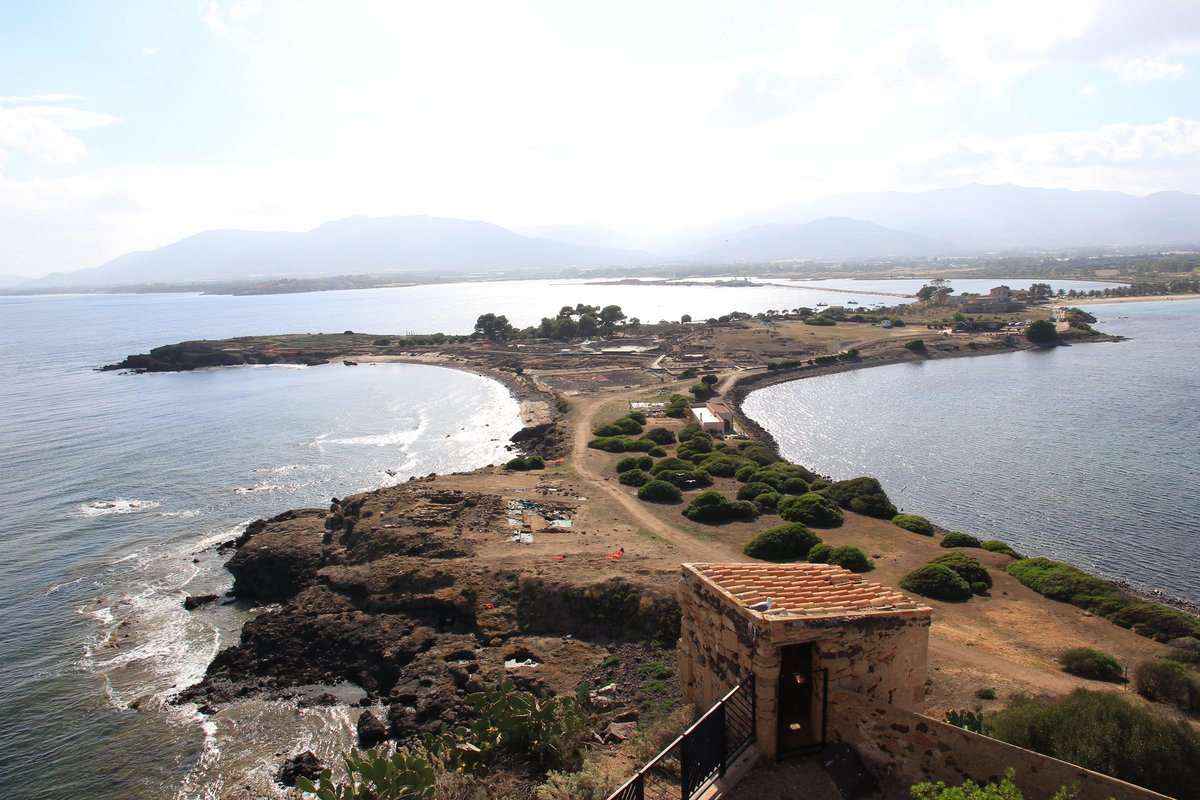
Walking among the ruins of Nora is like stepping back in time, but with eyes full of blue. Overlooking the sea of Pula Bay, this ancient city offers a perfect mix of archaeology and beach. Here, the Phoenicians founded the first settlement around the 8th century BC, followed by the Carthaginians and Romans. Today you can visit the still-active Roman theater, the baths with beautiful mosaics, and the forum. And after the visit? Take a dip in the crystal-clear waters of Nora Beach, just steps away. It’s one of those places that stays with you.
Nora: A Dive into History Between Phoenicians and Romans
Walking among the ruins of Nora is like stepping back in time, but with eyes full of blue. Overlooking the sea of Pula Bay, this ancient city offers a perfect mix of archaeology and beach. Here, the Phoenicians founded the first settlement around the 8th century BC, followed by the Carthaginians and Romans. Today you can visit the still-active Roman theater, the baths with beautiful mosaics, and the forum. And after the visit? Take a dip in the crystal-clear waters of Nora Beach, just steps away. It’s one of those places that stays with you.
Historical Overview
Nora is considered the oldest city in Sardinia. According to legend, it was founded by the hero Norax. The earliest remains date back to the Phoenician period (8th-6th century BC), with the famous tophet and the Nora stele. During the Punic era, it became an important commercial center. With the Roman conquest in 238 BC, Nora became the capital of the province of Sardinia and Corsica. It experienced its greatest splendor between the 2nd and 3rd centuries AD, with the construction of a theater, baths, and aqueduct. Abandonment began in the 5th century due to Vandal incursions, and by the 7th-8th century the city was deserted. Rediscovered in the 1800s, systematic excavations began in 1952.
- 8th-6th century BC: Phoenician foundation
- 238 BC: Roman conquest
- 2nd-3rd century AD: peak development
- 7th-8th century: abandonment
- 1952: systematic excavations
Historical Overview
Nora is considered the oldest city in Sardinia. According to legend, it was founded by the hero Norax. The earliest remains date back to the Phoenician period (8th-6th century BC), with the famous tophet and the Nora stele. During the Punic era, it became an important commercial center. With the Roman conquest in 238 BC, Nora became the capital of the province of Sardinia and Corsica. It experienced its greatest splendor between the 2nd and 3rd centuries AD, with the construction of a theater, baths, and aqueduct. Abandonment began in the 5th century due to Vandal incursions, and by the 7th-8th century the city was deserted. Rediscovered in the 1800s, systematic excavations began in 1952.
- 8th-6th century BC: Phoenician foundation
- 238 BC: Roman conquest
- 2nd-3rd century AD: peak development
- 7th-8th century: abandonment
- 1952: systematic excavations
What to See: The Theater and the Mosaics
Nora’s Roman theater is one of the best preserved on the island, built in the 1st century BC. It still hosts performances today, like the La Notte dei Poeti festival in July. While wandering through the ruins, don’t miss the baths: the floor mosaics are incredible, dating from the 2nd to 4th century AD. The house of the tetrastyle atrium has geometric and figurative mosaics. The forum, with honorific statues, was the heart of public life. And if you turn towards the sea, you’ll see the 16th-century Spanish tower that defended the coast. Bring your camera: great shots are guaranteed.
What to See: The Theater and the Mosaics
Nora’s Roman theater is one of the best preserved on the island, built in the 1st century BC. It still hosts performances today, like the La Notte dei Poeti festival in July. While wandering through the ruins, don’t miss the baths: the floor mosaics are incredible, dating from the 2nd to 4th century AD. The house of the tetrastyle atrium has geometric and figurative mosaics. The forum, with honorific statues, was the heart of public life. And if you turn towards the sea, you’ll see the 16th-century Spanish tower that defended the coast. Bring your camera: great shots are guaranteed.
The Tophet and the Phoenician Legacy
One of the most evocative sites in Nora is the tophet, the sacred Punic area discovered in 1889 after a storm. Here, votive stelae dedicated to the goddess Tanit were placed, often shaped like betyls or bearing the sign of Tanit (triangle and circle). The stelae are made of local sandstone and range from a few centimeters to over a meter in height. The tophet offers a window into the religious practices of the Phoenicians and Carthaginians. Nearby stand the Temple of Tanit and the Sanctuary of Asclepius-Eshmun, featuring a statue of the sleeping god. It is a dive into a distant past, filled with rites and mysteries.
The Tophet and the Phoenician Legacy
One of the most evocative sites in Nora is the tophet, the sacred Punic area discovered in 1889 after a storm. Here, votive stelae dedicated to the goddess Tanit were placed, often shaped like betyls or bearing the sign of Tanit (triangle and circle). The stelae are made of local sandstone and range from a few centimeters to over a meter in height. The tophet offers a window into the religious practices of the Phoenicians and Carthaginians. Nearby stand the Temple of Tanit and the Sanctuary of Asclepius-Eshmun, featuring a statue of the sleeping god. It is a dive into a distant past, filled with rites and mysteries.
Why Visit It
Nora is worth a visit for at least three reasons. First: it’s a unique archaeological site for its location, right on the sea – combining culture and relaxation in one go. Second: the Roman theater is still functional – if you get the chance, go to an evening show in summer; the atmosphere is magical. Third: Nora’s beach is equipped and accessible to all, with light sand and shallow waters, perfect for families. In short, it’s not a dusty museum: it’s a living place where the past meets the present between a swim and a walk among the ruins.
Why Visit It
Nora is worth a visit for at least three reasons. First: it’s a unique archaeological site for its location, right on the sea – combining culture and relaxation in one go. Second: the Roman theater is still functional – if you get the chance, go to an evening show in summer; the atmosphere is magical. Third: Nora’s beach is equipped and accessible to all, with light sand and shallow waters, perfect for families. In short, it’s not a dusty museum: it’s a living place where the past meets the present between a swim and a walk among the ruins.
When to go
The best time to visit Nora? Early morning, right when it opens, or late afternoon. In summer the sun is strong and the site has little shade, so avoid the midday hours. Morning light or sunset makes the mosaics and the view even more beautiful. If you can, choose spring or fall: the weather is mild, there are fewer crowds, and you can enjoy the beach without the rush. But even in summer, with a hat and a water bottle, the experience is still fantastic.
When to go
The best time to visit Nora? Early morning, right when it opens, or late afternoon. In summer the sun is strong and the site has little shade, so avoid the midday hours. Morning light or sunset makes the mosaics and the view even more beautiful. If you can, choose spring or fall: the weather is mild, there are fewer crowds, and you can enjoy the beach without the rush. But even in summer, with a hat and a water bottle, the experience is still fantastic.
Exploring the Area
After Nora, don’t miss the little church of Sant’Efisio on the beach: according to tradition, the saint was martyred here, and on May 3rd the procession of Sant’Efisio arrives here from Cagliari. A stone’s throw away, the Nora lagoon is perfect for birdwatching or a kayak trip. If you have time, stop by the center of Pula, with shops and restaurants. For the more sporty, Su Guventeddu beach to the east is popular with kite and windsurfers. In short, the area offers much more than just an archaeological site.
Exploring the Area
After Nora, don’t miss the little church of Sant’Efisio on the beach: according to tradition, the saint was martyred here, and on May 3rd the procession of Sant’Efisio arrives here from Cagliari. A stone’s throw away, the Nora lagoon is perfect for birdwatching or a kayak trip. If you have time, stop by the center of Pula, with shops and restaurants. For the more sporty, Su Guventeddu beach to the east is popular with kite and windsurfers. In short, the area offers much more than just an archaeological site.