
If you only have one day to discover Ferrara, this walking itinerary through the UNESCO historic center is perfect for you. We'll start at the Castello Estense, the city's symbol with its moats and majestic towers, then immerse ourselves in the Renaissance atmosphere of Piazza delle Erbe and Piazza Trento e Trieste. We'll walk along Corso Ercole I d'Este, one of Italy's most beautiful streets, to the Palazzo dei Diamanti with its unique facade. We'll discover hidden courtyards, ancient workshops, and typical local spots to stop for a taste of Ferrara cuisine. A complete route that will make you fall in love with this city in just a few hours, ideal for a weekend or day trip. This Ferrara historic center itinerary will give you an unforgettable experience of art, history, and good food.
🗺️ Your trip at a glance
A 7-stop walking itinerary that crosses the UNESCO historic center of Ferrara, from the Este residence to the Renaissance mansions.
- Ideal for those with one day looking for a complete and walkable cultural route among the symbols of Ferrara's Renaissance.
- Highlights: Includes 7 main stops with interactive maps, from the Este Castle to the Palazzina di Marfisa d'Este, passing through the Palazzo dei Diamanti and the Cathedral.
- Perfect for travelers who want to discover art, history, and architecture in a linear, easy-to-follow route without rushing.
Itinerary stops
Stop no. 1
Este Castle
 Starting your day at Este Castle means immediately immersing yourself in the heart of Renaissance Ferrara. This imposing red-brick building, located at Largo Castello 1, dominates the historic center with its four corner towers and the moat still filled with water. Built in 1385 as a defensive fortress, it later became the residence of the powerful Este family. Today you can explore the frescoed halls, the prisons where illustrious figures like Giulio d'Este were held, and the perfectly preserved ducal kitchens. Climbing the towers offers a breathtaking view of Ferrara: you can take in the entire UNESCO World Heritage historic center at a glance. Don't miss the Chapel of Renée of France and the ducal apartments, where the splendor of the Este court comes back to life.
- Go to the page: Estense Castle Ferrara: Medieval Fortress with Frescoed Halls and Rampart Walkways
- Largo Castello 1, Ferrara (FE)
- https://www.castelloestense.it
- Open in Google Maps
- View on Google Images

You should go if...
Stop no. 2
Cathedral of Saint George the Martyr
 Leaving the Este Castle behind you, you'll find yourself facing the Cathedral of Saint George the Martyr, the city's main place of worship. Its façade in white and pink marble is a masterpiece of the transition from Romanesque to Gothic, with three richly decorated portals and an upper loggia. Upon entering, you'll immediately notice the contrast between the majestic exterior and the interior, which was remodeled in Baroque style after a fire in the 18th century. Don't miss the Cathedral Museum nearby, where works such as the Months of Ferrara and the Madonna of the Pomegranate are preserved. The bell tower, begun by Leon Battista Alberti, remained unfinished but still dominates the square with its imposing presence. It's one of the symbols of the UNESCO historic center, perfect for those seeking art and spirituality in a single glance.
- Go to the page: Ferrara's Cathedral of Saint George: White and Pink Marble Facade and Museum with Works by Cosmè Tura
- Via Guglielmo degli Adelardi, Ferrara (FE)
- Open in Google Maps
- View on Google Images
You should go if...
Stop no. 3
Municipal Palace
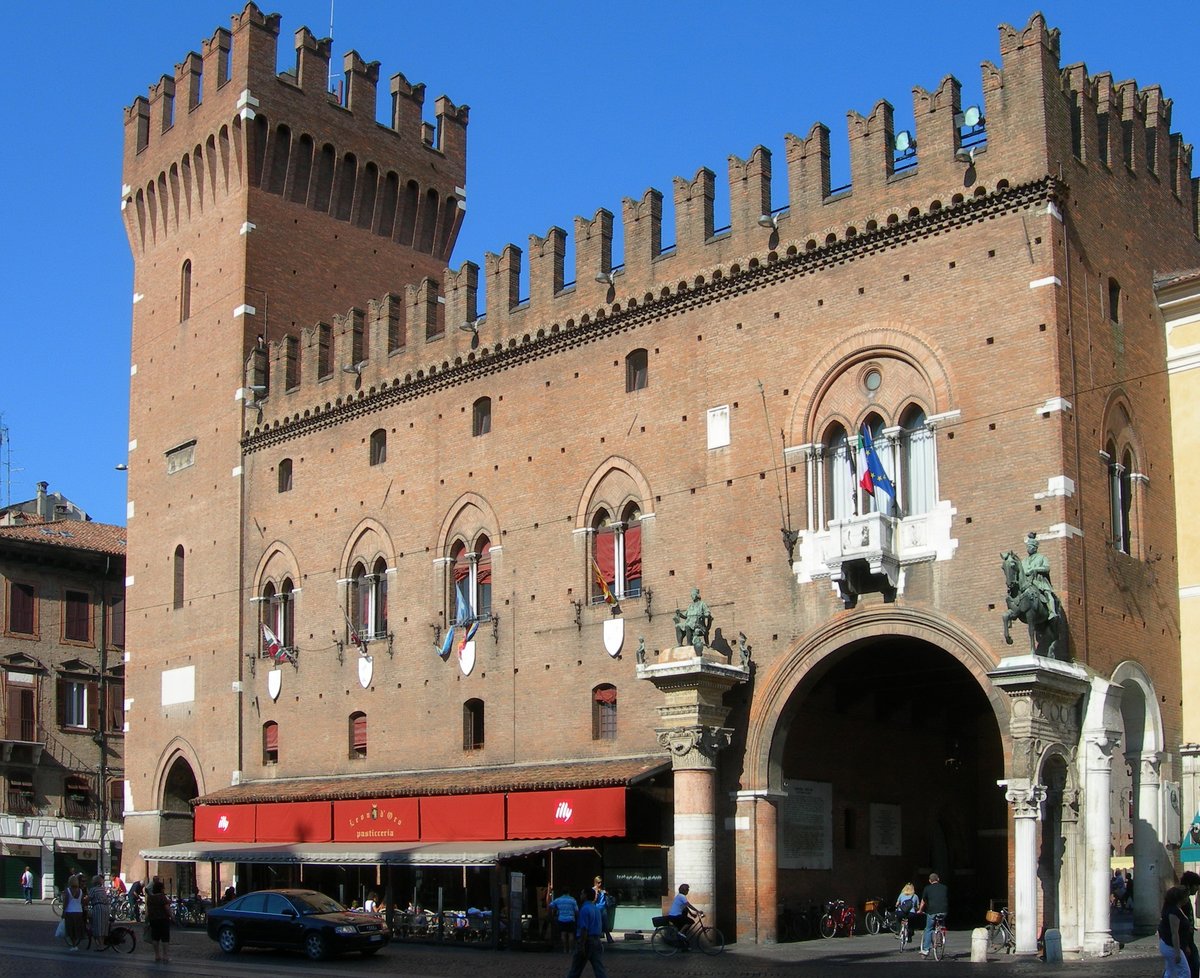 Continuing along Via Guglielmo degli Adelardi, you'll find yourself facing the Municipal Palace, the former Este residence that now houses the city's municipal offices. This building will strike you with its imposing Renaissance facade and the majestic ceremonial staircase, accessible through the inner courtyard. Don't miss the Este Hall, used for events and ceremonies, with its frescoes that narrate the city's history. The palace has been modified several times over the centuries, but still preserves the atmosphere of when it was the center of ducal power. It's a place where history can be felt with every step, perfect for understanding Ferrara's urban development.
- Via Guglielmo degli Adelardi, Ferrara (FE)
- Open in Google Maps
- View on Google Images
You should go if...
Stop no. 4
Diamond Palace
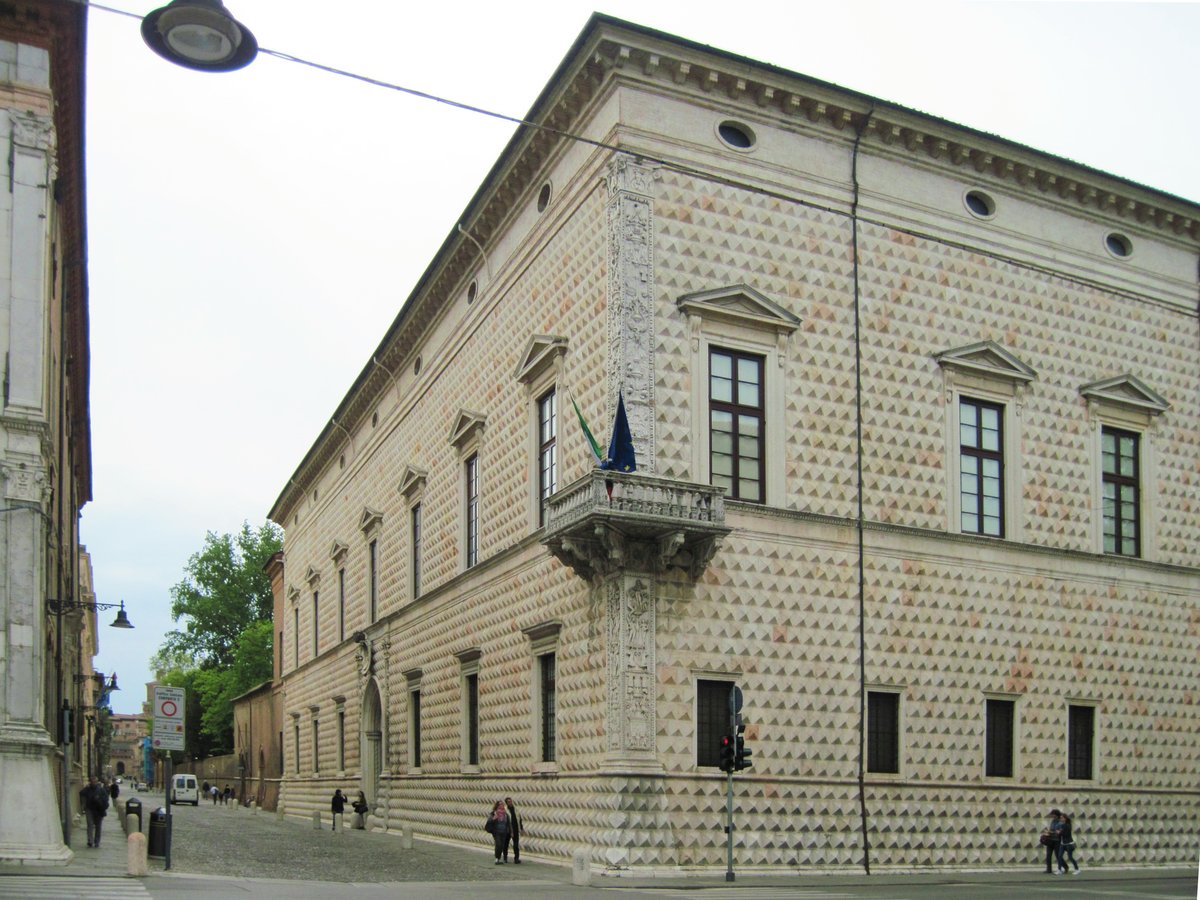 Leaving the Municipal Palace behind, head to Corso Biagio Rossetti to admire the Diamond Palace, famous for its unique facade in the world. The over 8,500 diamond-shaped ashlars, made of white and pink marble, create a shimmering effect with sunlight. Built at the end of the 15th century by order of Sigismondo d'Este based on a design by Biagio Rossetti, today it houses the National Picture Gallery with works by Ferrarese artists such as Cosmè Tura and Dosso Dossi. Inside, the Renaissance courtyard and frescoed halls transport you to the golden age of the Este family. It is one of the symbols of the Herculean Addition, the neighborhood designed to expand the city, and a perfect example of Italian Renaissance architecture.
- Go to the page: Palazzo dei Diamanti Ferrara: Facade with 8,500 Diamond-Shaped Bosses and the National Art Gallery
- Corso Biagio Rossetti, Ferrara (FE)
- Open in Google Maps
- View on Google Images
You should go if...
Stop no. 5
Ariostea Square
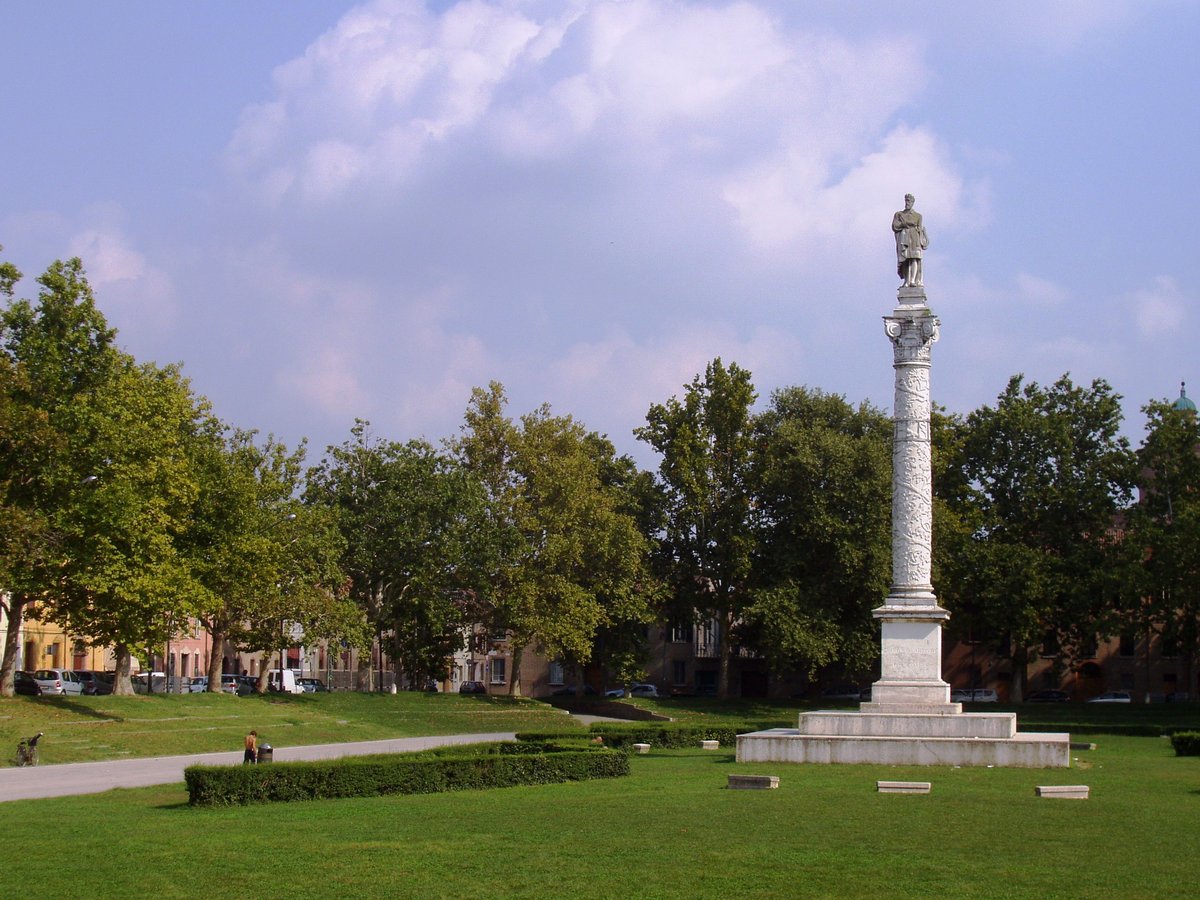 After admiring the unique facade of the Palazzo dei Diamanti, you find yourself in Ariostea Square, a vast open space that surprises with its elliptical shape and relaxed atmosphere. Designed in the 16th century as part of the Herculean Addition, this square was originally called Piazza Nuova and served as a venue for tournaments and celebrations. At its center stands the monument to Ludovico Ariosto, created in 1833 by Giovanni Duprè, which honors the famous Ferrarese poet, author of Orlando Furioso. Surrounded by historic buildings and ancient trees, the square offers a refreshing break during your walking tour. It's here that the Palio di Ferrara takes place every year, one of Italy's oldest horse races, reviving the city's medieval traditions.
- Ferrara (FE)
- Open in Google Maps
- View on Google Images
You should go if...
Stop no. 6
Basilica of San Francesco
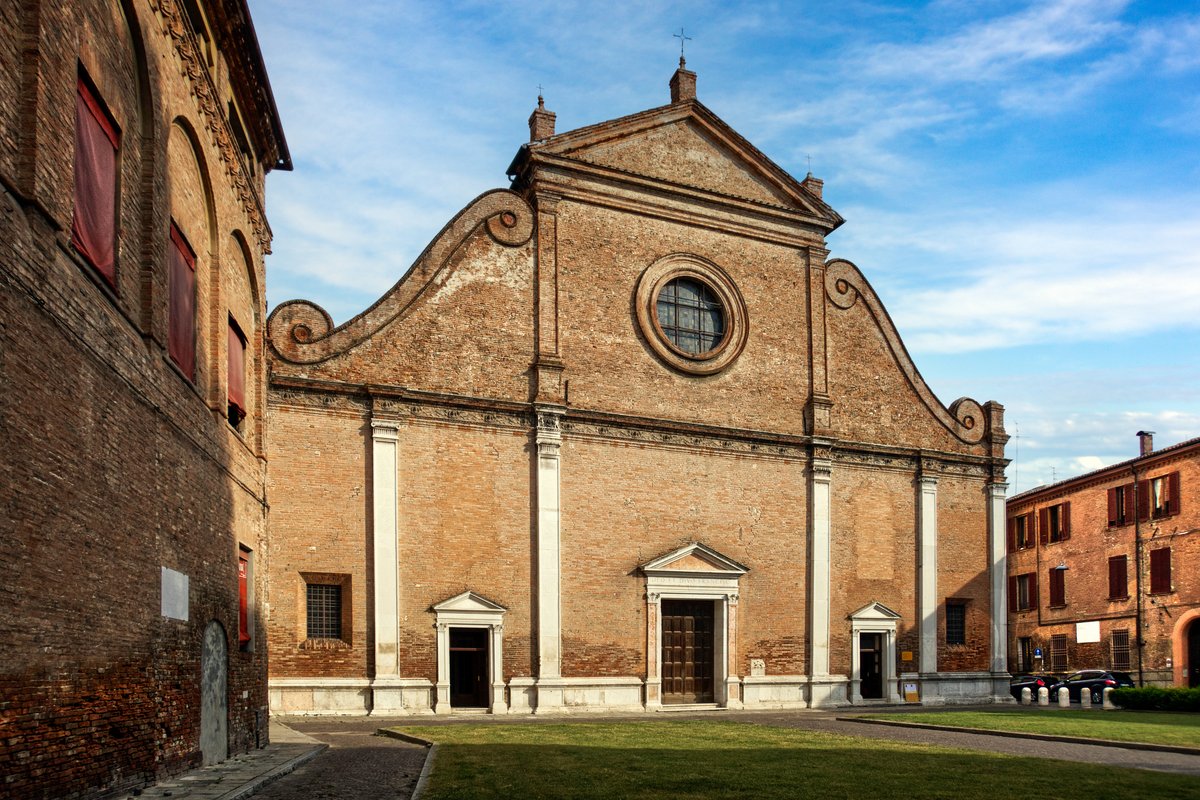 Leaving behind the expansive breath of Piazza Ariostea, you immerse yourself in the intimate atmosphere of Via Savonarola, where the Basilica of San Francesco stands. This place of worship, founded in the 13th century, represents one of the most significant examples of Gothic architecture in Ferrara. The brick façade, typical of Ferrarese tradition, welcomes you with its essential elegance, while the three-nave interior surprises with its sobriety and the light filtering through the stained-glass windows. Here rest important historical figures linked to the city, and the remaining frescoes, though partial, testify to the ancient artistic splendor. The basilica has been modified several times over the centuries, but it retains its medieval charm intact, offering a moment of reflection away from the hustle and bustle of the city center. It is a must-see for those who want to discover the Franciscan roots of Ferrara and admire an architecture that has withstood the test of time.
- Via Savonarola, Ferrara (FE)
- Open in Google Maps
- View on Google Images
You should go if...
Stop no. 7
Marfisa d'Este's Palace
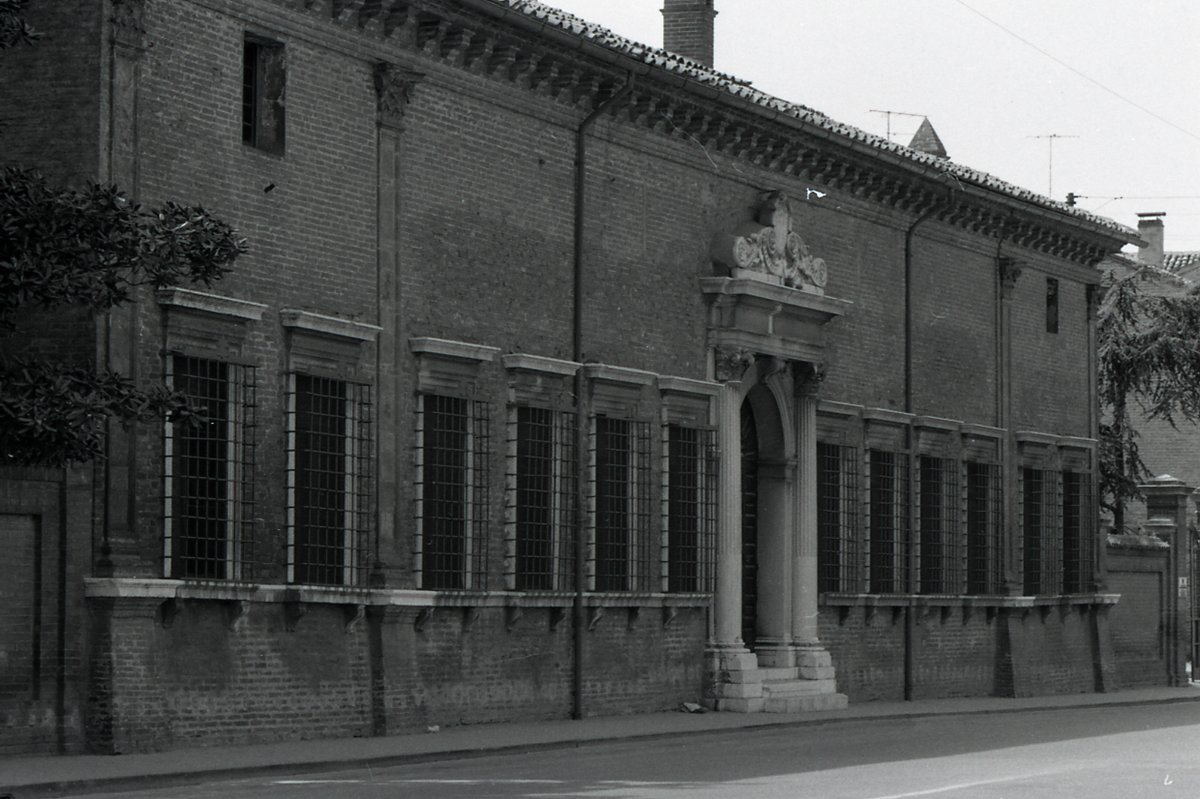 After leaving the solemn atmosphere of the Basilica of San Francesco, you find yourself along Corso della Giovecca, where Marfisa d'Este's Palace stands. This 16th-century residence, which belonged to the daughter of Francesco I d'Este, welcomes you with its elegant and intimate appearance, a stark contrast to the grand palaces of power. Inside, the rooms preserve original frescoes, decorated fireplaces, and period furnishings that recreate the atmosphere of a noble residence. The hanging garden, a hidden green corner, offers an ideal moment of tranquility for a break. Visiting this place means immersing yourself in the daily life of Ferrara's nobility, away from the official pomp but rich in authentic details. It's a stop that completes the picture of the city's Renaissance, also revealing its private and familial dimension.
- Corso della Giovecca, Ferrara (FE)
- Open in Google Maps
- View on Google Images
You should go if...