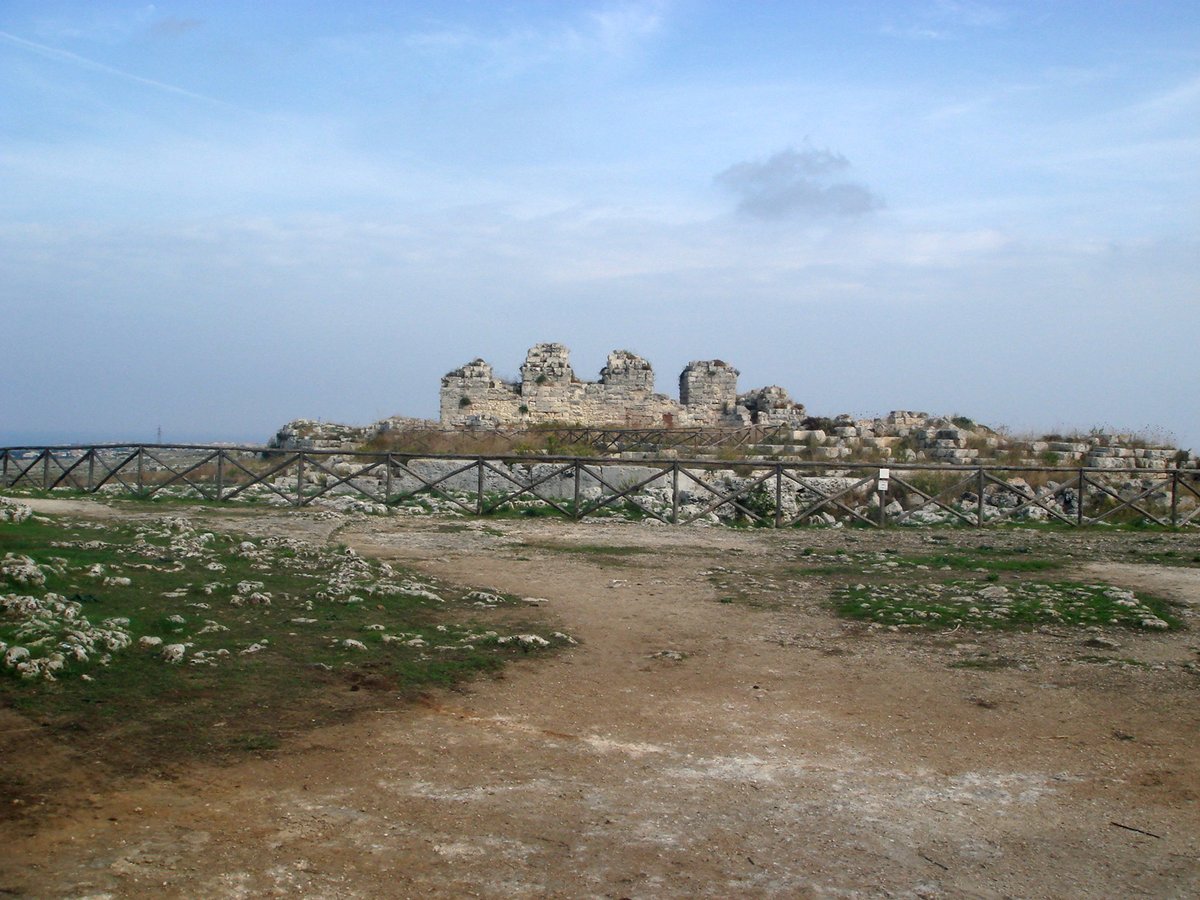
Eurialo Castle: Dionysius I’s Greek Fortress in Syracuse

Eurialo Castle is a masterpiece of Greek military engineering that overlooks Syracuse from above. Built in the 5th century BC at the behest of the tyrant Dionysius I, it represents the most imposing defensive work of antiquity in Sicily. Its strategic position offers a breathtaking view of the city and the sea, while its structures tell centuries of history.

The largest Greek fortress in Sicily spanning over 7 hectares
Secret passages and underground tunnels that connected different parts of the fortress
Three concentric moats and five towers forming an impenetrable defensive system
Unique panoramic view of Syracuse, the island of Ortigia, and the Ionian Sea


Events nearby


Copertina itinerario Eurialo Castle: Dionysius I's Greek Fortress in Syracuse
The largest Greek fortress in Sicily, built by Dionysius I in the 5th century BC to defend Syracuse. Discover the secret passages, towers, and moats that make this archaeological visit unique.

Good to know


Introduction

Reaching the Eurialo Castle is like discovering a secret the earth has kept for centuries. You don’t expect such grandeur, hidden as it is among the hills of Syracuse, but when you stand before those stone bastions silhouetted against the blue sky, you immediately understand you’re in a special place. The feeling is that of walking through history, touching the military ingenuity of the Greeks firsthand. It’s not just an archaeological ruin: it’s a place that makes you feel small in the face of the greatness of the past, with a panoramic view over the Syracuse plain that alone is worth the journey. Personally, I was struck by the silence that reigns here, broken only by the wind whistling through the ancient walls.

Historical Overview

The Eurialo Castle was built between 402 and 397 BC at the behest of Dionysius I, the tyrant of Syracuse who wanted to protect the city from Carthaginian attacks. It wasn’t just a simple fortress: it was a cutting-edge defensive system for its time, with moats, towers, and underground passages designed to confuse the enemy. Imagine that some of these tunnels were so ingenious that they allowed soldiers to move without being seen. Over the centuries, the castle was also modified by the Byzantines, who strengthened its structures. What we see today is the result of these historical layers, a puzzle of different eras that archaeologists continue to study.

  • 402-397 BC: Construction at the behest of Dionysius I
  • Byzantine era: Modifications and reinforcement of defenses
  • Modern excavations: Rediscovery and enhancement of the site

The Secret Passages and Moats

One of the things that fascinated me most while visiting the Euryalus Castle were precisely the underground passages and moats, which demonstrate how advanced Greek military engineering was. Walking among the ruins, you immediately notice the three moats carved into the rock to block enemy advancement. But it’s when you enter the tunnels that the visit becomes truly thrilling: these dark, narrow corridors were designed to allow rapid and hidden troop movements. Some lead to firing positions, others to collection chambers. They aren’t very long, but the atmosphere you breathe is unique: damp, silent, steeped in history. I recommend bringing a flashlight (your phone’s light works fine) to explore them better and imagine the soldiers who prepared for battle here.

The Towers and the Panoramic View

Climbing the surviving towers of the Eurialo Castle offers one of the most spectacular views in the entire province of Syracuse. From up here, you dominate the entire plain below, with your gaze stretching all the way to the distant sea. The towers, built in strategic points, weren’t just for spotting enemies: they were also active defense positions. Today, unfortunately, not all of them are safely accessible, but those that can be visited offer breathtaking glimpses. My favorite is the one facing north, from which you can perfectly see the ancient Elorina road. When I was there, a golden sunset light made everything magical. Be careful though: the stairs are steep and sometimes lack handrails, so caution is needed.

Why Visit It

Visiting the Eurialo Castle is worthwhile for at least three concrete reasons. First: it’s a unique example of Greek military architecture in Sicily, so well-preserved that it truly helps you understand how ancient defenses worked. Second: the panoramic location is incredible, with a 360-degree view that lets you appreciate the geography of the Syracusan territory. Third: it’s never as crowded as other archaeological sites in the area, so you can explore it calmly, almost in solitude. I spent an entire afternoon there without getting bored for a moment, between photos, explorations, and moments of simple contemplation. If you love history without frills, this is the right place.

When to Go

The best time to visit the Eurialo Castle? Definitely early morning or late afternoon, when the sun isn’t too strong and the light is softer. In summer, avoid the midday hours: there’s no shade and the heat can be intense. In spring and autumn, however, it’s almost always pleasant, with mild temperatures that invite leisurely exploration. I was there in October and there was a perfect golden light for photos. In winter, it can be windy, but the clear sky offers even sharper views. In short, every season has its charm; you just need to plan with appropriate clothing.

In the Surroundings

After visiting the Eurialo Castle, I recommend exploring two other places that perfectly complement the Syracusan experience. The first is the Archaeological Park of Neapolis, with its famous Greek Theatre still used for performances. There you understand the civic greatness of Syracuse, while at the Castle you discover its military power. The second is the Ortigia district, the historic heart of the city: get lost in the alleys, admire the Cathedral that incorporates a Greek temple, and sample something typical in one of the local spots. They are two sides of the same coin, both essential to understanding this land.

Itineraries nearby


💡 Did You Know…?

Legend has it that the name Eurialo derives from the pointed shape of the rock, similar to a nail (in Greek ‘eurialos’). During excavations, catapult projectiles and remains of war machines were found, concrete testimonies of the sieges it endured. The central cistern, still visible, ensured water supply during long sieges. A little-known detail: some tunnels were so narrow that only one person could pass through at a time, making the defense even more effective.