
If you only have one day to discover Taranto, this itinerary through the historic center is perfect for you. We'll start at the Aragonese Castle, the fortress overlooking the Mar Piccolo, then immerse ourselves in the alleys of the Island, the ancient heart of the city. We'll visit the Cathedral of San Cataldo with its Baroque chapel and crypt, and discover the remains of the Doric Temple, evidence of Greek Taranto. We'll walk along the Vittorio Emanuele III waterfront promenade, admiring the swing bridge and noble palaces. This Taranto historic center itinerary allows you to capture the essence of the city in just a few hours, between millennia of history and authentic atmospheres, with stops to taste Mar Piccolo oysters or a coffee in one of the typical cafés.
🗺️ Your trip at a glance
A one-day walking itinerary that traverses the ancient heart of Taranto, from the Greco-Roman era to the Baroque period, among symbolic monuments and authentic atmospheres.
- Ideal for travelers seeking an intense cultural experience in one day, between millennia of history and glimpses of the sea.
- Highlights: a walking route with 7 defined stops, including the Aragonese Castle, Doric Temple, Cathedral of San Cataldo, and Peripato Gardens, with maps for each location.
- Perfect for those who want to discover Taranto's historical stratification, from Magna Graecia to the 19th century, without missing moments of relaxation in panoramic gardens.
Itinerary stops
Stop no. 1
Aragonese Castle
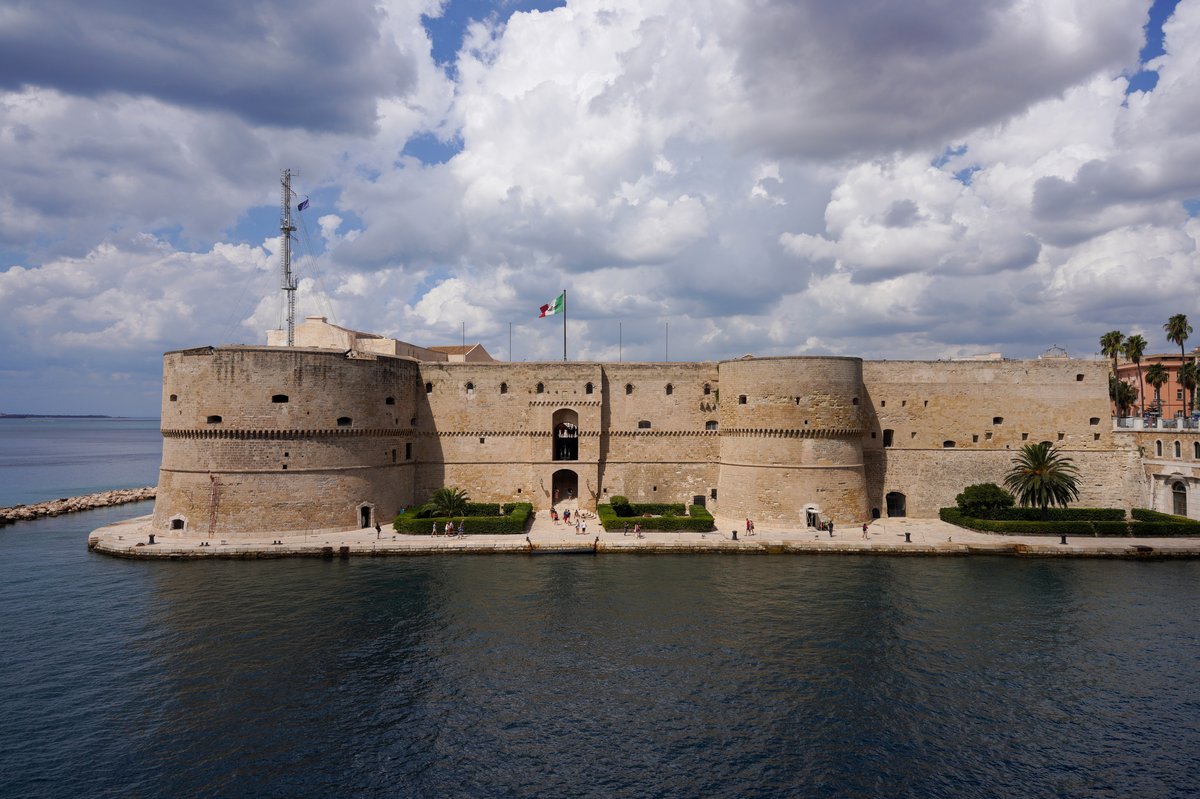 Starting the day at the Aragonese Castle means immediately immersing yourself in the heart of Taranto's history. Located in Piazza Castello, this imposing 15th-century fortress overlooks the Small Sea, offering a breathtaking view that embraces the swing bridge and the historic center. Commissioned by Ferdinand I of Aragon to defend the city from sea attacks, the castle still preserves its characteristic cylindrical towers and reinforced bastions. Today it houses the Italian Navy Command, but it's visitable with guided tours that reveal inner courtyards, chapels, and the original defensive structures. It's a perfect example of Renaissance military architecture, perfectly integrated into the urban landscape.
- Piazza Castello, Taranto (TA)
- Open in Google Maps
- View on Google Images

You should go if...
Stop no. 2
Doric Temple
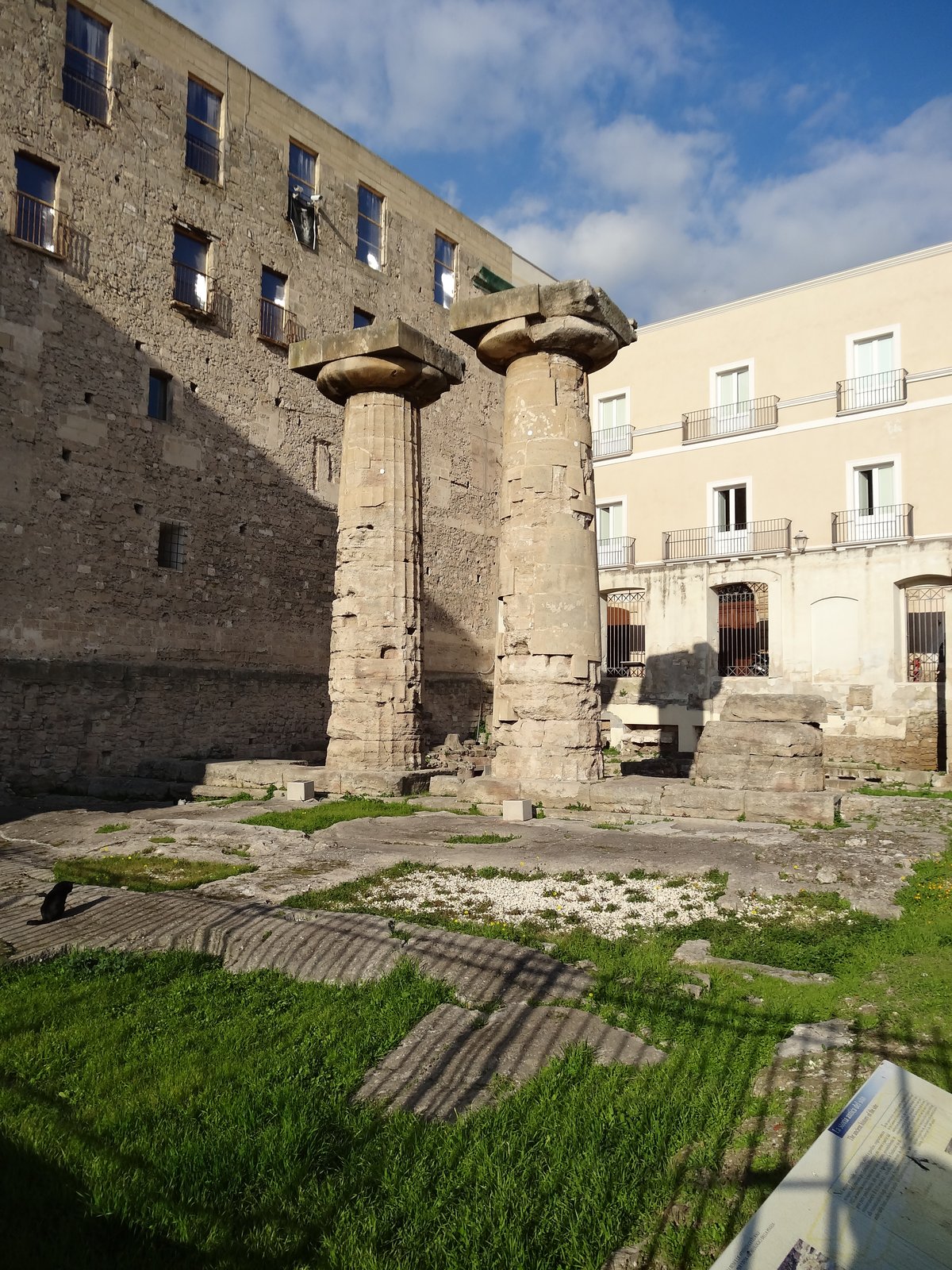 After visiting the Aragonese Castle, just a few steps away you can admire the Doric Temple, also located in Piazza Castello. This archaeological site dates back to the 6th century BC and is one of the few remains of ancient Taras, the Greek colony that founded the city. The two surviving columns, in Doric style, are built from local limestone and were part of a temple probably dedicated to Poseidon. Their position, overlooking the Mar Piccolo, offers a striking view that combines history and landscape. The area is freely accessible and allows you to experience firsthand the cultural layering of Taranto, from Magna Graecia to the present day. It's an ideal spot for a reflective pause, perhaps taking photos with the columns against the backdrop of the sea.
- Piazza Castello, Taranto (TA)
- Open in Google Maps
- View on Google Images
You should go if...
Stop no. 3
Cathedral of Saint Cataldus
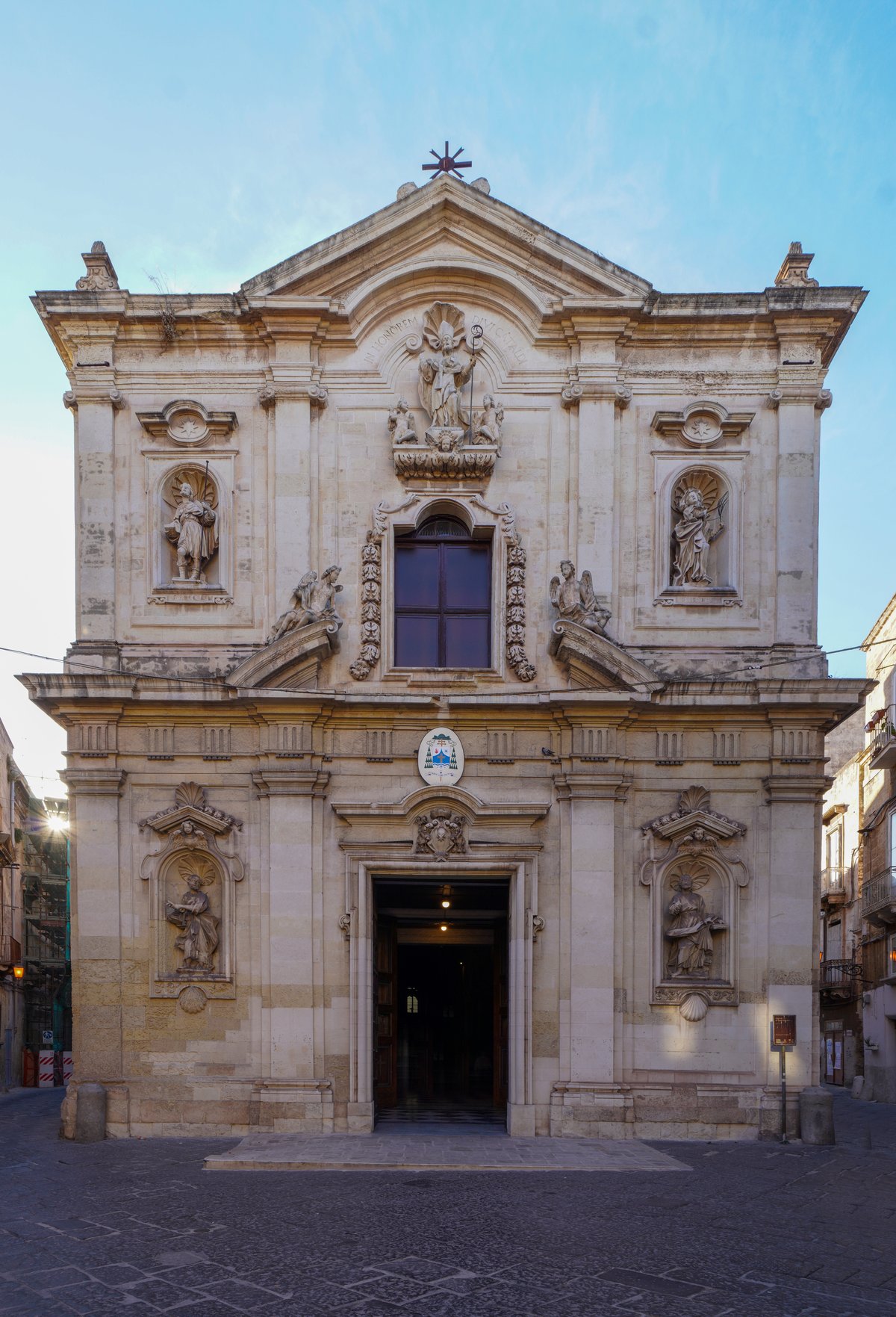 Leaving behind the ancient columns of the Doric Temple, you'll reach the Cathedral of Saint Cataldus in Largo Arcivescovado, the spiritual heart of the city. This sacred building, dedicated to Taranto's patron saint, features a Baroque facade that conceals Romanesque origins dating back to the 11th century. Inside, the Chapel of Saint Cataldus stands out, crafted from precious carparo marble and adorned with polychrome inlays, where the saint's relics are preserved. The crypt, accessible from the transept, contains Byzantine frescoes and medieval capitals that bear witness to the building's long history. The visit also allows you to admire the Cathedral Treasury, with sacred objects from the Angevin and Aragonese periods. The intimate atmosphere and light filtering through the stained-glass windows create an evocative setting, perfect for a moment of reflection during your exploration of the historic center.
- Go to the page: San Cataldo Cathedral in Taranto: Baroque chapel with silver altar and medieval crypt
- Largo Arcivescovado, Taranto (TA)
- Open in Google Maps
- View on Google Images
You should go if...
Stop no. 4
Mudi Diocesan Museum of Taranto
 After admiring the grandeur of the Cathedral of San Cataldo, you'll venture into the Mudi Diocesan Museum, located at Vico Seminario I, 2. This museum, set up in the former Archbishop's Seminary, houses an invaluable artistic and liturgical heritage. Among the most significant pieces are the 18th-century sacred vestments, embroidered with gold and silver threads, and the altarpieces from the Neapolitan school. Particularly noteworthy is the collection of sacred silverware, including chalices, monstrances, and reliquaries crafted between the 16th and 19th centuries. The visit also allows you to discover illuminated manuscripts and historical documents that recount the life of the Taranto diocese. The carefully detailed exhibition enhances each work with studied lighting that highlights its beauty.
- Go to the page: MUDI Taranto: Byzantine Gold and Medieval Relics in the Heart of the Ancient Village
- Vico Seminario I 2, Taranto (TA)
- http://www.museodiocesanotaranto.it
- Open in Google Maps
- View on Google Images
You should go if...
Stop no. 5
Clock Tower
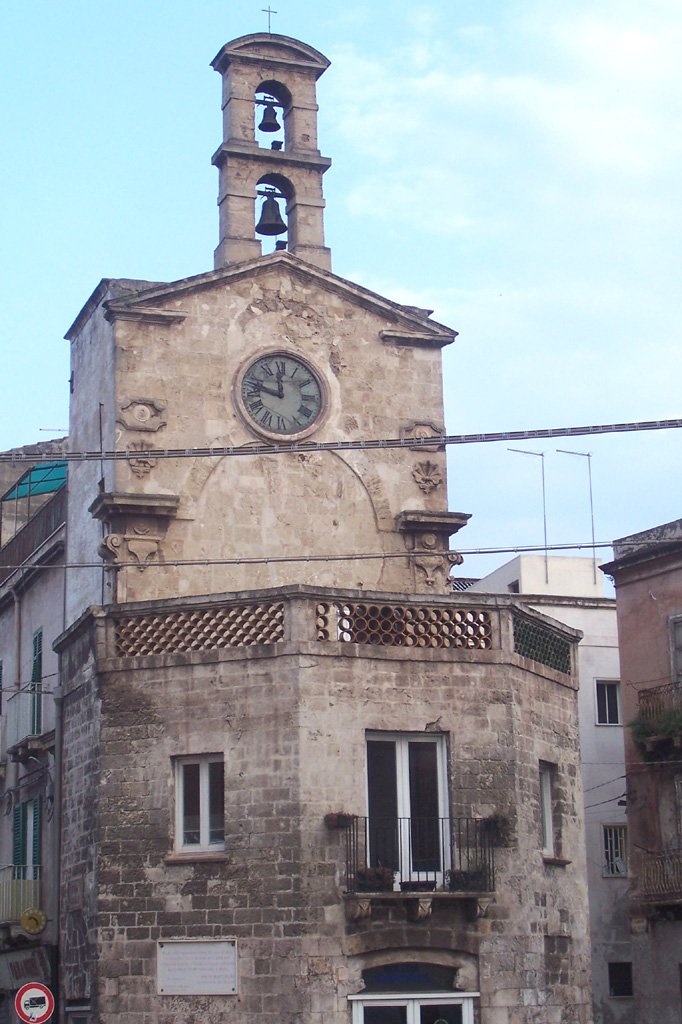 Leaving behind the precious collections of the Mudi Diocesan Museum, you arrive at the Clock Tower on Garibaldi Street, an architectural symbol that dominates the panorama of the ancient quarter. Built in the 19th century, this civic tower stands out for its original mechanical clock, still functioning, which for decades has marked the daily life of Taranto's residents. The structure, made of local stone, features neoclassical elements and a quadrangular base that rises upward, culminating in a characteristic spire. Looking closely, you'll notice the decorative details on the façades, including cornices and moldings that speak to the artistry of the era. The tower is not accessible internally, but its exterior offers a landmark for navigating the surrounding alleys, where you can breathe in the authentic atmosphere of the old city. It's an opportunity to grasp how public architecture has shaped Taranto's urban identity.
- Strada Garibaldi, Taranto (TA)
- Open in Google Maps
- View on Google Images
You should go if...
Stop no. 6
Peripato Gardens
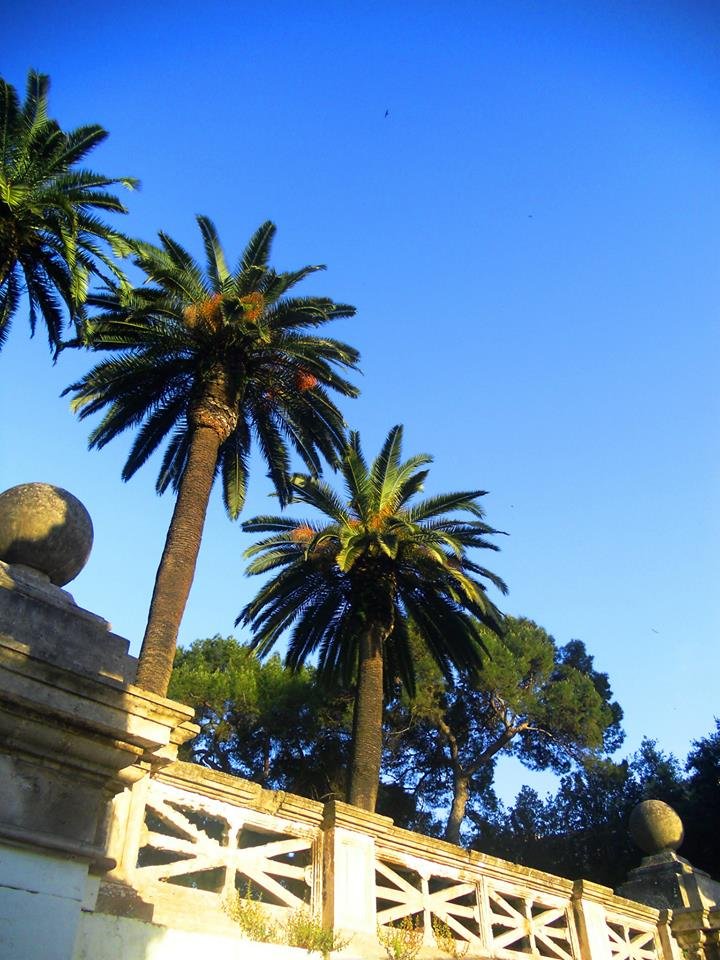 After admiring the Clock Tower on Via Garibaldi, the Peripato Gardens offer a refreshing break along the route through Taranto's historic centre. This green space, located just steps from the seafront, stands out for its geometric flowerbeds planted with Mediterranean species such as oleanders and palms, creating a pleasant contrast with the surrounding architecture. The tree-lined avenues invite a peaceful pause, while the views over the Mar Grande provide evocative glimpses towards the Aragonese Castle and the waters of the gulf. The gardens, created in the 19th century, are an example of urban design that combines functionality and aesthetics, with stone benches and fountains still used by locals. It is the ideal place to observe the daily life of the Tarantini, who gather here to stroll or read in the shade of the ancient trees.
- Taranto (TA)
- Open in Google Maps
- View on Google Images
You should go if...
Stop no. 7
Wind Rose Fountain
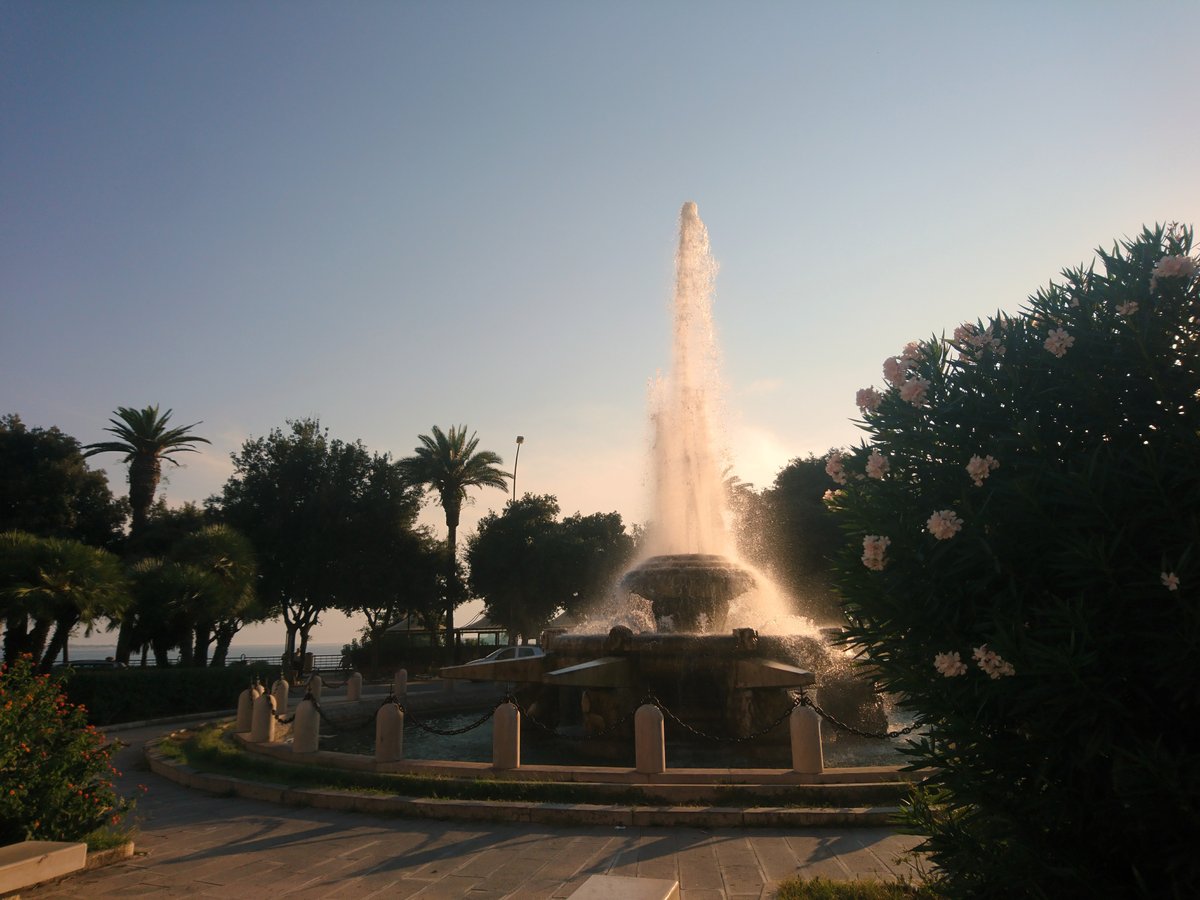 The Wind Rose Fountain in Piazza Ebalia represents a meeting point between modernity and maritime tradition. Crafted from white marble, the fountain features a circular base with engraved cardinal points and relief decorations evoking the waves of the Mar Grande. At its center, a spurting water jet creates unique light plays at sunset, when the sun's rays reflect off the wet surfaces. Its strategic location, near the waterfront and the Borgo Nuovo district, makes it a gathering spot for locals who pause here to chat or simply admire the view toward the Aragonese Castle. Unlike the gardens visited earlier, this monument celebrates the city's maritime identity through a contemporary design rich with historical meanings.
- Piazza Ebalia, Taranto (TA)
- Open in Google Maps
- View on Google Images
You should go if...