
Discover the charm of Teramo with this one-day itinerary in the historic centre, perfect for those seeking art and archaeology without venturing too far. Start at the Cathedral of Santa Maria Assunta with its Polyptych by Jacobello del Fiore, then immerse yourself in history at the Roman Theatre and the Roman Domus with its well-preserved mosaics. Continue to the Church of Sant'Anna dei Pompetti, one of the city's oldest sites, and admire historic palaces like Palazzo Savini. This route allows you to explore Teramo's treasures on foot in just a few hours, combining culture and convenience. Ideal for a weekend or a day trip, the Teramo historic centre art and archaeology itinerary will offer unique glimpses and a deep dive into Abruzzo's history.
🗺️ Your trip at a glance
A one-day walking itinerary through Teramo's historic center, perfect for discovering art and archaeology without stress. From the Roman Theater to the Cathedral, passing through ancient domus and churches, each stop tells centuries of history in a compact route.
- Ideal for: a one-day cultural outing or a weekend getaway, on foot without leaving the center.
- Highlights: 6 historical stops (Cathedral, Roman Theater, Torre Bruciata, Casa del Melatino, Domus del Leone, Piazza Sant'Anna) with an interactive map for easy navigation.
- For whom: travelers attentive to history and art, curious to discover Teramo's heritage in a practical and authentic way, away from tourist crowds.
Itinerary stops
Stop no. 1
Basilica Cathedral of Santa Maria Assunta and San Berardo
 Starting the Teramo: Art and Archaeology in the City Center itinerary from the Basilica Cathedral is the perfect choice to immediately immerse yourself in the city's historical heritage. Located in Piazza Ercole Vincenzo Orsini, this 12th-century cathedral impresses with its Romanesque facade and Gothic portal. Inside, the silver antependium by Nicola da Guardiagrele, a masterpiece of Abruzzese goldsmithing, and the crypt housing the relics of San Berardo, patron saint of Teramo, stand out. The basilica combines different styles, from Romanesque to Baroque, showcasing centuries of transformations. It's the ideal spot to understand Teramo's artistic evolution, with details like mosaics and sculptures that tell local stories. An essential stop for those wanting to discover the city's cultural roots.
- Go to the page: Teramo Cathedral: Silver Altar Frontal and 14th-Century Frescoes in the Historic Heart
- Piazza Ercole Vincenzo Orsini, Teramo (TE)
- Open in Google Maps
- View on Google Images

You should go if...
Stop no. 2
Roman Theatre of Teramo
 The Roman Theatre of Teramo, located in Largo Anfiteatro, is an unmissable stop for those wanting to immerse themselves in the city's history. Built in the 1st century AD, this archaeological site preserves part of the cavea and orchestra, offering an authentic glimpse into the cultural life of ancient Interamnia. The remains of the brick structures and stone steps testify to Roman architectural ingenuity. Walking among these ruins allows you to imagine the performances that took place here, with actors and audience animating the space. Its central location makes it easily accessible after visiting the Cathedral Basilica, ideally completing the exploration of Teramo's heritage. It's a place that fascinates with its simplicity and authenticity, far from the tourist crowds.
- Go to the page: Roman Theatre of Teramo: 3,000-seat cavea in the historic heart
- Largo Anfiteatro, Teramo (TE)
- Open in Google Maps
- View on Google Images
You should go if...
Stop no. 3
Burnt Tower
 Not far from the Roman Theatre, the Burnt Tower rises on Via Antica Cattedrale as an imposing testament to Teramo's medieval past. This circular brick tower, standing approximately 20 meters high, owes its name to a fire that marked its history. Built between the 12th and 13th centuries, it was part of the city's defensive system and still features the characteristic arrow slits and corbels that supported the walkways. Its strategic location, near the ancient cathedral, underscores its importance in controlling access to the religious and civic center. Observing its massive structure and the marks of time, one can sense the crucial role it played in protecting Teramo. It's a place that strikes with its essentiality and power, offering an authentic glimpse into Abruzzo's medieval fortifications.
- Via Antica Cattedrale, Teramo (TE)
- Open in Google Maps
- View on Google Images
You should go if...
Stop no. 4
Casa del Melatino
 Leaving the Torre Bruciata behind, you reach Largo dei Melatini, where Casa del Melatino stands—a 14th-century architectural gem. This brick building, with its façade featuring mullioned windows and hanging arches, represents one of the best-preserved examples of medieval civil architecture in Teramo. The name likely comes from the Melatino family who lived here, connected to the city's political life. The structure, with its pointed arch portal and decorated windows, shows the influence of Abruzzese Gothic style. Observing the details of the corbels and capitals, one can imagine daily life in the patrician houses of the 1300s. It's a place that impresses with its discreet elegance and intimate atmosphere, offering a moment of reflection between archaeological stops.
- Largo dei Melatini, Teramo (TE)
- Open in Google Maps
- View on Google Images
You should go if...
Stop no. 5
Domus and Lion Mosaic
 Just steps away from Casa del Melatino, on Via Antica Cattedrale, the Domus and Lion Mosaic reveals itself as one of Teramo's most evocative archaeological sites. This Roman residence from the imperial era preserves an exceptional polychrome mosaic floor, featuring the prominent figure of a lion, symbolizing strength and power. The remains of the domus, uncovered during recent excavations, reveal the organization of living spaces: residential rooms, courtyards, and service areas. The mosaic, crafted with marble and glass paste tesserae, displays extraordinary artisanal mastery, with geometric and figurative motifs that speak to the refined taste of its owners. Observing these details allows visitors to immerse themselves in the daily life of ancient Interamnia, capturing the elegance and complexity of Roman domestic architecture. A place that unites history and beauty, ideal for those who love archaeology without frills.
- Via Antica Cattedrale, Teramo (TE)
- Open in Google Maps
- View on Google Images
You should go if...
Stop no. 6
Piazza Sant'Anna
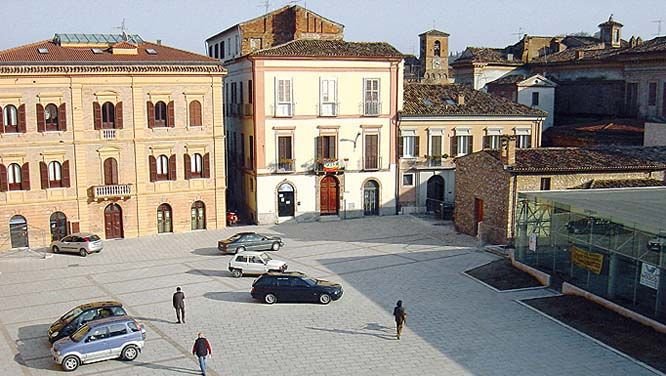 Leaving behind the archaeological treasures of the Domus del Leone, you'll reach Piazza Sant'Anna, an urban space that encapsulates centuries of Teramo's history. This irregular square takes its name from the Church of Sant'Anna, a building with medieval origins that preserves traces of various architectural eras. The square stands out for its intimate and authentic atmosphere, far from the main tourist flows. Here you breathe the most genuine Teramo, with its historic buildings discreetly overlooking the space and establishments frequented mainly by locals. Observing carefully, you'll notice the details of the façades that tell stories of urban transformations over time. This corner represents a perfect balance between historical memory and contemporary life, where the past silently converses with the present. Ideal for a refreshing break, the square also offers the opportunity to admire unexpected glimpses of the historic center.
- Piazza Sant'Anna, Teramo (TE)
- Open in Google Maps
- View on Google Images
You should go if...