Introduction
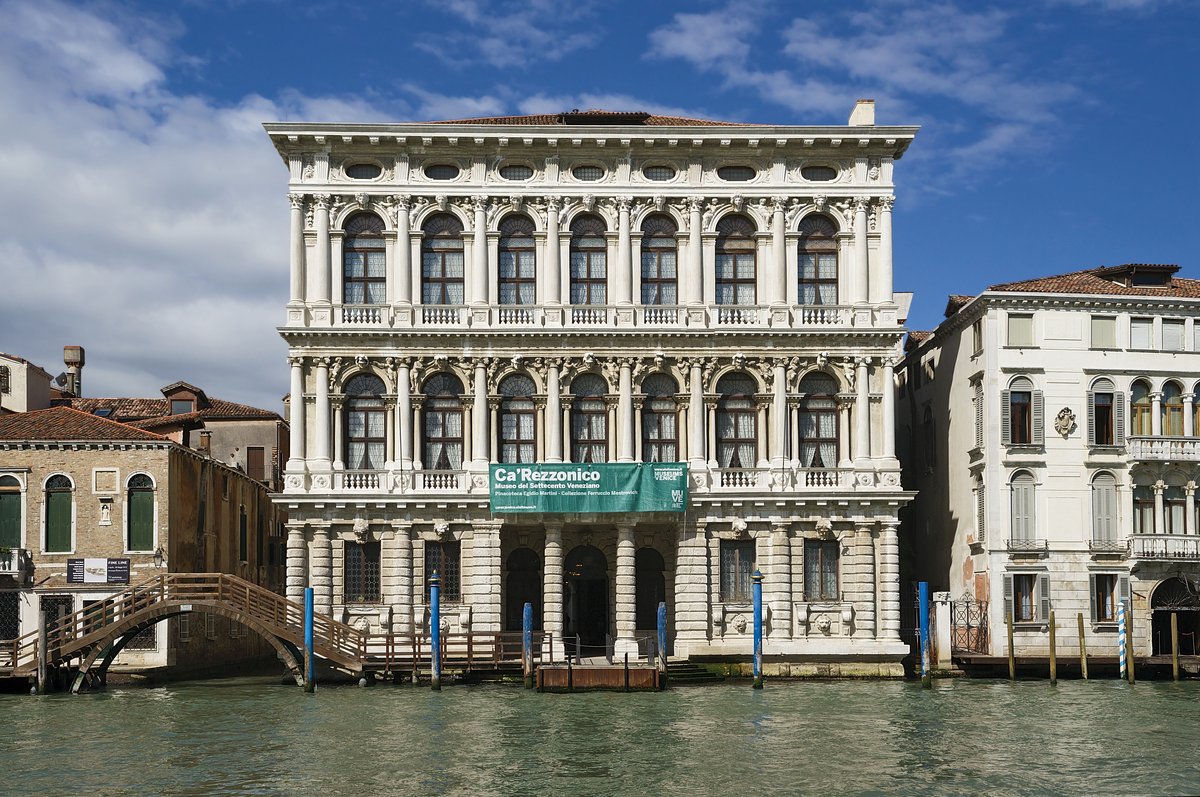
While Venice teems with tourists between St. Mark’s Square and the Rialto Bridge, there’s a peaceful corner that transports you straight to the 18th century. The Ca’ Rezzonico Museum is not just a palace, but an authentic journey through time. As soon as you cross the threshold, you’re greeted by the hushed silence of a bygone era, with frescoes that seem to speak and furnishings that tell stories of Venetian nobility. Here you won’t find the crowds of the most beaten tourist paths, but the intact atmosphere of when Venice was the queen of the seas. The sumptuous rooms, Murano glass chandeliers, and artworks make you feel like a privileged guest in a patrician home still alive. It’s ideal for those seeking art and history without stress, completely immersing themselves in the elegance of the past.
Historical Overview
The history of Ca’ Rezzonico begins in 1649, when the Bon family commissioned the project to Baldassarre Longhena, the same architect of the Basilica della Salute. Construction was halted due to financial difficulties until 1750, when the wealthy Rezzonico family – from whom it takes its name – purchased the unfinished building and entrusted Giorgio Massari with its completion. The Rezzonicos reached the peak of their prestige when Carlo, a family member, became Pope Clement XIII in 1758. In 1935, the Municipality of Venice purchased the palace to establish a museum dedicated to the Venetian 18th century, officially inaugurated in 1936. Today, it houses one of the most comprehensive collections from that century, with works from city museums and private donations.
- 1649: Construction begins for the Bon family
- 1750: Purchase by the Rezzonico family
- 1758: Carlo Rezzonico becomes Pope Clement XIII
- 1935: Purchase by the Municipality of Venice
- 1936: Opening as the Museum of 18th-Century Venice
The Masterpieces of Tiepolo
One of the main reasons to visit Ca’ Rezzonico is the frescoes by Giambattista Tiepolo, the leading figure of 18th-century Venetian art. In the Sala dell’Allegoria Nuziale, the painted ceiling celebrates the marriage of Ludovico Rezzonico to Faustina Savorgnan: the allegorical figures appear to float in a blue sky, with breathtaking mastery. But it’s not just the elder Tiepolo: in the adjacent room, you’ll find works by his son Giandomenico, more ironic and everyday, such as the famous ‘Mondo Novo’ series depicting popular Venice. These frescoes are not mere decorations but true pictorial narratives that capture the spirit of the era. Observing them up close allows you to appreciate the details, the expressions of the characters, and the extraordinary technique of a family of artists who left their mark on the history of Venetian art.
The Living Rooms
Beyond the artworks, what strikes you at Ca’ Rezzonico is the perfectly preserved domestic atmosphere. You’re not in a traditional museum, but in a noble home where every object has a function and a story. In the Throne Room, the gilded throne is still there, as if the Doge could sit down at any moment. The Ballroom, with its original floor and sparkling chandeliers, makes you imagine lavish parties and receptions. Then there are the private rooms: the bedroom with the canopy bed, the study with inlaid writing desks, even the game room with ancient pastimes. Venetian furniture from the era, Meissen porcelain, precious fabrics, and everyday objects recreate the life of a patrician family. It’s this completeness that makes the visit so immersive.
Why Visit It
Visiting Ca’ Rezzonico is worthwhile for three concrete reasons. First, it’s one of the few places in Venice where you can admire Tiepolo’s frescoes in their original context, not moved to a gallery. Second, it offers a comprehensive view of 18th-century Venice: not just painting, but also furnishings, decorative arts, and architecture all in one location. Third, compared to more famous museums, here you can enjoy the artworks calmly, without crowds, taking your time to observe the details. Additionally, its location on the Grand Canal provides magnificent views from the windows, an added value that few museums can offer. It’s ideal for those who want to delve deeper into Venetian culture beyond the most obvious attractions.
When to Go
The best time to visit Ca’ Rezzonico is early afternoon on weekdays, when most tourists are concentrated in more famous areas. This way you avoid organized groups that often arrive in the morning and can explore the rooms in relative tranquility. As for the season, autumn is particularly charming: the warm light entering from the windows overlooking the Grand Canal illuminates the frescoes in a magical way, creating picture-perfect atmospheres. Additionally, during this season Venice is less crowded, so you can combine the visit with a stroll through Dorsoduro without stress. Avoid summer weekends if you prefer a more intimate experience.
In the Surroundings
After visiting Ca’ Rezzonico, continue exploring Venetian 18th-century art with two nearby thematic experiences. Just a few minutes’ walk away is the Palazzo Cini Gallery, which houses a collection of Renaissance and 18th-century art in an intimate and refined setting. For an interesting contrast, head to the Scuola Grande dei Carmini, where you can admire more masterpieces by Tiepolo in a completely different context—that of a religious confraternity. Both places perfectly complement the vision of Venetian art from this period, showcasing its various facets between private life, collecting, and public devotion.