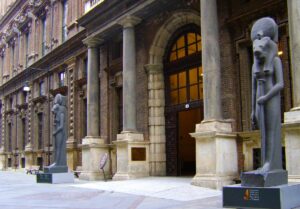
If you have only one day to discover Cuneo, this walking itinerary takes you through the heart of the city, blending history, art, and nature. Starting from the majestic Civic Tower, a medieval symbol, you’ll cross elegant squares like Piazza Galimberti and explore lesser-known corners such as the Diocesan Museum, keeper of sacred treasures. Continue towards the green Resistenza Park, perfect for a relaxing break, and don’t miss the unusual installation of Spiderman of the trees, a street art piece that merges nature and contemporaneity. The entire route unfolds on pedestrian streets, ideal for those who love walking and absorbing the authentic atmosphere. In under 5 km, you’ll experience the essence of Cuneo: a 1-day walking itinerary that encapsulates the best of the city. Practical info: the Civic Tower is open for a fee (booking recommended), while the park is free. For lunch, stop at one of the historic center’s trattorias. This is the classic what to see in Cuneo in a few hours, without stress.
🗺️ Your trip at a glance
A one-day itinerary in Cuneo combining the Civic Tower, Resistenza Park, and contemporary street art by Spiderman of the trees. Ideal for those who want to discover the city on foot at a relaxed pace.
- Ideal for those who love walking and discovering authentic corners.
- Highlights: panoramic Civic Tower, green park, contemporary art.
- For whom: travelers seeking a relaxed and cultural urban experience.
Itinerary stops
Stop no. 1
Torre Civica: The Medieval Heart of Cuneo
 Start your day right at the city’s symbol: the Torre Civica, towering over Via Roma at 52 meters high. As early as 1240, its bell summoned the City Council, and today, after a restoration for Cuneo’s 800th anniversary, you can climb all the way to the bell chamber. I opted to take the elevator to the third floor (yes, there is one!) and then tackled just 30 steps—not bad, considering there were originally 132. Up there, among the white columns, the view is like a postcard: below, the perfectly arranged rooftops and squares of the city, and all around the hills of the Langhe, and if the sky is clear, even Monte Rosa. Four photographic panels in Braille help you get your bearings. The guided tour lasts about half an hour and includes a look at the clock mechanisms. Fair price: €5 full price, €3 reduced. A tip: book ahead, as groups are limited to 6 people at a time. It’s the perfect way to start discovering Cuneo at a leisurely pace.
You should go if…
Stop no. 2
San Sebastiano Diocesan Museum: Between Faith and History
 Leave the Torre Civica behind and head into Contrada Mondovì, a pedestrian street lined with porticoes and shops, and you’ll find yourself in front of the San Sebastiano Diocesan Museum. Opened in 2012 after a restoration that lasted until 2011, it occupies the spaces of the ancient confraternity of the same name. Inside, it’s not just a collection of objects: the journey tells you almost 500 years of faith, pilgrimages, and plagues. It starts with the story of Saint James and the pilgrims heading to Santiago, complete with a map on the floor. Then it moves on to Saint Sebastian, protector from the plague, with a cycle of 18 17th-century paintings narrating his life. Among the works, 18th-century processional banners and a black-clad Our Lady of Sorrows that looks like it just stepped out of a procession stand out. If you’re up for it, there’s also an escape room to test your wits. The museum is fully accessible, has a café, and offers audio guides. Tickets cost €5, reduced €3. Open Friday, Saturday, and Sunday with varying hours (check the website before you go).
You should go if…
Stop no. 3
Fallen Workers: A Monument That Speaks
 Exiting the Diocesan Museum, take Via Mondovì and within minutes you’ll reach Piazzale Caduti del Lavoro. Here, nestled in the greenery of Parco della Resistenza, stands a monument to fallen workers that will make you pause. The sculpture, modern and simple in steel and stone, sits in a small, well-tended garden away from the tourist bustle. The atmosphere is intimate: shaded benches, the occasional runner passing by, and your gaze drifting among the flowerbeds. From here, you can already glimpse the central avenue leading into the heart of the park. If you stop, you’ll notice the plaques bearing names and dates, a touching way to remember the victims of labor. Parco della Resistenza is the green lung of Cuneo, and this monument is its quiet focal point. I found it a beautiful contrast between the history I’d just visited at the museum and the nature surrounding me. A place that invites reflection without heaviness, perfect for catching your breath before moving on.
- E 74, Cuneo (CN)
- Open in Google Maps
- View on Google Images
You should go if…
Stop no. 4
Spiderman of the Trees: Contemporary Art Among the Branches
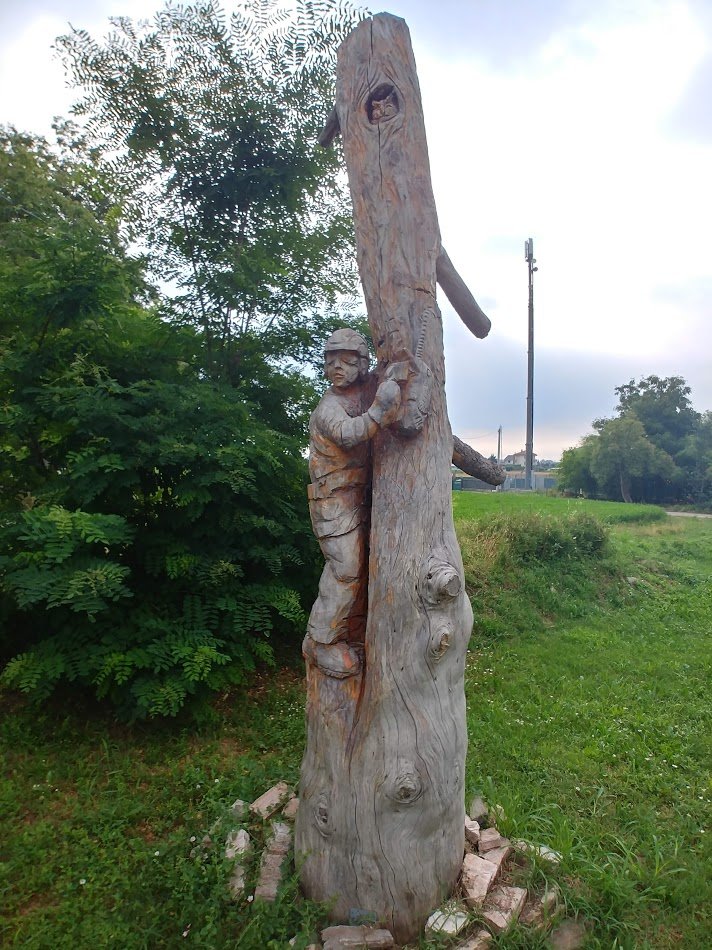 After leaving the Monument to the Fallen Workers, you delve into the Resistance Park along the tree-lined avenue. At some point, looking up, you see Spiderman of the Trees, a contemporary sculpture that appears to climb among the branches. The artwork, made of metal and recycled materials, blends with the foliage, creating a surprising effect. It’s not just any spider: it’s a tribute to nature and resilience, a piece that invites you to look up. I discovered it almost by chance, and it gave me a moment of wonder. It’s a perfect stop for those who love art outside museums, immersed in greenery. From here, the route continues towards the center, but this unusual corner stays with you.
- Via Canale Miglia, Cuneo (CN)
- Open in Google Maps
- View on Google Images
You should go if…
Stop no. 5
Resistance Park: Memory and Nature
 After the contemporary art of Spiderman of the trees, you find yourself in the green heart of Cuneo: the Resistance Park. Here time seems to slow down among shaded paths and well-kept lawns. At the center stands Umberto Mastroianni’s monument, an explosion of bronze and steel evoking a bomb blast in honor of the partisans. Inaugurated in 1969 in the presence of Sandro Pertini, it is a powerful symbol of anti-fascist memory. At the entrance, a plaque with words by Piero Calamandrei commemorates Duccio Galimberti. The park is not just history; it’s a lively place. You’ll find the sustainable bar Famù, events like CuneoViveloSport, and children’s storytime. Locals call it ‘Munta’ and come here to walk, jog, or simply enjoy the peace. Oh, and if you happen to come in the evening, you might even spot some wild boar from the nearby Fluviale: a touch of wilderness in the city.
- Cuneo (CN)
- Open in Google Maps
- View on Google Images
You should go if…
Stop no. 6
Ferruccio Parri Park: Cuneo’s Green Lung
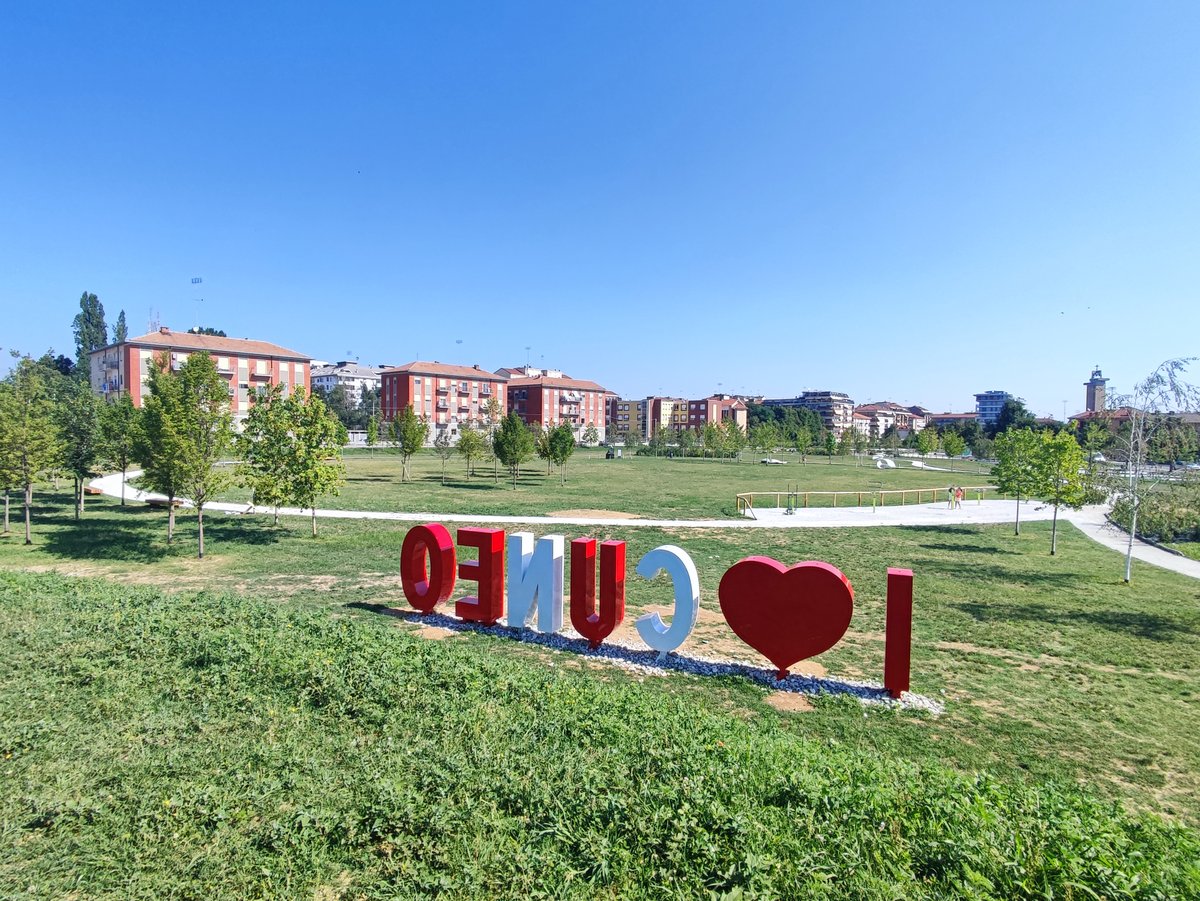 Heading south, you’ll reach a completely different area: Ferruccio Parri Park, spanning nearly 8 hectares and inaugurated in 2022 after 616 days of work. It is considered Italy’s largest urban park, a new green lung built on the former Piazza d’Armi. The name pays homage to Ferruccio Parri, a partisan and the first Prime Minister of liberated Italy. Here you’ll find everything: basketball and volleyball courts, table tennis, a skatepark, an outdoor fitness area, and a playground with interactive fountains – a paradise for kids in summer. The artificial lake, contemporary sculptures like Carlo D’Oria’s “I Titani,” and the glowing “I love Cuneo” sign create charming spots. If you need a break, the kiosk with a panoramic terrace is the place to be. The bike and pedestrian paths and lawns invite you to lie in the sun, even if the trees are still young. A young, lively park with some minor maintenance issues but already beloved by the people of Cuneo. Perfect for ending the day in relaxation.
- Cuneo (CN)
- Open in Google Maps
- View on Google Images
You should go if…