
The Capo Caccia Lighthouse is a historic clifftop viewpoint overlooking the sea, perfect for photography and breathtaking sunsets. Located within the Marine Protected Area, it provides direct access to Neptune’s Grotto through a 654-step staircase.
- Unique panoramas of the Gulf of Alghero and Foradada Island from the limestone cliffs.
- Direct access to Neptune’s Grotto via the famous Escala del Cabirol carved into the rock.
- Wildlife spotting opportunities for griffon vultures and peregrine falcons nesting in the cliffs.
- Spectacular photography guaranteed, especially at sunrise and sunset with golden light.
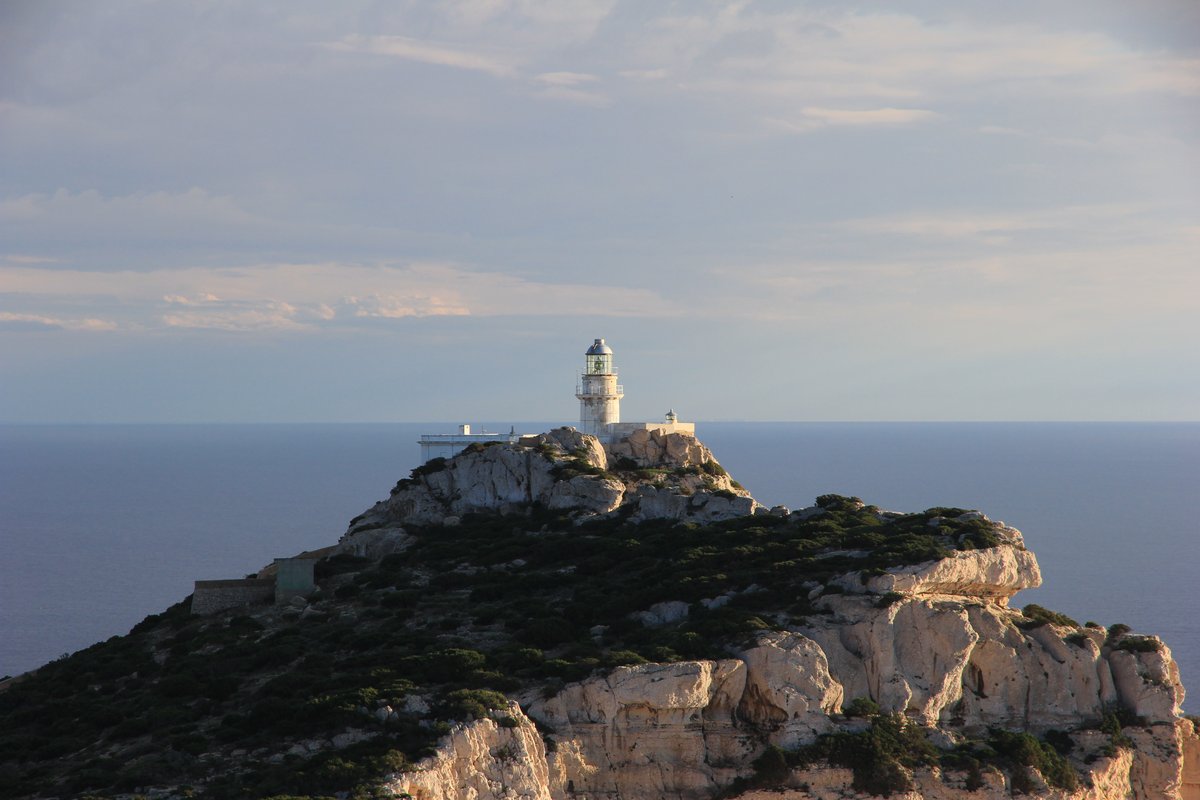
Built in 1864, the Capo Caccia Lighthouse offers stunning views of the Gulf of Alghero and Foradada Island. It serves as the starting point for Neptune’s Grotto via the Escala del Cabirol, ideal for sunset photography and griffon vulture sightings.
- Escala del Cabirol, Sassari (SS)
- Open in Google Maps
- View on Google Images Far del Cap Caccia/Faro di Capo Caccia a Sassari
Good to know
Introduction
Historical Overview
- 1864: Lighthouse construction
- 1938: Electrification
- 1940-1945: War damage and repairs
- 1970s: Automation
- Today: A tourist and nautical landmark
The Climb to the Sky
The Connection to Neptune’s Cave
Why Visit It
When to Go
In the Surroundings
💡 Did You Know…?
Capo Caccia Lighthouse has been the scene of numerous historical shipwrecks, the most famous of which is that of the French frigate ‘Sémillante’ in 1855, which sank in the stormy waters off the promontory with over 700 people on board. Even today, during storms, some local fishermen swear they hear bells ringing underwater. The staircase to Neptune’s Grotto, the Escala del Cabirol, was built by miners in 1954, and the name derives from the Sardinian ‘cabirol’ (roe deer), for its agility in navigating steep slopes. Lighthouse keepers recount that on full moon nights, when the beam of light reflects on the waves, it is possible to glimpse shadows of dolphins dancing in the dark.