Church of San Giorgio Martire in Chions: 16th-century frescoes and Romanesque bell tower

The Church of San Giorgio Martire in Chions is a parish church with documented roots dating back to the 14th century. Inside, well-preserved 16th-century frescoes depict scenes from the life of Saint George, while outside stands a Romanesque bell tower made of local stone. The church is easily accessible from the Pontebbana state road and offers an authentic cultural experience away from mass tourism.
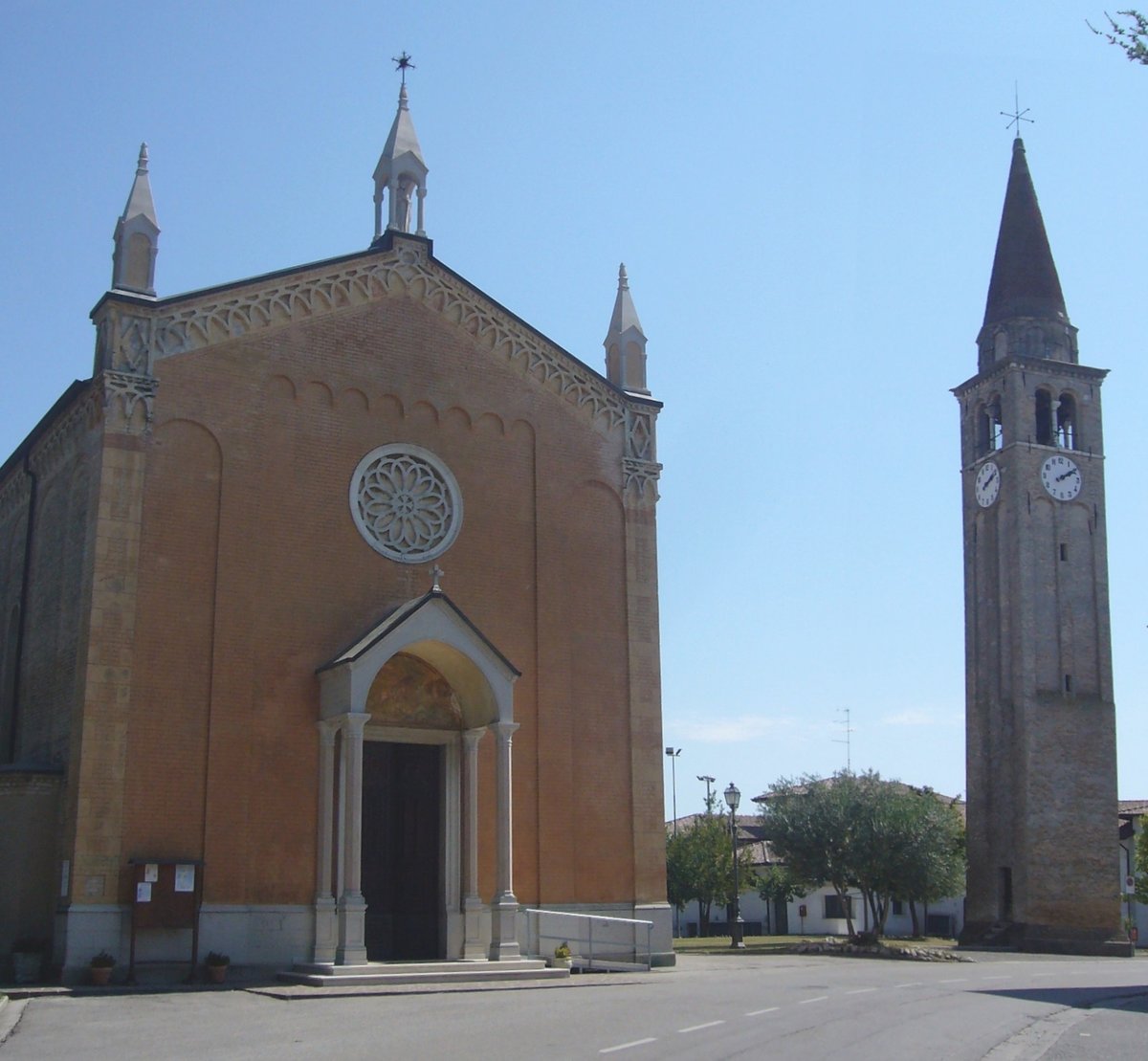
  • 16th-century Renaissance frescoes attributed to the school of Pomponio Amalteo
  • Romanesque bell tower from the 12th-13th centuries with preserved original structure
  • Intimate and authentic atmosphere in an active parish church
  • Location in the Friulian plain, easily accessible from the Pontebbana state road

Copertina itinerario Church of San Giorgio Martire in Chions: 16th-century frescoes and Romanesque bell tower
The Church of San Giorgio Martire in Chions houses Renaissance frescoes attributed to the school of Pomponio Amalteo and a Romanesque bell tower from the 12th-13th centuries. An active place of worship with an intimate atmosphere in the Friulian plain.

Good to know


Introduction

Upon arriving in Chions, the Church of Saint George the Martyr welcomes you with its elegant silhouette, dominated by a Romanesque bell tower that rises above the flat landscape of Friuli. It is not just a religious building, but a true treasure trove of art: beyond the simple facade, sixteenth-century frescoes hide, telling sacred stories with still-vivid colors. Entering here means immersing yourself in an atmosphere of silence and beauty, far from the hustle and bustle, perfect for those seeking a moment of reflection or an authentic cultural experience. The church, with its simple yet detail-rich structure, immediately captures attention and invites you to discover its centuries-old stories.

Historical Notes

The Church of San Giorgio Martire has ancient roots, with its first documented mention dating back to the 14th century, although the current structure mainly dates from the 16th century, when the precious internal frescoes were created. Over the centuries, it has undergone various restoration works that have preserved its integrity, maintaining the Romanesque character of the bell tower intact—a distinctive element that contrasts with later styles. The church has always been a spiritual reference point for the community of Chions, linked to the devotion to Saint George, the patron saint of knights.

  • 14th century: first documented evidence of the church
  • 16th century: creation of the internal frescoes and consolidation of the structure
  • Modern era: conservative restorations to preserve the artistic elements

The Hidden Frescoes

Inside, the church reveals its most precious treasure: a series of 16th-century frescoes adorning the walls, with religious scenes still clearly visible despite the passage of time. They depict episodes from the life of Saint George and other saints, executed with a warm color palette that creates a suggestive effect in the natural light filtering through the windows. These works, often overlooked in tourist guides, are a rare example of Renaissance sacred art in a rural setting and deserve a careful stop to appreciate their details and technique. Observing them up close, one can notice the nuances and brushstrokes that speak of the devotion and skill of the artists of the time.

The Romanesque Bell Tower

The Romanesque bell tower is the most iconic architectural element of the church, with its slender form and simple openings that recall the typical style of the 12th-13th centuries in Friuli. Built from local stone, it stands as a visual landmark for the entire village, and from its base, you can admire the meticulous detail in the masonry. Unlike many bell towers modified over time, this one has maintained its original structure, offering an authentic glimpse into the area’s medieval past. Although the interior is not accessible, it’s worth walking around to appreciate its imposing presence and the contrast with the later main building.

Why Visit It

Visit the Church of San Giorgio Martire for three concrete reasons. First, the 16th-century frescoes are a rare example of well-preserved Renaissance art in a countryside church, ideal for art history enthusiasts. Second, the Romanesque bell tower offers a snapshot of medieval Friulian architecture without needing to travel to large cities. Third, the tranquil and intimate atmosphere makes it perfect for a rejuvenating break during a tour of the Pordenone province, away from tourist crowds.

When to Go

The best time to visit the church is in the early afternoon, when natural light streams through the windows and illuminates the frescoes, enhancing their colors without the glare of direct sunlight. In terms of season, spring or autumn are ideal for enjoying the tranquility of the place, with mild temperatures that invite a longer stay, avoiding the hottest hours of summer or winter humidity.

In the Surroundings

Complete your visit with a stop at Porcia Castle, just a few minutes’ drive away—a well-preserved medieval manor with a park and occasional temporary exhibitions. Alternatively, explore the local wineries in the area, where you can sample typical Friulian wines like Refosco, paired with local products for an authentic food and wine experience.

💡 Did You Know…?

Inside, look for the fresco depicting Saint George slaying the dragon: according to a local legend, the colors of the saint’s cloak change hue depending on the light filtering through the side windows, creating an almost magical effect at sunset. Additionally, the Romanesque bell tower, with its massive structure, has survived numerous earthquakes thanks to an ancient construction technique that uses local stones and special mortar, still studied by experts. During the patron saint festivals, the church becomes the heart of the celebrations, with processions involving the entire town.