Church of Santa Maria dei Battuti: 15th-century frescoes and popular sacred art in Valeriano

The Church of Santa Maria dei Battuti in Valeriano, a hamlet of Pinzano al Tagliamento, is a jewel of 15th-century popular sacred art. Its simple facade conceals a richly frescoed interior, remarkably well-preserved, which narrates sacred stories with vibrant colors and expressive figures. The intimate setting and natural light filtering through the windows make the visit evocative and immersive within the Friulian rural landscape.

  • 15th-century frescoes: pictorial cycles of the Life of Mary and the Saints, featuring figures with folk-art characteristics and soft colors.
  • Popular sacred art: works created by local artisans, intended as a ‘Bible of the poor’ for the community.
  • Atmosphere of peace: a quiet and intimate place of worship, away from mass tourist flows.
  • Medieval village: the church is located in Valeriano, a village of medieval origin with cobblestone streets and stone houses.
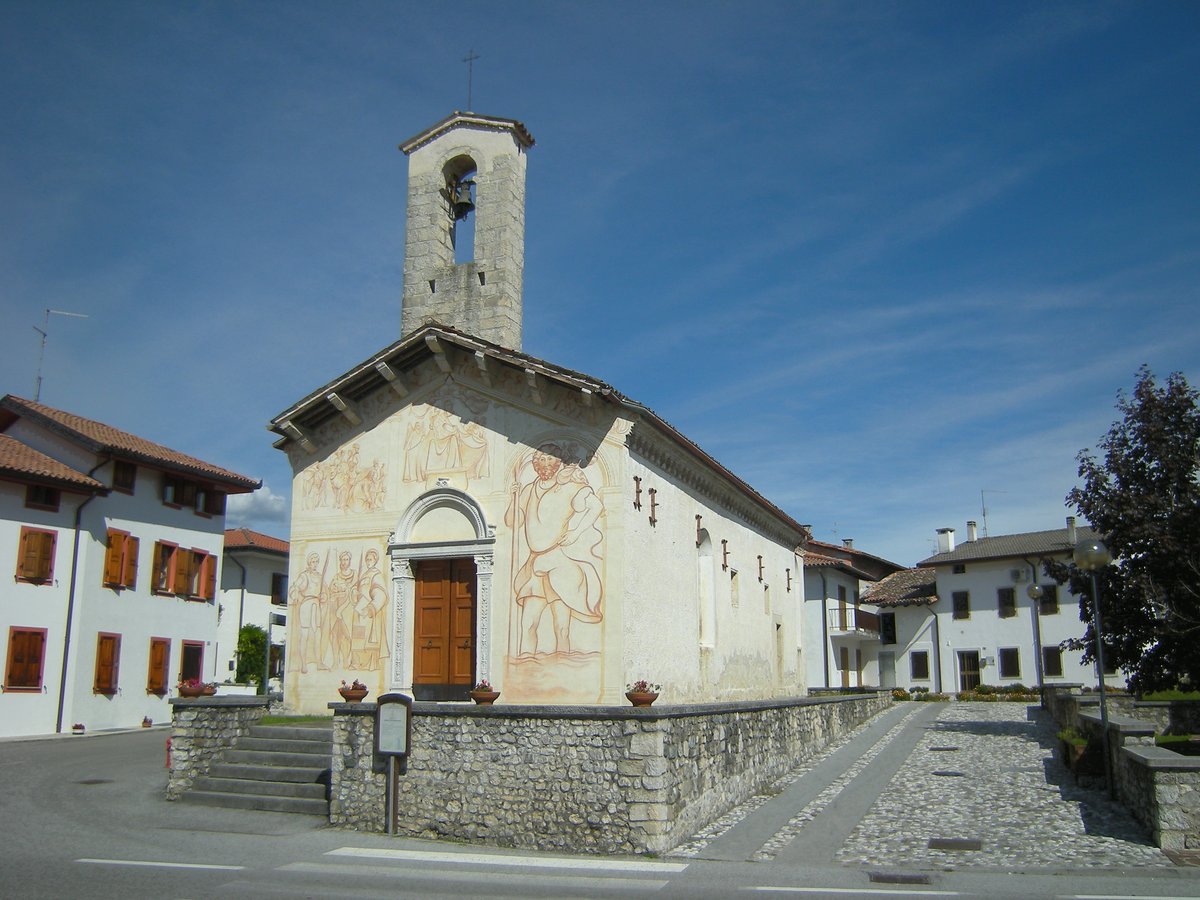
Copertina itinerario Church of Santa Maria dei Battuti: 15th-century frescoes and popular sacred art in Valeriano
The Church of Santa Maria dei Battuti in Valeriano houses 15th-century frescoes depicting the Life of Mary and the Saints, creating an atmosphere of serene peace. Ideal for discovering Friulian folk art and the medieval village of Valeriano.

Good to know


Introduction

Just outside the centre of Valeriano, a medieval village perched on the hills of Friuli, the Church of Santa Maria dei Battuti presents itself with a simple facade that hides a treasure. Upon entering, you are immediately enveloped in an atmosphere of quiet peace, far from the noise. The light filtering through the windows illuminates the fifteenth-century frescoes, creating a silent dialogue between art and spirituality. This place is not only a stop for enthusiasts of sacred art, but a refuge for those seeking the authenticity of a corner of Friuli still less travelled, where history is breathed among the ancient stones and the faded colours of the mural paintings.

Historical Overview

The church was built in the 15th century by the Confraternity of the Battuti, a lay association dedicated to penance and assistance. Inside, the frescoes mainly date back to the 15th century and are attributed to local craftsmen influenced by the Friulian school of the time. These works were not merely decorative; they served as a Bible of the Poor, narrating sacred stories to the faithful. The structure underwent restoration in the 20th century to preserve the delicate pictorial cycles.

  • 15th century: Construction of the church by the Confraternity of the Battuti.
  • 15th century: Creation of the interior fresco cycles.
  • 20th century: Restoration efforts to preserve the frescoes.

The Murals That Speak

The true heart of the visit are the 15th-century frescoes covering the walls and apse. Don’t expect the grandeur of a famous Renaissance cycle: here the art is humble, direct, with figures featuring popular traits and soft colors that time has mellowed. Scenes from the Life of Mary and the Saints are recognizable, typical of the devotional iconography of the era. Looking closely, details such as the drapery of the garments or the simple architectural backgrounds reveal the hand of local workshop artists. It’s an art that speaks to the community, designed to be understood by everyone, and this makes it particularly touching.

The Atmosphere of the Village

The visit to the church is inseparable from exploring Valeriano, a village of medieval origin that retains its charm intact. Upon arrival, you walk along cobblestone streets lined with stone houses, some with ancient portals. The church is located in a slightly secluded position, almost to protect its intimacy. This context makes the experience not only artistic but also immersive in the Friulian rural fabric. After the visit, a stop at one of the small local taverns to taste a glass of Refosco perfectly completes the day.

Why Visit

For three concrete reasons. First, to see up close a well-preserved example of 15th-century popular sacred art, away from massive tourist flows. Second, to enjoy an atmosphere of authentic tranquility that few places still offer. Third, because it’s a perfect opportunity to discover a corner of the hilly Friuli region made of intact villages, where time seems to have stood still and hospitality remains genuine.

When to Visit

The most enchanting time is in the late autumn afternoon, when the low-angled sunlight filters through the church windows, illuminating the frescoes with a warm golden hue and casting long shadows on the walls. During this season, the surrounding hillsides blaze with red and yellow, creating a poetic contrast with the building’s grey stone. Avoid the midday hours in summer, when the heat can be intense and the light too direct.

In the Surroundings

Just a few minutes’ drive away, you can reach Pinzano al Tagliamento, where the Tagliamento River flows majestically through gorges and you can admire the imposing bridge. For a thematic experience related to sacred art, visit the Pieve di San Martino in Valeriano itself, another Romanesque gem with interesting frescoes. Both places enrich the understanding of the historical-artistic heritage of this border area.

💡 Did You Know…?

Inside, look for the fresco depicting the Madonna of Mercy protecting the confraternity members under her cloak: a typical iconography of confraternities. You will also notice traces of an ancient painted ladder on the wall, symbolizing the ascent to heaven. The church was the meeting point of the Battuti, laypeople who flagellated themselves in penance during processions. Today, on the occasion of the patronal feast of San Martino in November, the church is reopened for special celebrations, offering a rare opportunity to experience it in a community context.