Introduction
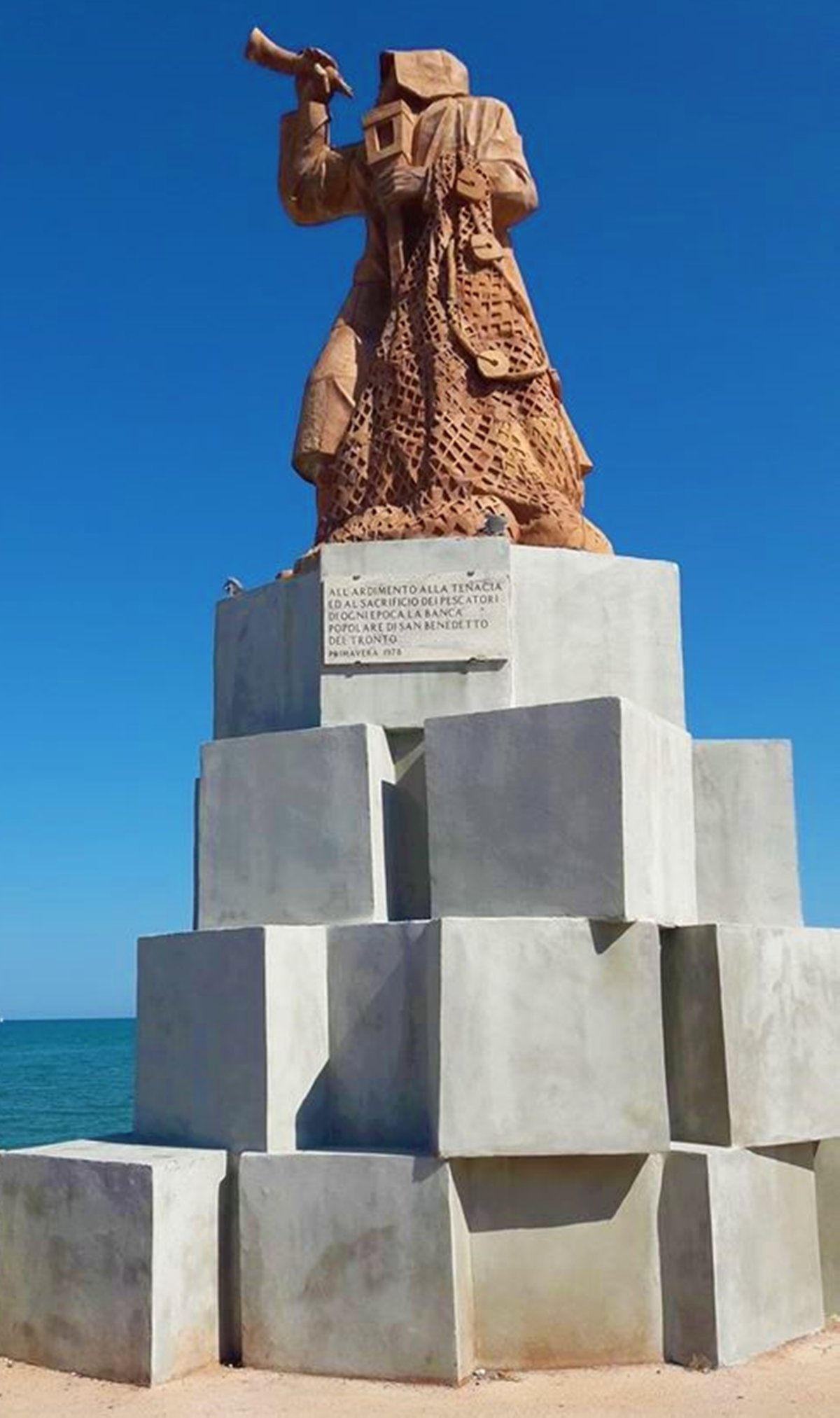
On the seafront of San Benedetto del Tronto, between the scent of salt air and the sound of waves, the Fisherman’s Monument welcomes you with a silent yet powerful presence. It’s not just a statue: it’s a symbol that tells stories of the sea, daily toil, and a community that built its identity on fishing. I first saw it at sunset, with golden light caressing the details of the wind-worn face and gnarled hands – an image that stays with you, much more than a simple souvenir photo. It’s located right along the promenade, almost like a travel companion for those walking while gazing at the horizon.
Historical Background
The monument was inaugurated in 1991, but its history is rooted in a centuries-old tradition. San Benedetto del Tronto has always been a fishing village, with its traditional “paranze” (typical Latin sail boats) sailing the Adriatic Sea. The work celebrates this very heritage, paying tribute not to a specific individual, but to
the entire community of fishermen, often the anonymous heroes of the sea. The artist – a local who knew those weathered faces well – sought to capture the essence of a trade built on patience, hope, and hard work. It is interesting to note how, despite the modernity of the waterfront, the monument maintains a visceral connection to the past.
- 1991: inauguration of the monument
- Previous centuries: development of the maritime tradition in San Benedetto
- Today: a symbol of identity for residents and an attraction for visitors
Man and Sea: The Details That Speak
As you approach, you immediately notice the details that make this statue so lifelike. The hands, large and calloused, still seem to grip the nets; the face is weathered, with a gaze fixed far away, toward the open sea. He wears the typical attire of fishermen from the past – a wool sweater, sturdy trousers – and on his feet are the characteristic ‘ciocie’, the simple footwear of laborers. It’s not an idealized figure, but a human, concrete one. I was struck by how, despite the sculpture’s stillness, it conveys a sense of movement, as if ready to return to the water. Some say that at night, under the lamplight, shadows create evocative plays on the wrinkles of the face – I haven’t verified this personally, but I believe it.
A Meeting Point on the Seafront
The monument is not isolated: it’s an integral part of San Benedetto’s lively seaside promenade. There’s always movement around it – families with children, couples strolling, runners training. It naturally becomes a backdrop for photos, but also a place to pause for a few minutes, perhaps sitting on the nearby bench, listening to the sea. I’ve seen elderly fishermen stop to look at it with a nod of appreciation, and curious tourists reading the plaque (in Italian and English) that explains its meaning. It’s a landmark, also useful for orientation: if you see it, you know you’re in the heart of the southern seafront, between the Rotonda and the port. Personally, I like to think that, in an era of quick selfies, it still manages to make one reflect on slower, deeper stories.
Why Visit It
Why is it worth a stop? First, it’s free and always accessible, with no opening hours or tickets – perfect for a spontaneous outing. Second, it offers an authentic glimpse into local culture, more genuine than many museums: here you feel the connection between San Benedetto and its sea. Third, it’s an excellent starting point for exploring the seafront promenade, with its palm trees, little cafes, and relaxed atmosphere. And let’s be honest, it always looks great in travel photos, especially when captured with the sun setting behind it.
When to Go
The best time? Sunset, without a doubt. The sky’s colors reflect in the bronze, creating an almost magical atmosphere. But also early in the morning, when the waterfront is still quiet and the light is clear, offers different emotions. Avoid the midday hours on a sweltering summer day – you risk finding it too crowded and with the high sun flattening the details. In winter, with the rough sea and crisp air, it has a wilder character, and perhaps an even more authentic one.
In the Surroundings
After admiring the monument, continue walking south to reach the Sea Museum, which delves into maritime history with artifacts and vintage boats. Alternatively, if you want to taste tradition, stop at one of the trattorias near the port for a plate of brodetto (the local fish stew) – some places have vintage photos of fishermen that seem to come straight from the statue. Without straying too far, you’ll better understand the context that inspired the work.