An Evocative Introduction
Entering the Gallery of Ex-Votos at the Sanctuary of Montenero is like leafing through a book of lived stories: over 700 votive paintings tell of blessings received, dangers escaped, and hopes entrusted to the Madonna. Most come from sailors, fishermen, and ordinary people: storms, shipwrecks, illnesses, accidents. Each painting is a fragment of life, a painted thank you. Then there are objects: rudders, pieces of boats, helmets, even whale bones. A folk museum that stirs emotions. And among these, a youthful work by Giovanni Fattori, the great Macchiaioli painter from Livorno, stands out. The gallery is a dive into devotion and everyday history, far from traditional museums.
An Evocative Introduction
Entering the Gallery of Ex-Votos at the Sanctuary of Montenero is like leafing through a book of lived stories: over 700 votive paintings tell of blessings received, dangers escaped, and hopes entrusted to the Madonna. Most come from sailors, fishermen, and ordinary people: storms, shipwrecks, illnesses, accidents. Each painting is a fragment of life, a painted thank you. Then there are objects: rudders, pieces of boats, helmets, even whale bones. A folk museum that stirs emotions. And among these, a youthful work by Giovanni Fattori, the great Macchiaioli painter from Livorno, stands out. The gallery is a dive into devotion and everyday history, far from traditional museums.
Historical Notes
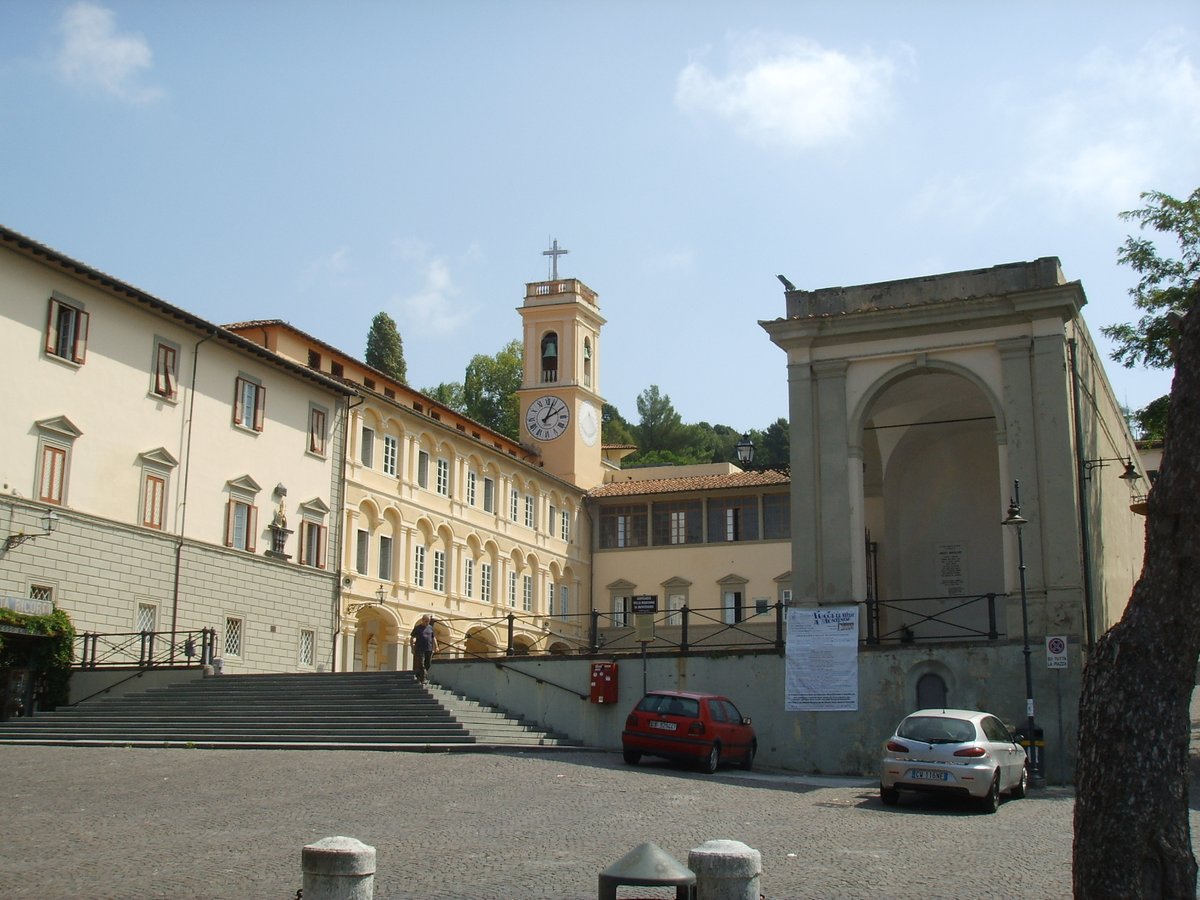
The history of the sanctuary begins on May 15, 1345, when a lame shepherd finds a wooden panel of the Madonna in a stream and, carrying it to a hill called “Monte del Diavolo”, is healed. Thus begins the cult of the Madonna delle Grazie di Montenero. In the 15th century, the Jesuits built the sanctuary; the current Baroque building dates from 1744. The gallery of ex-votos was formed over subsequent centuries, gathering gifts from the faithful, especially sailors. In 1908, the funicular that ascends from the Montenero Basso district was inaugurated. Next to the sanctuary stands the Famedio, where illustrious figures such as the writer Guerrazzi and Fattori himself are buried.
Historical Notes
The history of the sanctuary begins on May 15, 1345, when a lame shepherd finds a wooden panel of the Madonna in a stream and, carrying it to a hill called “Monte del Diavolo”, is healed. Thus begins the cult of the Madonna delle Grazie di Montenero. In the 15th century, the Jesuits built the sanctuary; the current Baroque building dates from 1744. The gallery of ex-votos was formed over subsequent centuries, gathering gifts from the faithful, especially sailors. In 1908, the funicular that ascends from the Montenero Basso district was inaugurated. Next to the sanctuary stands the Famedio, where illustrious figures such as the writer Guerrazzi and Fattori himself are buried.
Ex-Votos of Sea and Land
The collection is a fresco of past life: storms at sea, endangered boats, falls into the water. But also road and domestic accidents. The paintings show costumes of the era, landscapes, means of transport: it is a chronicle in images. Among the objects, helms and pieces of boats stand out, offered by those who escaped a shipwreck. Objects that speak of faith and fear, but also of pride and gratitude. The gallery is a mirror of the life of the people of Livorno, people of sea and land.
Ex-Votos of Sea and Land
The collection is a fresco of past life: storms at sea, endangered boats, falls into the water. But also road and domestic accidents. The paintings show costumes of the era, landscapes, means of transport: it is a chronicle in images. Among the objects, helms and pieces of boats stand out, offered by those who escaped a shipwreck. Objects that speak of faith and fear, but also of pride and gratitude. The gallery is a mirror of the life of the people of Livorno, people of sea and land.
Folk Art Treasures and Beyond
They are not all naive paintings: there is Giovanni Fattori’s “Cavallino” from 1848, depicting a man thrown from a horse – a very early work by the master. Then there is Renato Natali’s “The Motorcyclist”, another artist from Livorno. And in 2024, a contemporary ex-voto was added: an embossed metal heart by Stefano Pilato, with colorful birds and a small image of the Madonna. A mix of folk and high art that makes the gallery lively and constantly evolving. A place where the sacred and art intertwine without filters.
Folk Art Treasures and Beyond
They are not all naive paintings: there is Giovanni Fattori’s “Cavallino” from 1848, depicting a man thrown from a horse – a very early work by the master. Then there is Renato Natali’s “The Motorcyclist”, another artist from Livorno. And in 2024, a contemporary ex-voto was added: an embossed metal heart by Stefano Pilato, with colorful birds and a small image of the Madonna. A mix of folk and high art that makes the gallery lively and constantly evolving. A place where the sacred and art intertwine without filters.
Why Visit
First: it’s a collection unique in Italy for the quantity and variety of maritime ex-votos. Second: you can see an early work by Fattori in a popular context, not in a museum. Third: the visit is free (the sanctuary is open) and also offers a beautiful panorama of Livorno and the coast from the belvedere in front. Plus, it’s not crowded: a corner of spirituality and history away from the classic tourist circuits.
Why Visit
First: it’s a collection unique in Italy for the quantity and variety of maritime ex-votos. Second: you can see an early work by Fattori in a popular context, not in a museum. Third: the visit is free (the sanctuary is open) and also offers a beautiful panorama of Livorno and the coast from the belvedere in front. Plus, it’s not crowded: a corner of spirituality and history away from the classic tourist circuits.
When to Go
If you have a choice, I recommend autumn, perhaps during the Ottobrata di Montenero (first Sunday of October), when the sanctuary is in celebration and the gallery often enriches with new ex-votos. For the atmosphere, early morning is best: the light comes in gently and the silence helps you immerse. In summer the days are long and you can combine a walk on the terrace. Avoid Mondays if you are unsure of the hours (better to check).
When to Go
If you have a choice, I recommend autumn, perhaps during the Ottobrata di Montenero (first Sunday of October), when the sanctuary is in celebration and the gallery often enriches with new ex-votos. For the atmosphere, early morning is best: the light comes in gently and the silence helps you immerse. In summer the days are long and you can combine a walk on the terrace. Avoid Mondays if you are unsure of the hours (better to check).
Nearby
Just a few steps away, the Famedio (Livorno’s Pantheon) is the final resting place of figures such as Giovanni Fattori and Francesco Domenico Guerrazzi. It is a small, open-air monumental cemetery, evocative and free. Then, don’t miss the Montenero funicular: built in 1908, it climbs from Piazza delle Carrozze up to the sanctuary. It is one of the few historic funiculars still operating in Italy, and the ride offers a beautiful view of the city. A funicular ride completes the experience with a vintage touch.
Nearby
Just a few steps away, the Famedio (Livorno’s Pantheon) is the final resting place of figures such as Giovanni Fattori and Francesco Domenico Guerrazzi. It is a small, open-air monumental cemetery, evocative and free. Then, don’t miss the Montenero funicular: built in 1908, it climbs from Piazza delle Carrozze up to the sanctuary. It is one of the few historic funiculars still operating in Italy, and the ride offers a beautiful view of the city. A funicular ride completes the experience with a vintage touch.