Introduction
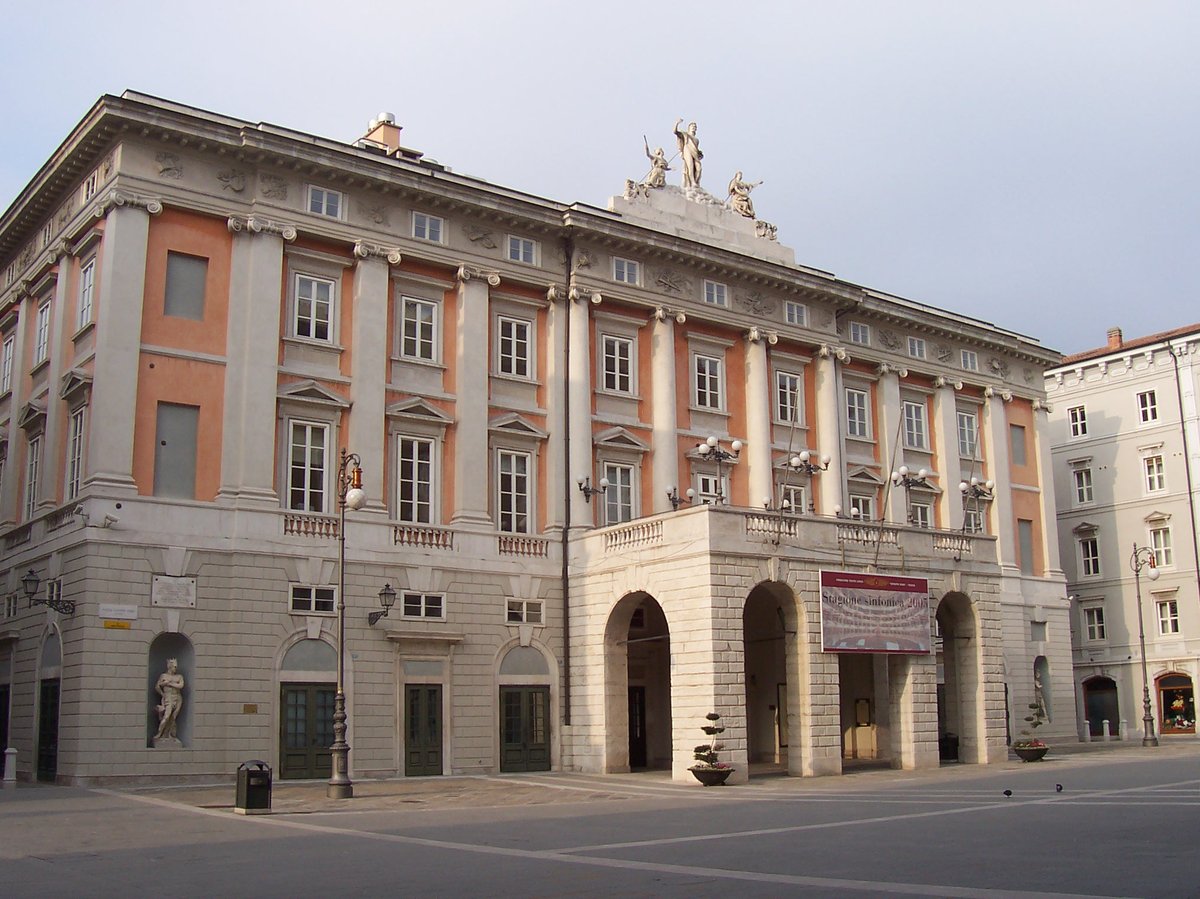
Have you ever walked through a city and suddenly felt drawn to a building? In Trieste, the Giuseppe Verdi Opera House has exactly that effect. It’s not just a theater; it’s an institution that dominates Piazza dell’Unità d’Italia with its severe, majestic neoclassical facade. Inside, however, it’s another story: a riot of gilded stuccoes, red velvets, and that typical hushed atmosphere that makes you feel immediately part of something special. For me, it’s the beating heart of Trieste’s culture, a place where the architecture speaks for itself and the promise of an unforgettable evening is always in the air. You don’t need to be an opera expert to appreciate it; just look up and let yourself be captivated.
Historical Background
The history of the Verdi Theatre is closely tied to the Trieste bourgeoisie of the 19th century, who wanted a theatre worthy of the city. It was designed by architects Matteo Pertsch and Giovanni Scalmanini, drawing inspiration from Milan’s Teatro alla Scala. Its inauguration in 1801 was a major social event, featuring Johann Simon Mayr’s opera “Ginevra di Scozia.” Over the years, it has hosted conductors of the caliber of Gustav Mahler and composers like Richard Strauss. It has withstood wars and changes, undergoing several restorations, the most recent in the 1990s, to restore it to its former glory.
- 1801: Inaugurated as Teatro Nuovo.
- 1901: Dedicated to Giuseppe Verdi on the centenary of his death.
- World War II: Severely damaged by bombings.
- 1997: Reopens after a lengthy and meticulous restoration.
Behind the Scenes of the Opera Season
What I love about Verdi is that it’s not a static museum. It’s alive. Its opera season is a fixed appointment for the city and attracts enthusiasts from the entire region. Don’t expect just the great classics like ‘La Traviata’ or ‘Rigoletto’ (which are still there); they often propose less-known titles or very interesting contemporary productions. The acoustics are considered among the best in Italy, a significant detail when you think about the power of an orchestra in the pit. A sincere piece of advice: even if you can’t see an opera, try attending one of the Friday concerts or a symphonic concert. It’s a more accessible way to experience the magic of this hall, without the sometimes intimidating formality of opera. The atmosphere is more relaxed, but the emotion is guaranteed.
The Architecture That Tells a Story
Entering the main hall is a breathtaking visual experience. The layout is horseshoe-shaped, with four tiers of boxes and a spacious gallery. Each box is a small private room, with velvet curtains that can be drawn closed – a legacy from the times when the theater was also a venue for social gatherings and gossip. The frescoed ceiling is another highlight: it depicts Apollo and the Muses and is illuminated by a massive Bohemian crystal chandelier. Sometimes, during intermissions, I pause just to admire the details: the stuccowork, the capitals, the gilding that glimmers under the light. It’s an architecture that doesn’t aim to be discreet; it wants to amaze you and make you feel important. And it succeeds brilliantly, even if you’re seated in the gallery.
Why Visit It
First, to experience a piece of authentic Trieste. This theatre has been a city symbol for over two centuries, beloved by Triestines. Second, for its cultural accessibility: beyond opera, the programme is rich with concerts, ballet, and drama, often at more affordable prices than other Italian theatres. Third, for its unbeatable location: it’s in Piazza dell’Unità d’Italia, overlooking the sea. You can easily combine a cultural visit with a stroll on the pier or a coffee in one of the nearby historic cafés. It’s not an attraction to ‘tick off’ and leave, but a place to experience at a leisurely pace.
When to Go
The main opera season typically runs from October to May, which is the period of peak activity. However, in my opinion, the most evocative time is a winter afternoon, when the low, slanting sunlight illuminates the white facade and the gray sea provides contrast. Inside, with the heating on and few people around, you can breathe in an intimate and cozy atmosphere. In summer, on the other hand, the theater sometimes organizes special events or small concerts, and the square area stays lively until late. Perhaps avoid big performance days if you’re seeking tranquility, but for the full experience, a winter Saturday evening with rain beating against the windows has its own romantic charm.
In the Surroundings
After leaving the theater, take a short stroll to the Caffè degli Specchi, right in Piazza dell’Unità d’Italia. It’s historic, elegant, and the perfect spot to discuss the performance you just saw while sipping a coffee or an aperitif. If you’d rather continue with cultural themes, just a few minutes’ walk away is the Museo Revoltella, a modern art gallery with a remarkable permanent collection and often interesting temporary exhibitions. It offers a nice contrast between the 19th-century art of the theater and the avant-garde movements of the 20th century, all within a few hundred meters.