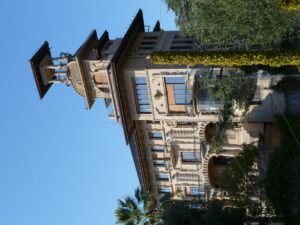
The Carlo Felice Theatre, symbol of Genoa’s cultural rebirth, combines a historic 19th-century facade with a modern interior featuring one of Italy’s best acoustics. Located in the heart of Piazza De Ferrari, it offers a program ranging from the opera season to symphony concerts by the Carlo Felice Orchestra, ballets, and family shows. Guided tours allow exploration of backstage areas like artists’ dressing rooms and state-of-the-art stage machinery.
- Iconic architecture with preserved neoclassical facade and modern glass and steel dome
- Excellent acoustics considered among Italy’s best for opera and concerts
- Secret Oval Hall with 19th-century furnishings in red velvet and crystals
- Backstage guided tours revealing dressing rooms, stage, and stage machinery
Introduction
You are in Piazza De Ferrari, the beating heart of Genoa, and there stands the Teatro Carlo Felice. It’s not just a theater; it’s an architectural icon that dominates the square with its majestic neoclassical facade and glass dome that seems to float. Entering is like crossing the threshold into a world where opera and symphonic music have breathed for nearly two centuries. The visual impact is striking: the austere exterior contrasts with the modern interior, rebuilt after the war, where red seats and clean lines create an atmosphere both solemn and welcoming. For me, it’s the ideal starting point to understand the cultural soul of Genoa, a city that has always loved blending tradition and innovation. If you’re here, don’t just look from the outside: even just a coffee in the foyer, with that bustle of theatergoers, gives you a taste of its vitality.
Historical Notes
The history of the Carlo Felice is a tale of destruction and rebirth. Inaugurated in 1828, it takes its name from the sovereign Carlo Felice of Savoy and quickly became the temple of Genoese opera, hosting premieres of works by composers like Verdi. Then, in 1943, the bombings of World War II reduced it almost to ruins, leaving only the façade and part of the perimeter standing. For decades, Genoa had a ghost theater at the heart of the city, until reconstruction was completed in 1991. Today, what you see is a fascinating mix: the original 19th-century façade preserved like a jewel, while the interior is entirely new, designed by architect Aldo Rossi with modern boldness. I like to think it’s a symbol of Genoese resilience, which doesn’t forget the past but looks forward.
- 1828: Inauguration under the name of Carlo Felice of Savoy
- 1943: Severe damage from wartime bombings
- 1991: Reopening after reconstruction by Aldo Rossi
- Today: Home to the Genoa Opera and Orchestra
Behind the Scenes: The Oval Room
One of the best-kept secrets of the Carlo Felice is the Oval Room, an elegant and little-known space located on the first floor. It’s not always accessible to the public, but during certain guided tours or special events, you can peek inside. It’s a gem from the late 19th century, with walls covered in red velvet, mirrors, and crystal chandeliers that create an atmosphere reminiscent of a noble salon. Historically, it was where aristocrats retreated during opera intermissions. Today, it’s used for conferences or small concerts, but its old-world charm remains intact. For me, it’s like a dive into the past: while the rest of the theater is modern, here you breathe the air of 19th-century Genoa. If you happen to visit on an open day, don’t miss it—it’s a detail that makes the visit more intimate and surprising.
Perfect Acoustics and Backstage Secrets
What you might not know is that the Carlo Felice is considered one of the theatres with the best acoustics in Italy, thanks to a reconstruction that optimized every detail. During guided tours (highly recommended, in my opinion), you can discover how it works: from the shape of the main hall, designed to distribute sound evenly, to the sound-absorbing materials hidden in the walls. But the most intriguing part is backstage: you walk through the artists’ dressing rooms, see the stage from unique perspectives, and discover state-of-the-art stage machinery. Once, I attended an orchestra rehearsal from here, and hearing the music so up close, without the filter of the audience, was a unique emotion. It’s an experience that goes beyond a simple visit, making you feel part of the theatre, even if just for an hour.
Why Visit It
First, because it’s more than just a theater: it’s a living piece of history that tells the story of Genoa through its wounds and rebirths. Second, for its programming: not just opera, but symphony concerts, ballets, and contemporary events that attract international names, making it a dynamic cultural hub. Third, for its location: it’s in the heart of Genoa, steps away from attractions like Palazzo Ducale, so you can easily combine your visit with other activities. I’d return just for the evening atmosphere, when the square lights up and the theater looks even more majestic. And you don’t need to be an opera expert: just curiosity about architecture or a desire to experience something authentic in the city.
When to go
To experience its most enchanting side, aim for the evening, especially on a performance day. Seeing the theater illuminated, with crowds gathering in Piazza De Ferrari, is a spectacle within a spectacle. Inside, with soft lighting and the murmur of the audience, there’s a magical atmosphere that isn’t felt during the day. For the year, autumn and winter months are ideal: the opera season is in full swing, and the cooler weather encourages stepping indoors. In summer, however, the theater organizes outdoor events or special tours, but in my opinion, it loses some of its intimate charm. Personally, I have a preference for winter evenings: leaving after the show, with the square’s lights reflecting on puddles, is a memory I always carry with me.
In the Surroundings
After the theater, take a short walk to the Palazzo Ducale, just a few minutes away. It’s another symbol of Genoa, where contemporary art exhibitions and medieval architecture interact in surprising ways. Or, if you want to stay in a musical mood, look for the small Chiesa di San Pietro in Banchi nearby: it sometimes hosts Baroque music concerts in an intimate and evocative atmosphere. Both places add layers to your Genoese experience without taking you far from the center. I love the idea of an ‘art and sounds’ themed itinerary: from the Carlo Felice to the Palazzo Ducale, passing through historic alleys, it’s a way to savor the city at a leisurely pace.