Villa Medicea Poggio a Caiano: Pontormo’s Frescoes and a UNESCO Renaissance Garden

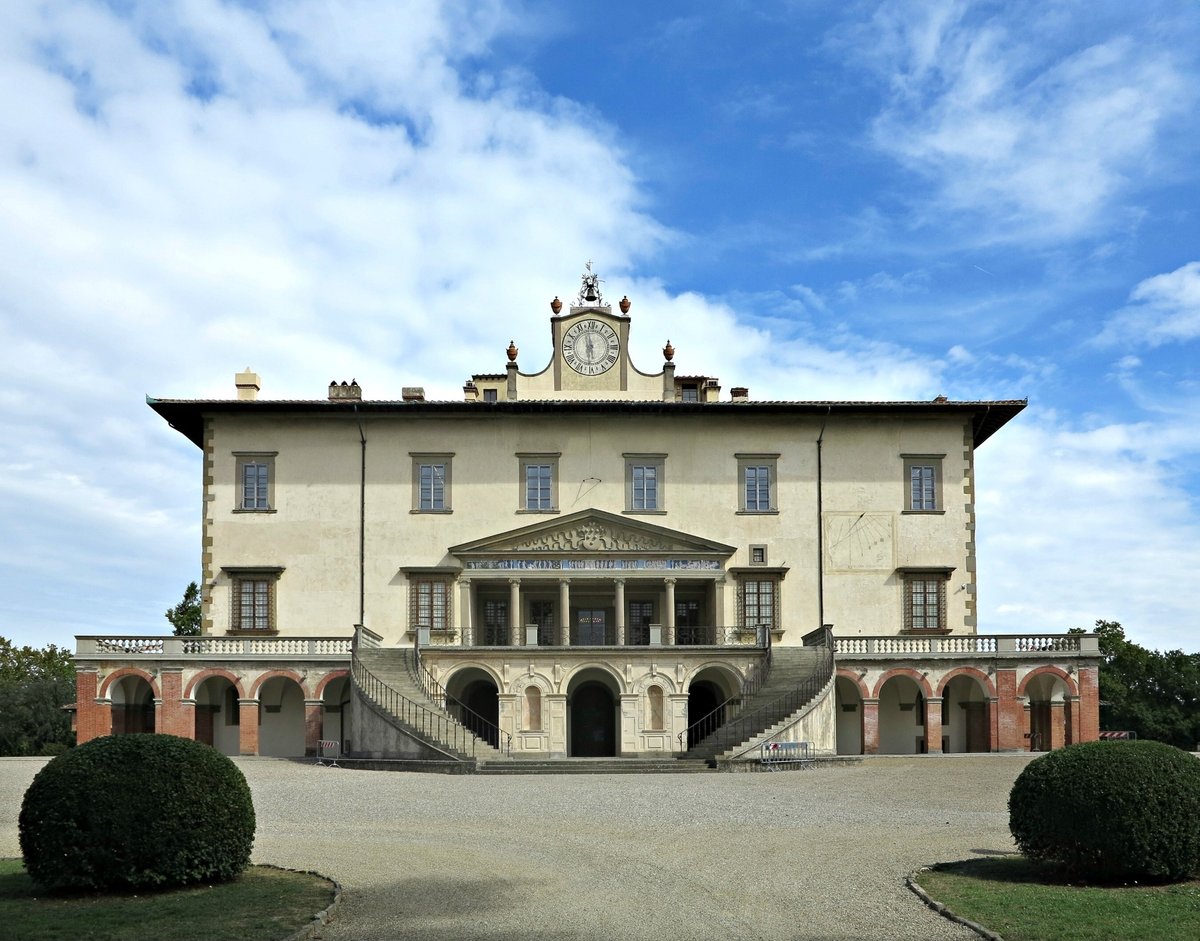
The Villa Medicea di Poggio a Caiano, a UNESCO World Heritage site, is a Renaissance residence commissioned by Lorenzo the Magnificent. Designed by Giuliano da Sangallo, it blends classical architecture with a country estate, featuring interiors rich in art and a geometric park.

  • Frescoes by Pontormo and Andrea del Sarto in the Salone di Leone X
  • Monumental honor staircase and façade with a loggia portico
  • Italian-style garden with geometric pathways, boxwood hedges, and a lemon house
  • Well-preserved interiors with original furnishings and a historic kitchen


Events nearby


Copertina itinerario Villa Medicea Poggio a Caiano: Pontormo's Frescoes and a UNESCO Renaissance Garden
Villa Medicea di Poggio a Caiano, a UNESCO World Heritage site with frescoes by Pontormo and Andrea del Sarto, a monumental staircase, and an Italian-style garden. An easy day trip from Florence or Prato.

Good to know


Introduction

As soon as you pass through the gate of the Medici Villa of Poggio a Caiano, you immediately understand you’re in a special place. This majestic Renaissance residence, nestled in the greenery of the Prato countryside, strikes you with its harmonious forms and timeless elegance. Designed by Giuliano da Sangallo for Lorenzo the Magnificent, the villa stands out with its white facade and classical portico, creating an image that stays with you. It’s not just a building, but a symbol of the Medici’s power and taste, perfectly integrated into the Tuscan landscape. Climbing the monumental staircase, you feel as if you’re stepping back in time, into an era of artistic and cultural splendor. The breathtaking view from the terrace overlooking the garden is simply stunning.

Historical Overview

The villa was commissioned by Lorenzo the Magnificent in the late 15th century as a place for leisure and representation. Giuliano da Sangallo designed its architecture, creating the first example of a Renaissance villa with a loggia and external staircase. In the 16th century, it became the residence of Eleonora di Toledo and other members of the Medici family, who enriched it with frescoes and decorations. In the 18th century, it passed to the House of Lorraine, who modified its interiors. Today, after careful restoration, it is state-owned and open to the public.

  • 1485: Construction begins for Lorenzo the Magnificent
  • 16th century: Expansions under Cosimo I and Eleonora di Toledo
  • 1737: Transfer to the House of Lorraine
  • 2013: Inclusion in the UNESCO World Heritage List

The Interiors: A Journey into Art

Beyond the facade, the villa’s interiors hold continuous surprises. The Hall of Leo X, with the celebrated fresco by Pontormo and Andrea del Sarto commemorating Medici glories, is an absolute masterpiece. The private rooms, such as the apartment of Victor Emmanuel II, preserve original furnishings and Tuscan school paintings. Don’t miss the historic kitchen, with its large fireplaces and period utensils, which allows you to imagine Renaissance banquets. Each space tells a story, from the coffered ceilings to the terracotta floors, in a mix of elegance and functionality typical of Medici architecture.

The Italian Garden

The villa’s garden is a jewel of green architecture, designed to harmonize with the building. Geometric pathways bordered by boxwood hedges guide you through flowerbeds and classical statues. The still-functioning lemon house shelters centuries-old citrus trees, while the small grove offers cool, shaded corners. It’s the perfect spot for a contemplative break, away from the crowds, where you can breathe in the atmosphere of a bygone era. Here, the Medici once strolled and entertained guests, and you can do the same, enjoying the view over the countryside.

Why Visit It

Three concrete reasons not to miss it: first, it’s one of the best-preserved Medici villas, with authentic interiors that transport you back to the Renaissance. Second, the frescoes by Pontormo and Sarto are unique masterpieces, hard to find elsewhere in such excellent condition. Third, its location, just minutes from Prato, makes it easy to combine with a city tour, without the long queues typical of other Tuscan attractions.

When to Go

The best time is late spring, when the garden is in full bloom and the warm light enhances the colors of the facade. Avoid the midday hours on summer days, opting instead for early morning or late afternoon to enjoy the outdoors without the humidity. In autumn, the park’s foliage creates evocative atmospheres, perfect for memorable photos.

In the Surroundings

Complete your visit with a stop at the Prato Textile Museum, which tells the centuries-old story of the area’s wool production, also linked to the Medici economy. Alternatively, explore the surrounding hills, where you can sample local wines at one of the typical wineries, such as those along the Carmignano Wine Road.

Itineraries nearby


💡 Did You Know…?

In the Sala di Leone X, Pontormo’s fresco depicts Vertumnus and Pomona with colors so vivid they seem painted yesterday. Legend has it that Lorenzo the Magnificent loved to host philosophers and artists here, discussing beauty while admiring the view over the Prato hills. The drawbridge, now fixed, once protected the Medici family during times of political tension. On sunny days, the light filtering through the Renaissance windows creates plays of shadow that seem to bring the figures in the frescoes to life.