
Majella National Park, accessible from Guardiagrele, is a protected area of over 74,000 hectares in the heart of Abruzzo. It offers pristine mountain landscapes, hiking trails for all levels, and opportunities to observe Apennine wildlife.
- Medieval rock-carved hermitages like San Bartolomeo in Legio, carved directly into the rock.
- UNESCO World Heritage ancient beech forests with centuries-old trees over 500 years old.
- Apennine peaks exceeding 2,700 meters, including Monte Amaro (2,793 m).
- Protected habitat for species such as the Apennine wolf and Marsican brown bear.
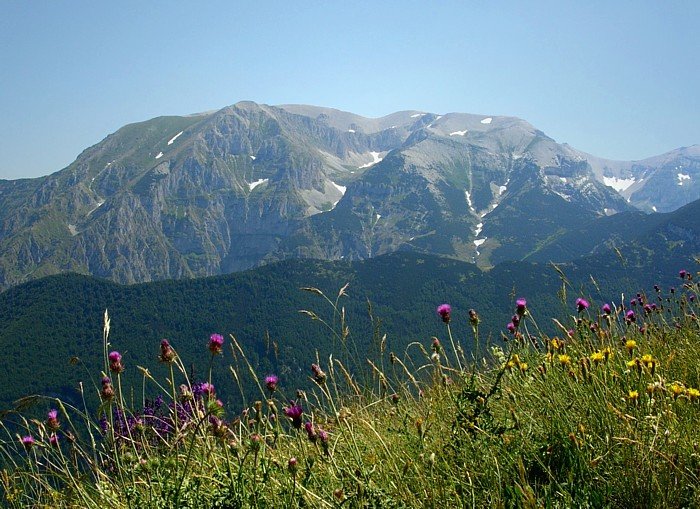
Protected area spanning 74,095 hectares with peaks up to 2,793 m, medieval rock-carved hermitages, and ancient UNESCO World Heritage beech forests. Habitat of the Apennine wolf and Marsican brown bear.
- https://www.parcomajella.it/Contatti.htm
- Via Occidentale 6, Chieti (CH)
- +39 0864 25701
- Open in Google Maps
- View on Google Images Ente Parco Nazionale della Majella a Chieti
Good to know
Introduction
The Majella National Park in Guardiagrele is a natural jewel of Abruzzo that will leave you breathless. As soon as you arrive, the Apennine peaks stand out against the sky, creating a majestic panorama that dominates the valley. This is not just a park: it’s a protected area of over 74,000 hectares where wild nature reigns supreme. Walking through the ancient UNESCO World Heritage beech forests, you can feel the mountain’s breath, while the medieval hermitages embedded in the rock tell stories of ancient spirituality. The unique feature? Majella is called the ‘Mother Mountain’ for its massive and welcoming shape, with peaks exceeding 2,700 meters like Monte Amaro. Here, Abruzzo reveals its most authentic face: wild, pristine, and rich with history.
Historical Overview
The history of Majella is intertwined with medieval hermitism. In the 10th century, hermits and monks chose these mountains for their spiritual isolation, building rock shelters that can still be visited today. Figures like Pietro da Morrone, who became Pope Celestine V in 1294, found refuge here. The park was officially established in 1991, but its protection has older roots: as early as 1926, part of the territory was recognized as a reserve. Today it preserves not only nature but also centuries-old traditions linked to pastoral life and local craftsmanship.
- 10th century: First hermit settlements
- 1294: Pietro da Morrone becomes Pope Celestine V
- 1926: First forms of territory protection
- 1991: Establishment of Majella National Park
Hidden Hermits in the Rock
One of the most fascinating aspects of the park are the rock hermitages carved directly into the mountainside. The Hermitage of San Bartolomeo in Legio, reachable with a short hike from Roccamorice, is a masterpiece of spontaneous architecture: a chapel nestled in a natural cave at 600 meters above sea level. Not far away, the Hermitage of Santo Spirito a Majella offers not only spirituality but also breathtaking views over the Orta Valley. These places are not mere tourist attractions: they are living testimonies to how humans have adapted to the most extreme mountain environments. The unique feature? Many hermitages still preserve medieval frescoes and are perfectly integrated into the rocky landscape.
UNESCO Ancient Beech Forests
The ancient beech forests of Majella have been a UNESCO World Heritage site since 2017 and represent one of Europe’s oldest forest ecosystems. Walking among these centuries-old trees, some over 500 years old, is a unique experience: light filters through the canopies creating magical plays of shadow. The Orfento Valley, accessible from Caramanico Terme, hosts one of the most spectacular beech forests, where silence is broken only by the rustle of leaves and the call of woodpeckers. These woods aren’t just beautiful: they are living laboratories of biodiversity, habitat of the Apennine wolf and the Marsican brown bear. The advice? Follow the nature trail that winds among monumental trees and discover why these forests are considered heritage of humanity.
Why Visit It
Visit Majella for three concrete reasons. First: the variety of trekking routes suitable for everyone, from simple nature trails to more challenging treks towards the highest peaks. Second: the unique opportunity to observe Apennine wildlife, with sightings of chamois, deer, and with luck, the Marsican bear. Third: the possibility to combine nature and culture by visiting perfectly preserved medieval hermitages, testimonies of spirituality that have endured for centuries. Here you don’t just find landscapes: you find living history and unique biodiversity in the heart of the Apennines.
When to Go
The most enchanting time to visit Majella is autumn dawn, when the first light of day illuminates the golden beech forests and mist envelops the valleys, creating fairytale-like atmospheres. In this season, the forest colors explode in shades of red, orange, and yellow, while the crisp air makes hiking more enjoyable. Avoid the midday hours during summer days when the heat can be intense: it’s better to explore early in the morning or in the late afternoon to enjoy the best light and the most magical atmosphere.
In the Surroundings
Complete your experience by visiting Guardiagrele, a medieval village renowned for its artistic copper and gold craftsmanship. The historic center preserves Gothic portals and churches rich in artworks, while artisan workshops showcase ancient techniques passed down through generations. Just a few kilometers away, Caramanico Terme offers natural thermal baths and the Marsican Bear Museum, perfect for deepening your knowledge of the local wildlife. Both locations enrich your visit with authentic culture and traditions of the mountainous Abruzzo region.
💡 Did You Know…?
Majella is called the ‘Mother Mountain’ for its shape resembling a reclining woman. According to legend, Pope Celestine V took refuge here after renouncing the papacy. Today, you can still visit his hermitages, where spirituality merges with majestic nature. In spring, the meadows are covered with wild orchids, while in winter, tracks in the snow tell the story of wolves and deer passing through.