Introduction
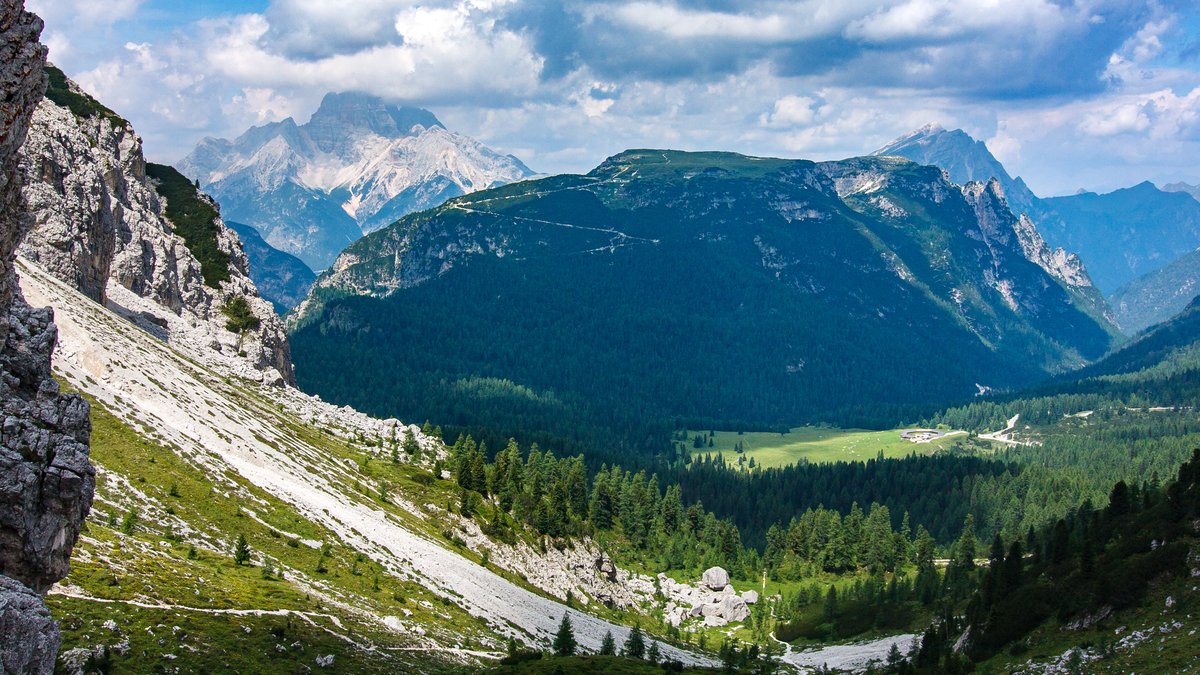
If there’s one place where history and nature blend in a unique way, it’s Monte Piana. At 2,324 meters, this Dolomitic plateau offers a breathtaking 360° panorama: the Tre Cime di Lavaredo, Mount Paterno, the Cadini di Misurina, Sorapiss, and Lake Misurina seem within arm’s reach. But it’s not just beauty: here, the Great War left indelible marks, turning the mountain into an open-air museum. Trenches, tunnels, and gun emplacements intertwine with the landscape, offering an experience that moves and teaches. And the best part is that the hike is suitable for everyone, including families. All you need is a bit of walking spirit and curiosity.
Introduction
If there’s one place where history and nature blend in a unique way, it’s Monte Piana. At 2,324 meters, this Dolomitic plateau offers a breathtaking 360° panorama: the Tre Cime di Lavaredo, Mount Paterno, the Cadini di Misurina, Sorapiss, and Lake Misurina seem within arm’s reach. But it’s not just beauty: here, the Great War left indelible marks, turning the mountain into an open-air museum. Trenches, tunnels, and gun emplacements intertwine with the landscape, offering an experience that moves and teaches. And the best part is that the hike is suitable for everyone, including families. All you need is a bit of walking spirit and curiosity.
Historical Notes
Monte Piana was the site of a long and bloody positional battle between Italians and Austro-Hungarians from May 24, 1915 to November 3, 1917. The two sides occupied the opposite plateaus, separated by Forcella dei Castrati, and fought indecisively for over two years, causing approximately 14,000 casualties. The Italian line was abandoned after the defeat at Caporetto. Today, thanks to the work of volunteers, the mountain is an open-air museum with restored trenches and tunnels.
Historical Notes
Monte Piana was the site of a long and bloody positional battle between Italians and Austro-Hungarians from May 24, 1915 to November 3, 1917. The two sides occupied the opposite plateaus, separated by Forcella dei Castrati, and fought indecisively for over two years, causing approximately 14,000 casualties. The Italian line was abandoned after the defeat at Caporetto. Today, thanks to the work of volunteers, the mountain is an open-air museum with restored trenches and tunnels.
Walking among the Trenches
From the Rifugio Angelo Bosi (2205 m), an easy trail of about 2 km leads to the Capanna Carducci, passing through reminders of the war. You walk on wooden planks, descend into deep trenches, and observe tunnels and machine-gun nests. The atmosphere is surreal: silence broken only by the wind, and suddenly you find yourself inside history. But be careful: there are holes and ravines, so keep children by the hand and dogs on a leash. There are no water sources, so bring a water bottle. The walk takes 2-4 hours, depending on how much you want to explore.
Walking among the Trenches
From the Rifugio Angelo Bosi (2205 m), an easy trail of about 2 km leads to the Capanna Carducci, passing through reminders of the war. You walk on wooden planks, descend into deep trenches, and observe tunnels and machine-gun nests. The atmosphere is surreal: silence broken only by the wind, and suddenly you find yourself inside history. But be careful: there are holes and ravines, so keep children by the hand and dogs on a leash. There are no water sources, so bring a water bottle. The walk takes 2-4 hours, depending on how much you want to explore.
Rifugio Bosi and the Private Museum
The Rifugio Angelo Bosi is more than just a refreshment stop: inside, it houses a small private museum with artifacts, photographs, and documents from the Great War. You can see weapons, uniforms, and everyday objects that tell the story of soldiers living in extreme conditions, with temperatures as low as -42°C. This former Italian command post is run by volunteers and offers a warm welcome. Guides and souvenirs are also available for purchase. From here, you can take the shuttle down to Misurina (5 km, 500 m elevation drop) or continue on foot.
Rifugio Bosi and the Private Museum
The Rifugio Angelo Bosi is more than just a refreshment stop: inside, it houses a small private museum with artifacts, photographs, and documents from the Great War. You can see weapons, uniforms, and everyday objects that tell the story of soldiers living in extreme conditions, with temperatures as low as -42°C. This former Italian command post is run by volunteers and offers a warm welcome. Guides and souvenirs are also available for purchase. From here, you can take the shuttle down to Misurina (5 km, 500 m elevation drop) or continue on foot.
Why Visit It
If you’re looking for an excursion that combines nature and history, Monte Piana is perfect. First, the panorama of the Three Peaks is among the best in the Dolomites, and it’s reached by an easy walk. Second, it’s a free open-air museum where you can touch the reality of mountain warfare. Third, it’s suitable for everyone, including children over 10 and dogs, as long as they are on a leash. Plus, the shuttle bus saves you the steepest part, making the trip accessible even to those who aren’t super fit.
Why Visit It
If you’re looking for an excursion that combines nature and history, Monte Piana is perfect. First, the panorama of the Three Peaks is among the best in the Dolomites, and it’s reached by an easy walk. Second, it’s a free open-air museum where you can touch the reality of mountain warfare. Third, it’s suitable for everyone, including children over 10 and dogs, as long as they are on a leash. Plus, the shuttle bus saves you the steepest part, making the trip accessible even to those who aren’t super fit.
When to Go
The best time is summer, from June to October, when the shuttle service is running and the days are long. However, if you want to avoid the crowds, I recommend September: the autumn colors paint the mountains red and yellow, and the air is crisp. Avoid August weekends, when parking in Misurina is a nightmare. Early morning sun spectacularly lights up the Tre Cime, while the afternoon is ideal for photos towards Lake Misurina. In winter the road is closed and you can only get there with skis or snowshoes.
When to Go
The best time is summer, from June to October, when the shuttle service is running and the days are long. However, if you want to avoid the crowds, I recommend September: the autumn colors paint the mountains red and yellow, and the air is crisp. Avoid August weekends, when parking in Misurina is a nightmare. Early morning sun spectacularly lights up the Tre Cime, while the afternoon is ideal for photos towards Lake Misurina. In winter the road is closed and you can only get there with skis or snowshoes.
In the Surroundings
After your visit, don’t miss Lake Misurina just a few kilometers away, with its turquoise waters and view of the Three Peaks. It’s perfect for a walk or a picnic lunch. If you have time, Rifugio Auronzo is another panoramic spot offering a different perspective on the Dolomites. And for history enthusiasts, there are other Great War sites nearby, such as the military village in Val Marzon and the outpost of Col Ciampon. All reachable with short detours.
In the Surroundings
After your visit, don’t miss Lake Misurina just a few kilometers away, with its turquoise waters and view of the Three Peaks. It’s perfect for a walk or a picnic lunch. If you have time, Rifugio Auronzo is another panoramic spot offering a different perspective on the Dolomites. And for history enthusiasts, there are other Great War sites nearby, such as the military village in Val Marzon and the outpost of Col Ciampon. All reachable with short detours.