Padenghe Castle: Medieval Fortress with 360° View of Lake Garda

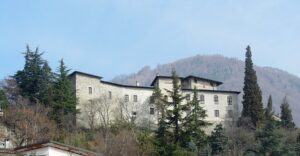
Padenghe Castle is one of the best-preserved medieval fortresses on Lake Garda, built between the 10th and 12th centuries. Ascending the cobblestone lane through the village leads to a 360-degree panorama stretching from the Trentino mountains to the Lombardy plains. The castle is often open to the public to explore the courtyard and towers.

  • 10th-12th century medieval fortress with thick walls and towers
  • 360-degree view of Lake Garda from the Trentino mountains to the Lombardy plains
  • Cobblestone path winding through the historic village houses
  • Ideal moments for sunset photography with warm light on ancient stones


Events nearby


Copertina itinerario Padenghe Castle: Medieval Fortress with 360° View of Lake Garda
10th-12th century fortress with thick walls, towers, and inner courtyard. Cobblestone path leads to the castle for panoramic views from the Trentino mountains to the Lombardy plains. Ideal for sunset photography.

Good to know


Introduction

Arriving in Padenghe sul Garda, Padenghe Castle suddenly rises against the sky, a powerful silhouette that seems to guard the lake for centuries. It’s not just a monument; it’s a visual landmark that draws the eye from every corner of the town. Climbing up there, even just for the view, is already worth the trip. The feeling is that of touching a piece of history that dominates a simply breathtaking landscape. The stone walls, the towers challenging the clouds—everything speaks of a past that is still palpable here. It’s not a static museum but a living place that tells stories of defenses, sieges, and medieval daily life. Personally, I’m always struck by how, despite the centuries, it maintains an air of almost intimidating grandeur, yet at the same time welcoming for those seeking a peaceful corner above the lake.

Historical Notes

The origins of Padenghe Castle date back to the 10th century, built primarily as a defensive structure against Hungarian raids. It was not a luxurious noble residence but a practical stronghold. In 1158, it was even destroyed by Frederick Barbarossa during his campaigns in Italy, an event that profoundly marked its history. Rebuilt later, it became a possession of the Republic of Venice in the 15th century, a period during which its fortifications were strengthened. Walking among the walls, one can still notice the signs of these shifts in power. An interesting fact: within the walls, a genuine medieval village developed, with houses, a small church, and a water cistern, of which evident traces remain. The timeline of key moments is as follows:

  • 10th century: First fortifications.
  • 1158: Destruction by Frederick Barbarossa.
  • 13th-14th century: Reconstruction and expansion.
  • 15th century: Transition under the control of the Most Serene Republic of Venice.
  • Today: Municipal property and tourist destination.

Exploring the Walls and Towers

The true experience here is walking along the perimeter of the walls. They are not just a boundary, but a path that offers ever-changing glimpses of Lake Garda. The fortifications are largely intact and allow for a complete circuit, letting you feel the strength of the defenses firsthand. The towers, especially the main tower, are the focal point. Climbing to the top, even if access is sometimes limited, provides a 360-degree view ranging from the lake to the morainic hills. Pay attention to the details: the arrow slits for archers, the stone corbels that supported the defensive structures. It’s not uncommon to find small corners where vegetation has reclaimed its space, creating picturesque spots. The atmosphere is tranquil, far from the crowds of Garda’s more famous locations. I recommend taking the time to observe the materials, the strategic position, imagining the sentries of times past.

The View That Steals Your Heart

If there’s one reason this castle is remembered, it’s the panoramic view of Lake Garda. From the walls, your gaze sweeps freely over the water, capturing Garda Island, the distant Sirmione peninsula, and the mountains that frame the scene. It’s one of those places where you’ll want to linger, without any rush. The light constantly changes, offering special color displays at dawn and dusk. This isn’t just any view: it’s the view of those who once controlled the territory, and you’ll understand perfectly why it was built right there. Bring a camera, but your eyes alone will suffice. Sometimes, on the clearest days, you can even spot distant peaks. A personal tip: seek out the southwest corner, where the vista embraces much of the Brescian coast. It’s a natural spectacle that completes the historical visit.

Why Visit It

Visiting Padenghe Castle is not just a typical tourist stop. First, because it offers a direct and authentic encounter with medieval military architecture, without fanciful reconstructions or overly intrusive displays. You can feel the real history. Second, for the unmatched and free panorama of the lake, one of the most complete and evocative views along the entire Brescian shore. Third, because it remains a relatively tranquil place, away from the crowds of more famous centers, perfect for a relaxed and immersive visit. Additionally, its commanding position makes it a unique visual landmark that helps you understand the geography of the area.

When to Go

The best time? Without a doubt, late afternoon, around sunset. The warm light of the sun setting behind the mountains paints the castle stones and the lake in shades of pink and orange, creating a magical, suspended atmosphere. In summer, it can be crowded during midday hours, while in spring and autumn, you can enjoy greater peace. I’d avoid very windy days, as up there you feel it all. In winter, with the mists rising from the lake, the effect is eerie and fascinating, but visibility may be reduced. In short, every season has its charm, but for the most thrilling experience, aim for the golden hour.

In the Surroundings

The castle visit pairs perfectly with a wine-tasting experience. Just a stone’s throw away, in the Padenghe countryside, you’ll find wineries producing Lugana and Groppello, typical local wines. A tasting at one of these family-run establishments completes your journey through the region’s flavors. Alternatively, to continue with the historical-medieval theme, it’s worth making a quick trip to the Castello di Moniga del Garda, another well-preserved fortress nearby that often hosts events and exhibitions. Two concrete suggestions to enrich your day without straying far from the local atmosphere.

Itineraries nearby


💡 Did You Know…?

A local legend says the castle was connected by secret underground passages to the nearby Moniga fortress, used for quick escapes during sieges. Additionally, during restorations, 15th-century ceramic artifacts were found, witnesses to daily life in the Visconti era. The main tower, called the ‘keep,’ was used as a prison: it’s said that a date from the 1400s, left by a prisoner, is still engraved there.