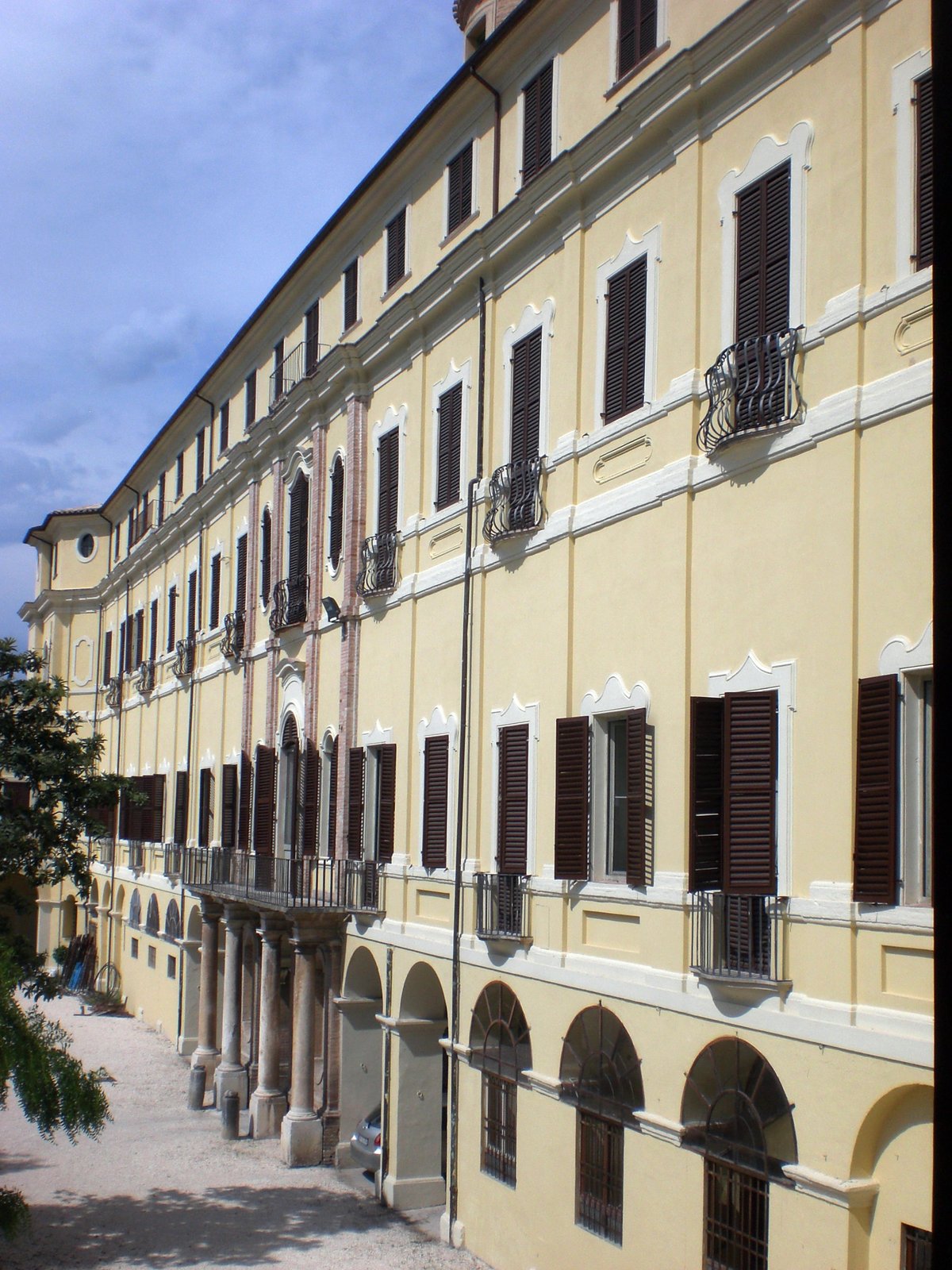
Palazzo Pianetti is an 18th-century jewel in the heart of Jesi, famous for its spectacular 76-metre Stucco Gallery, the longest Rococo gallery in Italy. It houses the Civic Art Gallery with masterpieces by Lorenzo Lotto, the Archaeological Museum, and the Contemporary Art Gallery. The Italian garden with mythological statues completes the experience.
Stucco Gallery: 76 metres of Rococo allegories
Art Gallery: masterpieces by Lorenzo Lotto (Deposition, Annunciation)
Italian garden: statues by Bonazza and 18th-century atmosphere
Free app: augmented reality and children’s tours, awarded the Compasso d’Oro
Introduction
In Jesi, Palazzo Pianetti surprises you with its Galleria degli Stucchi, 76 meters long: the longest rococo gallery in Italy after that of Diana at the Venaria Palace. A unique masterpiece, with polychrome stuccoes and allegories that tell the adventure of humankind. You stroll among works by Lorenzo Lotto in the Picture Gallery and lose yourself in the Italian garden, with mythological statues by Antonio Bonazza. A place that combines art, history, and a timeless atmosphere, all here, just steps from the center.
Introduction
In Jesi, Palazzo Pianetti surprises you with its Galleria degli Stucchi, 76 meters long: the longest rococo gallery in Italy after that of Diana at the Venaria Palace. A unique masterpiece, with polychrome stuccoes and allegories that tell the adventure of humankind. You stroll among works by Lorenzo Lotto in the Picture Gallery and lose yourself in the Italian garden, with mythological statues by Antonio Bonazza. A place that combines art, history, and a timeless atmosphere, all here, just steps from the center.
Historical Notes
The palace was commissioned by Marquis
Cardolo Maria Pianetti, a passionate alchemist and architect to Charles VI of Habsburg. Construction began in
1748 based on a design by Domenico Luigi Valeri and finished in 1786. In
1859, on the occasion of the marriage between Vincenzo Pianetti and Virginia Azzolino, architect Angelo Angelucci renovated the second floor and created the grand staircase. In
1901 the palace passed to the Tesei family and then gradually to the municipality of Jesi. Today it houses three museums: the Archaeological Museum, the Art Gallery, and the Contemporary Art Gallery. Here is a timeline:
- 1748: start of construction
- 1767-1770: creation of the Stucco Gallery
- 1781-1786: decoration of the Aeneas Rooms
- 1859: renovation and grand staircase
- 1901: sale to the Tesei family
- 20th century: municipal acquisition and opening of museums
Historical Notes
The palace was commissioned by Marquis
Cardolo Maria Pianetti, a passionate alchemist and architect to Charles VI of Habsburg. Construction began in
1748 based on a design by Domenico Luigi Valeri and finished in 1786. In
1859, on the occasion of the marriage between Vincenzo Pianetti and Virginia Azzolino, architect Angelo Angelucci renovated the second floor and created the grand staircase. In
1901 the palace passed to the Tesei family and then gradually to the municipality of Jesi. Today it houses three museums: the Archaeological Museum, the Art Gallery, and the Contemporary Art Gallery. Here is a timeline:
- 1748: start of construction
- 1767-1770: creation of the Stucco Gallery
- 1781-1786: decoration of the Aeneas Rooms
- 1859: renovation and grand staircase
- 1901: sale to the Tesei family
- 20th century: municipal acquisition and opening of museums
The Stucco Gallery: A Rococo Masterpiece
The Stucco Gallery is the heart of the palace. Set along the inner facade, it stretches for 76 meters and astonishes with its pastel colors and allegories. Stuccoes and paintings by Giuseppe Tamanti, Giuseppe Simbeni, and Andrea Mercoli depict Time, the Months, the Zodiac Signs, and the Four Continents. In the ovals, lagoon scenes symbolize man’s journey towards knowledge. The final exedra houses the Cardinal Virtues. A unique work in Italy, with a Central European flair, it will leave you speechless. Don’t miss the details: the stuccoes seem almost alive, and the light filtering through the windows makes them even more magical.
The Stucco Gallery: A Rococo Masterpiece
The Stucco Gallery is the heart of the palace. Set along the inner facade, it stretches for 76 meters and astonishes with its pastel colors and allegories. Stuccoes and paintings by Giuseppe Tamanti, Giuseppe Simbeni, and Andrea Mercoli depict Time, the Months, the Zodiac Signs, and the Four Continents. In the ovals, lagoon scenes symbolize man’s journey towards knowledge. The final exedra houses the Cardinal Virtues. A unique work in Italy, with a Central European flair, it will leave you speechless. Don’t miss the details: the stuccoes seem almost alive, and the light filtering through the windows makes them even more magical.
The Rooms of Aeneas and the Noble Apartment
Six successive rooms tell the myth of Aeneas on the vaulted ceilings, painted in tempera between 1781 and 1786 by Carlo Paolucci and Placido Lazzarini. The scenes, inspired by a manuscript of the Aeneid from the Vatican Library, blend rococo with early neoclassical trends. Then go up to the second floor, the private apartment of the marquises: halls, lounges, bedroom, and the Caffè-House, a round salon with a flat dome boasting incredible acoustics. The 19th-century decorations by Olimpio Bandinelli include risorgimento allegories and cameos of great artists like Titian and Raphael. A dive into aristocratic life of the era.
The Rooms of Aeneas and the Noble Apartment
Six successive rooms tell the myth of Aeneas on the vaulted ceilings, painted in tempera between 1781 and 1786 by Carlo Paolucci and Placido Lazzarini. The scenes, inspired by a manuscript of the Aeneid from the Vatican Library, blend rococo with early neoclassical trends. Then go up to the second floor, the private apartment of the marquises: halls, lounges, bedroom, and the Caffè-House, a round salon with a flat dome boasting incredible acoustics. The 19th-century decorations by Olimpio Bandinelli include risorgimento allegories and cameos of great artists like Titian and Raphael. A dive into aristocratic life of the era.
Why Visit
Three reasons not to miss Palazzo Pianetti. First: the masterpieces of Lorenzo Lotto. Five works by the Renaissance master are housed here, including the Deposition of 1512 and the Santa Lucia Altarpiece of 1532. A concentration of art that few museums can boast. Second: the Stucco Gallery is a unique feature in Italy, with its length and wealth of symbols. Third: the “Apri Palazzo Pianetti” app, selected for the ADI Compasso d’Oro 2022, includes audio guides for the blind, LIS guides, and a child-friendly itinerary. A museum designed for everyone, truly inclusive.
Why Visit
Three reasons not to miss Palazzo Pianetti. First: the masterpieces of Lorenzo Lotto. Five works by the Renaissance master are housed here, including the Deposition of 1512 and the Santa Lucia Altarpiece of 1532. A concentration of art that few museums can boast. Second: the Stucco Gallery is a unique feature in Italy, with its length and wealth of symbols. Third: the “Apri Palazzo Pianetti” app, selected for the ADI Compasso d’Oro 2022, includes audio guides for the blind, LIS guides, and a child-friendly itinerary. A museum designed for everyone, truly inclusive.
When to Go
The best time? Spring or autumn, when the Italian garden is at its peak. If you go in the morning, the light enters diagonally from the facade and illuminates the stuccoes of the Gallery, creating shadow plays that enhance the pastel colors. In summer, the palace is open continuously (10 AM–7 PM), so you can visit without rushing. Avoid Mondays in winter (closed) and check holidays: it closes on January 1, September 22, and December 25. Bring a light sweater: the interior is cool even in summer.
When to Go
The best time? Spring or autumn, when the Italian garden is at its peak. If you go in the morning, the light enters diagonally from the facade and illuminates the stuccoes of the Gallery, creating shadow plays that enhance the pastel colors. In summer, the palace is open continuously (10 AM–7 PM), so you can visit without rushing. Avoid Mondays in winter (closed) and check holidays: it closes on January 1, September 22, and December 25. Bring a light sweater: the interior is cool even in summer.
Nearby
After your visit, take a stroll through Jesi’s historic center. Just a few steps away you’ll find the Teatro Pergolesi, a neoclassical gem with a vibrant cultural program. If you love history, stop by the Museo Federico II Stupor Mundi, dedicated to the Swabian emperor who was born right here. For a sweet break, drop into one of the center’s wine bars and taste the Verdicchio dei Castelli di Jesi, a white wine that is right at home here. And if you have time, explore the Marche hills: villages like Staffolo or Montecarotto are just a stone’s throw away and offer breathtaking views.
Nearby
After your visit, take a stroll through Jesi’s historic center. Just a few steps away you’ll find the Teatro Pergolesi, a neoclassical gem with a vibrant cultural program. If you love history, stop by the Museo Federico II Stupor Mundi, dedicated to the Swabian emperor who was born right here. For a sweet break, drop into one of the center’s wine bars and taste the Verdicchio dei Castelli di Jesi, a white wine that is right at home here. And if you have time, explore the Marche hills: villages like Staffolo or Montecarotto are just a stone’s throw away and offer breathtaking views.