
Rivalta Castle is a medieval fortress still inhabited by the Zanardi Landi family, with crenellated towers, a moat, and architecture dating back to the 12th century. Strolling through the Renaissance courtyard and gardens immerses you in Piacenza’s history, away from tourist crowds.
- Medieval castle still inhabited by descendants of the Zanardi Landi family
- Well-preserved 15th-century crenellated towers and moat
- Interior rooms with 15th-16th century weapons and 17th-century Flemish tapestries
- Centuries-old park and gardens with antique roses along the Trebbia River
Events nearby
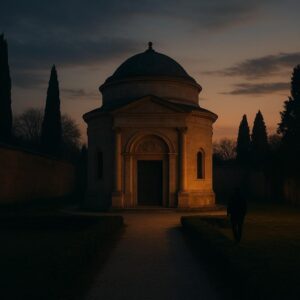


Rivalta Castle in Rivalta Trebbia: A historic residence still inhabited, featuring 15th-century towers, a medieval moat, armory rooms, Flemish tapestries, and a centuries-old park along the Trebbia River.
- Loc. Borgo di Rivalta, Piacenza (PC)
- Open in Google Maps
- View on Google Images Castello di Rivalta a Piacenza
Good to know
Introduction
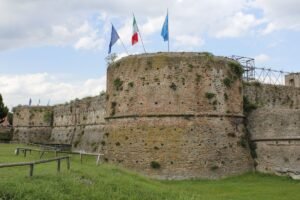
As soon as you arrive in Rivalta Trebbia, the Castle of Rivalta immediately captures your attention: crenellated towers soaring above the Piacenza countryside, a moat that still surrounds the walls today, and that medieval atmosphere that seems frozen in time. It’s not just a monument, but a lived-in residence, where the Zanardi Landi counts still reside today. Walking through the inner courtyard, among the red bricks and pointed arches, makes you feel part of a centuries-old story. The breathtaking view from the drawbridge is unforgettable: the structure dominates the Trebbia valley, with the Emilia hills forming the backdrop. Perfect for those seeking authenticity, far from the crowds of more popular destinations.
Historical Overview
The first records of the castle date back to the 12th century, when it served as a military outpost for the Malaspina family. It later passed to the Visconti of Milan in the 14th century, becoming a strategic stronghold along the Via Francigena. In the 15th century, it was expanded with corner towers and a moat, taking on its current appearance. Since the 18th century, it has been owned by the Zanardi Landi family, who transformed it into a noble residence while preserving original furnishings and historical documents. Today, it hosts events and weddings, maintaining its strong connection to the local territory.
- 12th century: first evidence as a Malaspina fortress
- 14th century: Visconti rule, role on the Via Francigena
- 15th century: expansions with towers and moat
- 18th century: acquisition by the Zanardi Landi family
Interior Rooms and Furnishings
Inside, the rooms recount centuries of noble life. The Armory Hall displays armor and swords from the 15th-16th centuries, with details showcasing the evolution of medieval defense. The Tapestry Hall, on the other hand, preserves Flemish textiles from the 17th century, donated by the Dukes of Parma. Each space features period furniture, such as the walnut four-poster bed in the master bedroom, and still-functional stone fireplaces. The library is particularly noteworthy, housing ancient volumes including rare editions on Piacenza’s history. Guided tours lead you through these spaces, revealing anecdotes about ownership changes and local traditions.
Courtyard and Gardens
The inner courtyard is a jewel of Renaissance architecture, featuring a central well and loggias adorned with heraldic coats of arms. From here, you can access the gardens, where boxwood hedges create geometric green patterns and antique roses perfume the air in spring. A pathway leads to a small medieval kitchen garden, with aromatic herbs and plants used in traditional Emilian cuisine. The moat, now dry, is partially walkable and offers picturesque spots for photos, with the castle walls reflecting in the water after rainfall. Ideal for a peaceful break, away from the noise.
Why Visit
Three practical reasons not to miss it: first, it’s one of the few inhabited castles in Emilia, so the experience is authentic and vibrant. Second, visits often include tastings of local products, such as Piacenza cured meats and wines from the nearby hills, directly in the historic cellars. Third, the location allows you to combine the trip with a walk along the Trebbia River, with easy trails starting from the village. No endless queues: by booking online, you’ll enter in just a few minutes.
When to Go
The best time is late spring, when the gardens are in bloom and the afternoon light enhances the red bricks of the towers. In summer, avoid the midday heat; opt for early morning or sunset, when the atmosphere becomes more intimate. In autumn, the colorful leaves create spectacular contrasts with the walls, but check the opening hours, as they may vary.
In the Surroundings
Just a few minutes away, the Borgo di Grazzano Visconti recreates a medieval village with artisan workshops and costumed performances. For food lovers, a stop at Azienda Agricola Fugazza offers the chance to sample DOP Piacenza salami and local wines in a traditional cellar. Both locations complete the immersion into Emilian culture without venturing far from the area.
Itineraries nearby


💡 Did You Know…?
Legend has it that the castle is haunted by the ghost of a white lady, perhaps a noblewoman from the past. During restoration work, traces of an ancient secret passage connecting the cellars to the Trebbia River were discovered, likely used for emergency escapes. The private chapel preserves fifteenth-century frescoes that are almost unknown to the general public.