
Castello Pallavicino Serbelloni dominates Castiglione d’Adda with its impeccably preserved medieval structure. Still inhabited by the family’s descendants, it retains the intact architectural features of the 15th century. Its strategic position along the Adda River makes it a unique example of Lombard defensive architecture.
- Inhabited medieval fortress: still the residence of the Pallavicino Serbelloni family descendants today
- Water-filled moat: fed by the waters of the Adda River, it completely surrounds the structure
- Four corner towers: two cylindrical and two square with original arrow slits and corbels
- Functional drawbridge: access from the south side via the ancient lifting mechanism
Events nearby


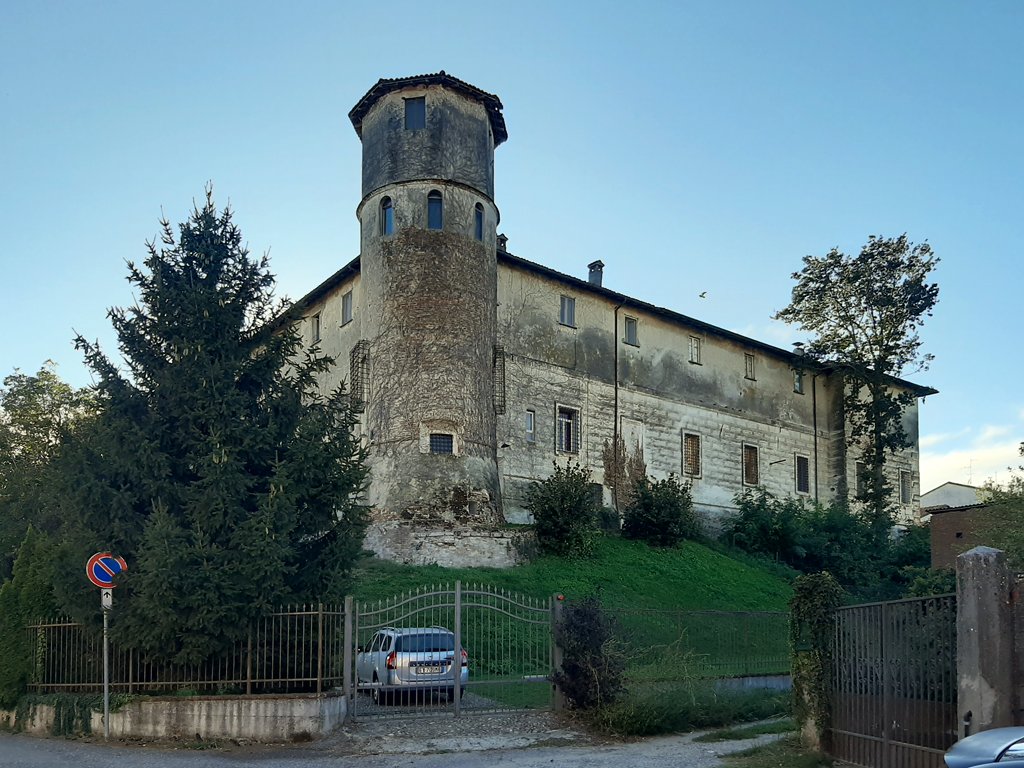
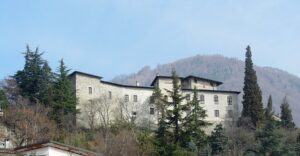
A 15th-century fortress still inhabited by the descendants of the family, featuring a moat fed by the Adda River, four corner towers, and an original drawbridge. Open during FAI events and special days.
- Via La Valle Bassa, Lodi (LO)
- Open in Google Maps
- View on Google Images Castello Pallavicino Serbelloni a Lodi
Good to know
Introduction
As soon as you arrive in Castiglione d’Adda, the Pallavicino Serbelloni Castle strikes you with its imposing presence. It’s not just a monument, but a piece of living history that dominates the Lombard landscape. The massive towers and the still-intact moat immediately transport you to the Middle Ages, with an atmosphere you’ll rarely find elsewhere. Walking around its walls makes you feel part of an ancient tale, while the red bricks and arrow slits tell centuries of battles and dominations. It’s one of those places that, even just looking at it from the outside, gives you strong emotions and a sense of rare authenticity.
Historical Overview
The castle originated in the 13th century as a defensive stronghold along the Adda River, commissioned by the Della Torre family to control river traffic. It later passed to the Visconti of Milan, who enhanced its structures, and in the fifteenth century to the Pallavicino family, who transformed it into a noble residence. The Serbelloni family, the last owners, inhabited it until the twentieth century, preserving its original appearance. Today it is privately owned, but its walls still recount every era.
- 13th century: construction commissioned by the Della Torre family
- 14th century: transfer to the Visconti of Milan
- 15th century: transformation into a residence by the Pallavicino family
- 19th-20th century: residence of the Serbelloni family
The Towers and the Moat
The four corner towers are the most distinctive feature: two cylindrical and two square, each with original arrow slits and corbels. By mentally climbing one of them, you immediately understand the strategic position: it dominated the Adda valley and the routes to Milan. The moat, still fed by the river’s waters, completely surrounds the structure and creates an effect of isolation that enhances its charm. This is not a dry or filled moat, but a living one, with spontaneous vegetation that attracts waterfowl. Few castles in Lombardy preserve this detail so intact.
Interiors and Courtyards
Although not always accessible to the public, during events or guided tours you can admire the internal courtyards with stone wells and Renaissance loggias. The halls, when open, display coffered ceilings and monumental fireplaces, with period furnishings that recall the life of the Pallavicino family. A particular feature is the private chapel, dedicated to Saint George, with fifteenth-century frescoes that are almost faded but still recognizable. Even without entering, from the street you can glimpse the massive wooden portals and the iron grilles, signs of an era when every detail had a purpose.
Why Visit It
Three concrete reasons: first, it’s a rare example of perfectly preserved medieval military architecture, without invasive restorations. Second, its location along the Adda River allows you to combine the visit with a nature walk along the riverbanks. Third, during FAI days or local events, special openings are often organized with guides who reveal anecdotes about the secret passages (which exist but are not visitable). It’s a place that naturally combines history and nature.
When to Go
The best time is in spring, when the surrounding countryside is green and blooming, and the afternoon light enhances the warm colors of the bricks. Avoid days with heavy rain, as the moat can make the area damp and slippery. If you can, go early in the morning: the typical mist of the Lower Lombardy region envelops the castle, creating an almost fairytale-like atmosphere, and you’re more likely to find it without crowds.
In the Surroundings
Just a few minutes away lies Castelnuovo Bocca d’Adda, with its historic bridge over the river and a cycling and pedestrian path that runs alongside the water—perfect for a bike ride. If you love local flavors, stop by a farmhouse in the area to sample Salame di Varzi DOP or Lodi cheeses, such as Tipico Lodigiano. These experiences complete your visit with a dive into Lombardy’s rural traditions.
Itineraries nearby

💡 Did You Know…?
Legend has it that a Visconti treasure is buried in the castle, hidden during the wars between Milan and Venice. Locals tell of strange noises at night and lights that turn on by themselves in the oldest rooms. Particularly evocative is the northeast tower, where a white lady is said to appear on full moon nights, guardian of secrets never revealed.