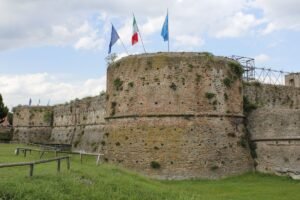
Rocca dei Sanvitale in Noceto: Castle of Music

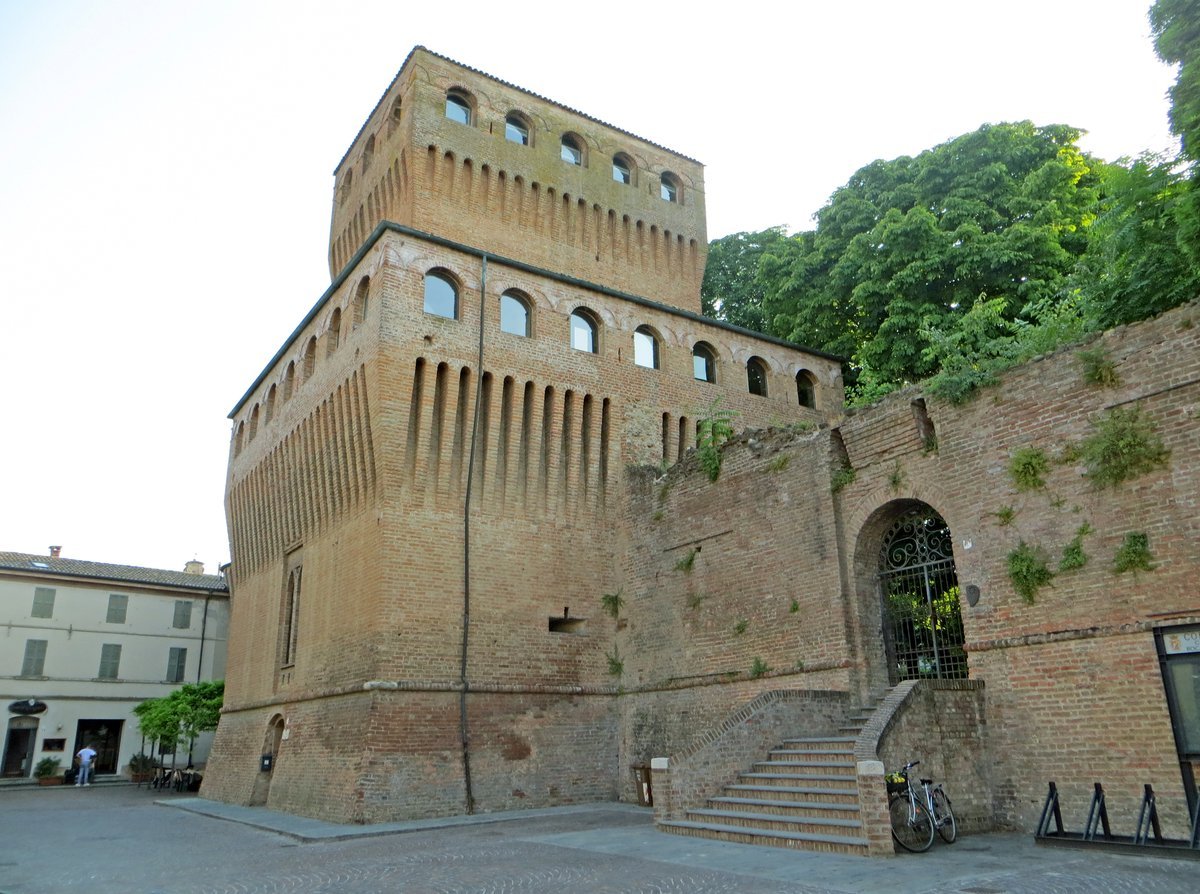
The Rocca dei Sanvitale is located in Piazza Garibaldi in Noceto, in the province of Parma, and since 2005 has been known as the Castle of Music. It preserves a medieval layout with a keep, four corner towers, brick walls, and a courtyard with a centuries-old horse chestnut tree. Today it houses the Museum of Violin Making, the Record Museum, and the Renato Scrollavezza International School of Violin Making.
– The Sala Milli on the ground floor for exhibitions, conferences, and weddings.
– The B. Slawitz Record Museum with 1,268 78-rpm records predating 1952.
– The 19th-century Camera Ottica, the only one still working in Italy.
– The workshop at the top of the tower with a 360° view over the plain.


Events nearby
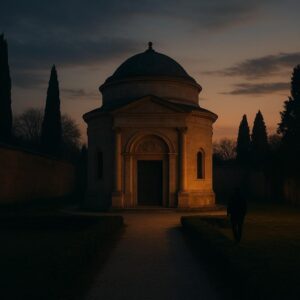

Copertina itinerario Rocca dei Sanvitale in Noceto: Castle of Music
In the center of Noceto, the Rocca dei Sanvitale is the Castle of Music: keep, corner towers, Museum of Violin Making, Record Museum, and the International School of Violin Making.

Good to know


Introduction – Rocca dei Sanvitale in Noceto: The Castle of Music

In the heart of Noceto, just a few steps from Piazza Garibaldi, the Rocca dei Sanvitale is not your usual postcard castle: it is small, compact, and captivates you with an atmosphere suspended between ancient stone and music. It has been called the Castle of Music since 23 December 2005, when it was inaugurated as a cultural venue. Inside, the Museum of Violin Making, the Record Museum, and various musical associations coexist. The keep, the corner towers, and the courtyard with its centuries-old horse chestnut create an intimate corner, almost surprising for a historic centre on the plain. Don’t expect a royal palace: it is a lived-in fortress, transformed several times, which today you visit with curiosity. The entrance from the internal park and the restored halls tell a long story of sieges, restorations, and musical rebirths. For anyone passing through Parma, it is a smart detour.

Historical Background

The first records of a fort date back to 1226, when the Guelph faction of Parma settled here. The original fortification was probably built in the early 13th century by the Pallavicino family; in the 15th century the present structure was rebuilt by Pier Maria de’ Rossi for the Sanvitale. In 1402 the Sanvitale established themselves at Noceto, but the castle endured sieges and changes of ownership. In 1551, during the War of Parma, it was occupied by imperial troops. In 1612, after the plot against Ranuccio I Farnese, it passed to the Dalla Rosa marquises, before returning to the Sanvitale. With the Napoleonic edicts of 1805 it was confiscated; in 1938 it became the property of the Municipality of Noceto. After World War II it also served as a dance hall. Since 1998, restorations have brought its ancient structures to light; in 2005 the Castello della Musica was established.

  • 1226: first records of the fort
  • 15th century: rebuilt for the Sanvitale
  • 1612: plot and transfer to the Dalla Rosa
  • 1805: Napoleonic confiscation
  • 1938: purchased by the Municipality of Noceto
  • 2005: inauguration of the Castello della Musica

The Keep, the Towers and the Courtyard

The fortress develops around the ancient keep, the oldest and most recognisable part. The outer wall perimeter is slightly trapezoidal in shape, with four circular corner towers; the building to the left of the central core rises three storeys plus a basement. The brick façades bear the scars of the destruction they suffered, yet they retain corbels with machicolations and partially visible Ghibelline merlons. To the right of the keep, a flight of steps leads to the old entrance, once equipped with a drawbridge. Today the moat is gone: in its place is an inner park with centuries-old trees and a large horse chestnut that dominates the courtyard. On the ground floor, the main hall of the keep hosts temporary exhibitions; on the first floor are the museums. From the top level of the keep, a view opens over the surrounding plain. The workshop at the top of the tower, used by the School of Violin Making, offers a 360° panorama.

String Instrument Museum and Record Museum

Going up to the main floor, you enter the heart of the Castello della Musica. The Museum of Stringed Instruments houses bowed and plucked instruments crafted by master Renato Scrollavezza and members of the Parma violin making community. The same building houses the Renato Scrollavezza International School of Violin Making, founded in 1975 at the Arrigo Boito Conservatory in Parma. The Record Museum preserves the collection donated in 1972 by sports journalist Bruno Slawitz: 1,268 78-rpm records from before 1952, 400 complete operas, and 450 symphonic titles. There are also computer listening stations. On the ground floor, you’ll find the Sala Milli, used for exhibitions, conferences, and weddings, and the Gildo Mellin room. The Sala Rossellini is equipped for video conferences and screenings, with educational films on the making of stringed instruments. From Piazza Garibaldi, you can access the Proloco premises.

Legends, a Votive Basin, and the Camera Ottica

The fortress is not only about museums. Here, curious stories and legends intertwine. In 2004, a Terramare votive basin was discovered, about two metres deep and dating to the Bronze Age, with artefacts inside; its purpose is uncertain, perhaps linked to a funerary rite. Then there is the legend of the “muroni”: restless spirits of soldiers in armour with axes who are said to wander between the castle and the ruins of an ancient residence. It is said that, before the Battle of Legnano in 1176, the lords of the castle walled up the soldiers alive; they had been guarding a treasure that has never been found. But the highlight, for me, is the Camera Ottica: the only one still working in Italy, dating back to the 1800s. Using two concave mirrors, it reflects an inverted image of the square in front, allowing you to observe without being seen.

Why visit it

Three concrete reasons. First: it is a fortified castle with museums inside, not just a facade; a visit here brings together architecture, violin making, and historic recordings. Second: the Camera Ottica is a small marvel—the only working one in Italy—and worth the detour on its own. Third: Bruno Slawitz’s Museo del Disco is a time machine for opera and symphonic music lovers, with 1,268 78-rpm records dating from before 1952. And then there is the atmosphere: the courtyard with the horse chestnut tree, the timeworn bricks, the view from the top of the keep. The fortress is part of the circuit of the Association of Castles of the Duchy of Parma, Piacenza and Pontremoli, so it fits naturally into an itinerary among fortresses. It is not a huge place; precisely for that reason, you visit it calmly, without rushing. For anyone who loves music, it is an almost obligatory stop.

When to Go

The best time? A clear morning, when light enters the courtyard and sets the brickwork aglow; or in the late afternoon, with the low sun warming the facades. In spring or early autumn, the horse chestnut tree and the inner park are at their best, without the full heat of summer. If you can, choose a day that isn’t too crowded: the fortress is small, and the silence within its walls is part of its charm. In winter, the atmosphere is more intimate, almost medieval, and the museum rooms invite you to linger. Avoid the middle hours of scorching days, when the courtyard can become a furnace. The view from the top is more striking when the air is clear, perhaps after rain that cleans the horizon. You don’t need a whole day; a couple of hours are enough for the museums, the courtyard, and a stop in Piazza Garibaldi.

In the Surroundings

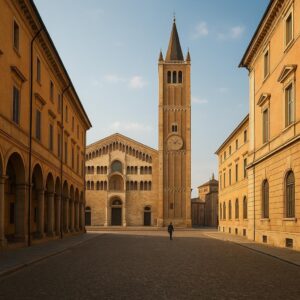
If you’ve already put the Rocca dei Sanvitale on your itinerary, you can expand your trip without leaving the province of Parma. In Fontanellato there’s the Rocca Sanvitale, another fortress belonging to the same family: here the visit is enriched by frescoes and a different yet complementary story. It’s an interesting comparison between two Sanvitale fortresses. Or focus on Parma: its historic centre with the Duomo, the Baptistery and museums is a magnet for lovers of art and good food. Both destinations fit well with the theme of the Castles of the Duchy, the circuit that also includes Noceto. Don’t expect huge distances: these are stops that are easy to combine. And if you have time left, the surrounding Parma countryside offers villages and typical products to discover at a leisurely pace.

Itineraries nearby


💡 Did You Know…?

Within the walls, the legend of the muroni is told: spirits of soldiers in armor who, according to tradition, were walled up alive before the Battle of Legnano (1176) to guard a treasure that was never found. In 2004, near the rocca, a two-meter-deep Bronze Age votive basin emerged, with artifacts perhaps linked to a funerary rite. A detail that makes Noceto unique.