
The National Museum of Abruzzo, the MuNDA, is the region’s principal museum: after the 2009 earthquake it displayed its collections at the former Mattatoio in Borgo Rivera, opposite the Fountain of the 99 Spouts, and on 20 December 2025 it partially reopened in its historic home at Forte Spagnolo. Its route spans archaeology, the Middle Ages, the Renaissance, and the Baroque, with masterpieces recovered and restored. Here’s what to expect:
– Beffi Triptych (1410-1415) and Saint Sebastian by Silvestro dell’Aquila (1478)
– Mammuthus meridionalis from Scoppito and the Amiternum Calendar
– Madonna of Lettopalena and paintings by Mattia Preti
– Nineteenth-century Abruzzo with Michetti, Celommi, and Patini
Events nearby


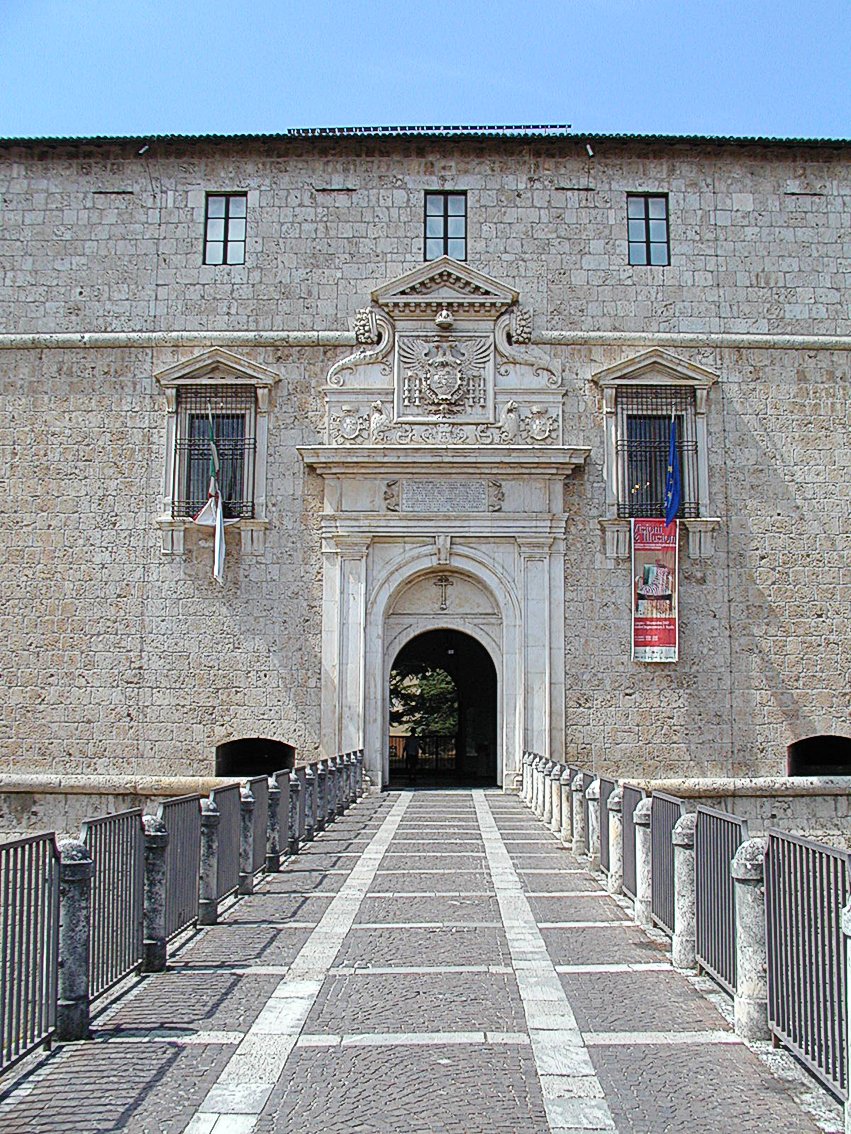
The National Museum of Abruzzo in L’Aquila: its historic home at Forte Spagnolo and collections from the Middle Ages to the twentieth century, including the Beffi Triptych, Saint Sebastian, and the Scoppito Mammoth. 2025 reopening and visitor information.
- https://www.musei.abruzzo.beniculturali.it/musei?mid=63&nome=munda-museo-nazionale-dabruzzo
- munda@beniculturali.it
- Via Tancredi da Pentima, L’Aquila (AQ)
- +39 0862 28420
- Open in Google Maps
- View on Google Images Museo nazionale d’Abruzzo a L’Aquila
Good to know
Introduction
Historical Background
- Late nineteenth century: Civic Museum founded by Mario Chini
- 1942: dismantling of the Civic Museum
- 1949–1951: restoration of the Spanish Fortress
- 23 September 1951: opening at its historic home
- 6 April 2009: earthquake, museum closure
- 19 December 2015: reopening at the former slaughterhouse in Borgo Rivera
- 2019: special autonomy for the museum
- 20 December 2025: partial reopening at the Spanish Fortress
The Route Through the Rooms: From the Middle Ages to the 20th Century
The Scoppito Mammoth and the Archaeological Finds
Why visit it
When to go
Around the Area
Itineraries nearby


💡 Did You Know…?
Fun fact: the Scoppito mammoth was discovered in 1954 and is now one of the most iconic finds; the work Nereid by Emilio Greco was donated by the artist in 1993; the museum has a tactile section and a virtual tour. After the earthquake, many works were recovered from the rubble and restored, such as the thirteenth-century Deposition of Christ from the Cathedral of Penne.