Roman Amphitheatre of Cagliari: Rock-Carved Arena for 10,000 Spectators

The Roman Amphitheatre of Cagliari, built between the 1st and 2nd centuries AD, is carved directly into the limestone rock of Buoncammino hill. It could accommodate up to 10,000 spectators for gladiatorial games and animal hunts. Today, it offers an authentic historical experience just minutes from the historic centre, with panoramic views over the city and sea.

  • Arena and underground galleries: explore the spaces used by gladiators and animals, with atmospheric lighting and details in the rock.
  • Panoramic view: from the upper tiers, enjoy a unique view over Cagliari and its gulf, perfect for photos.
  • Living archaeological site: in summer, it hosts concerts and theatrical performances, returning to its original function in a peaceful way.
  • Strategic location: just a few minutes’ walk from the historic centre and near other sites like Villa di Tigellio and the Castello district.
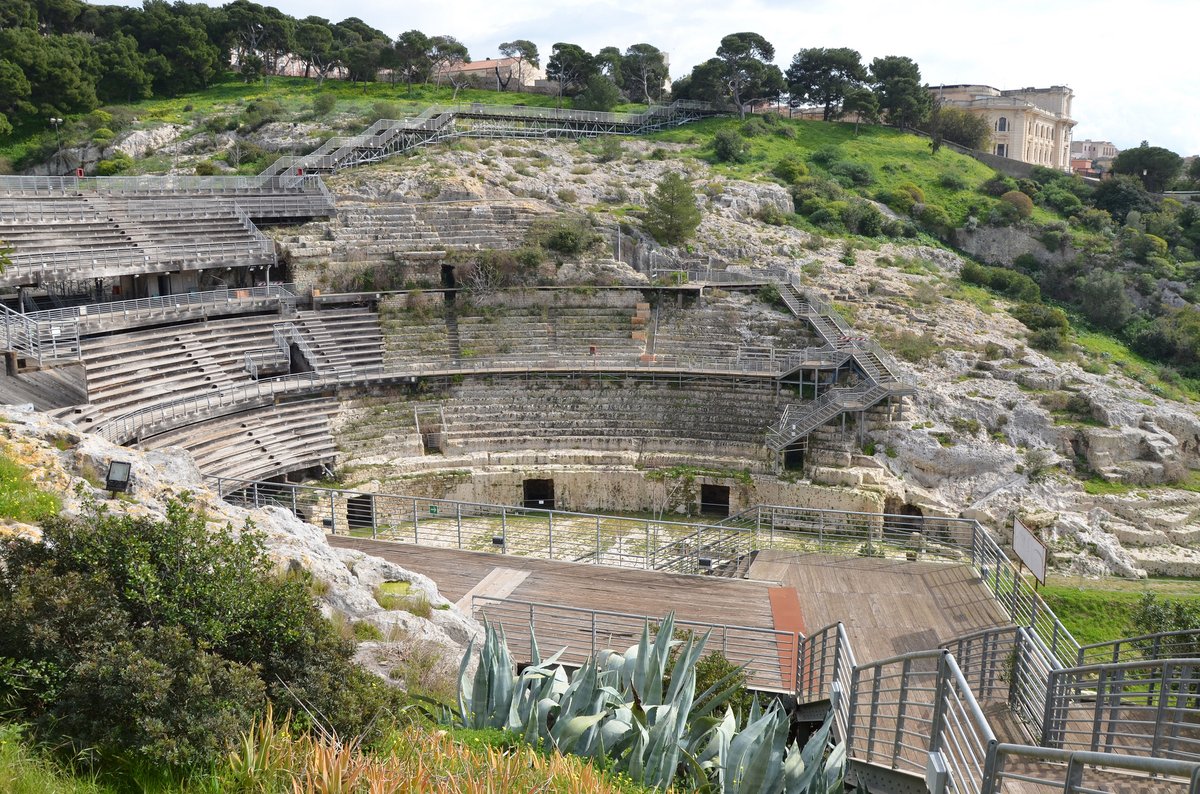
Copertina itinerario Roman Amphitheatre of Cagliari: Rock-Carved Arena for 10,000 Spectators
Roman arena from the 1st-2nd century AD carved into the Buoncammino hill with underground galleries, panoramic views over Cagliari, and summer event possibilities. Practical visiting information.

Good to know


Introduction

As soon as you arrive at the Roman Amphitheatre of Cagliari, you immediately understand it’s not just an archaeological site. It’s a powerful sight, carved directly into the rock of Buoncammino Hill, that makes you feel small in the face of history. The sensation is strange: you’re in the heart of a vibrant city, but just crossing the entrance catapults you back almost two thousand years. The air here smells of ancient stone and distant stories. It’s not just a monument to photograph; it’s a place that asks you to imagine the voices of the crowd, the roar of the games. Personally, I was struck by how this space, once dedicated to the most brutal spectacles, is now an oasis of silence and reflection, nestled among modern houses. A contrast that makes the visit even more memorable.

Historical Background

The amphitheater was built between the 1st and 2nd centuries AD, when Cagliari (then Carales) was an important center of the Roman Empire. It wasn’t just for gladiators: venationes, hunts with exotic animals, and probably public executions were also held here. Think about the logistics: it could accommodate up to 10,000 spectators! Unfortunately, in the Middle Ages, it was used as a quarry for materials to build other city structures, which is why today we mainly see its structure carved into the rock. It’s a shame, but it also makes understanding what has survived even more fascinating. One detail that has always made me reflect: some scholars believe the underlying quarries were used as prisons for those condemned to the spectacles. Chilling.

Brief timeline:

  • 1st-2nd centuries AD: Construction and peak period.
  • Medieval era: Used as a material quarry.
  • 19th century: First archaeological investigations.
  • 2000s: Restoration and enhancement for tourist visits.

Exploring the Galleries and Quarries

The most evocative part, in my opinion, is exploring the galleries and accessible underground spaces. They’re not enormous, but walking through the same passages used by gladiators and animals sends shivers down your spine. The lighting is designed to create atmosphere without being overly theatrical. Pay attention to the details in the rock: you can still see the grooves left by tools during excavation. In some spots, you can access what were likely the cages for wild animals (the so-called ‘carceres’). It’s dark, cool, and damp down there – a complete sensory experience that explanatory panels alone cannot provide. I recommend taking your time in these spaces: it’s here that the amphitheatre stops being a ruin and becomes a living place in your imagination.

The View from Above and Architectural Details

As you ascend to the upper tiers (partially reconstructed), you’ll enjoy a unique view of Cagliari and its gulf. It’s the perfect moment for a photo, but also to understand the site’s strategic position. From up here, you can better appreciate the elliptical shape and Roman engineering. Look carefully at the few remains of the external limestone facade: they give an idea of how majestic it once was. I like searching for ancient graffiti (there are some, though barely visible) – they’re like messages from the past. In summer, this space sometimes becomes a stage for concerts and theatrical performances. Seeing it return to its original function, even in a peaceful way, is a special feeling. A tip? Sit for a moment on one of the steps and listen to the wind through the rocks: it feels like hearing a distant echo.

Why Visit It

For three concrete reasons. First: it’s the most important Roman monument in Sardinia, a piece of imperial history on an island we often associate only with the Nuragic period. Second: it offers an unusual perspective on the city. From its steps, you see Cagliari from above, with the sea in the background – a postcard few tourists seek. Third: it’s a ‘living’ site. It’s not a dusty museum; in summer it hosts concerts and performances (check the schedule), so you can experience the amphitheater as the ancients did, though today you listen to jazz or plays instead of gladiator fights. It’s a layered experience: archaeology, panorama, and contemporary culture all in one ticket.

When to Go

The best time? Early afternoon, especially in spring or early autumn. The side sunlight enhances the shadows and volumes of the rock, making photos spectacular and the atmosphere more evocative. In summer, avoid the midday hours: it gets very hot and there’s little shade. In winter, on the other hand, clear days offer crystalline light, and you can enjoy the view without crowds. I once went just before sunset in winter: the orange sky above the ruins was something magical. Be mindful of closing times, though!

In the Surroundings

The visit to the amphitheater pairs perfectly with another historical gem: the Villa of Tigellio, just a few minutes’ walk away. These are the remains of a Roman domus with beautiful mosaics, completing the picture of daily life in ancient Carales. For a total contrast, instead, head up to the historic Castello district. Among its narrow streets and Pisan walls, you can visit the Cathedral of Santa Maria and enjoy a coffee in a panoramic square. Two different faces of Cagliari’s long history, close and easily combined.

💡 Did You Know…?

A hyper-realistic detail few know: beneath the arena, the original hydraulic conduits are still visible, used to drain water after shows or for special effects during performances. Additionally, excavations have uncovered remains of exotic animals like lions and tigers, brought from Africa for hunts. If you visit at sunset, the warm light accentuates the shadows on the rock walls, creating an almost magical atmosphere. Remember: there are no fountains or facilities inside, so bring a water bottle.