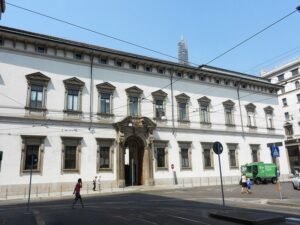
Royal Palace Milan: International Exhibitions and Habsburg Apartment

Royal Palace Milan is an internationally renowned exhibition center that combines millennia of history with high-level temporary exhibitions. Overlooking Piazza Duomo, it offers a complete cultural experience with neoclassical architecture and constantly renewed artistic programming.

  • Temporary exhibitions of international artists such as Van Gogh, Picasso, and Kandinsky
  • State Apartment with original 18th-century Habsburg furnishings
  • Strategic location just steps from the Duomo and Galleria Vittorio Emanuele II
  • Neoclassical architecture with majestic halls and history from the Middle Ages to today


Events nearby


Copertina itinerario Royal Palace Milan: International Exhibitions and Habsburg Apartment
Royal Palace Milan hosts temporary exhibitions of artists like Van Gogh and Picasso, along with an 18th-century State Apartment. A historic exhibition center just steps from the Duomo.

Good to know


Introduction

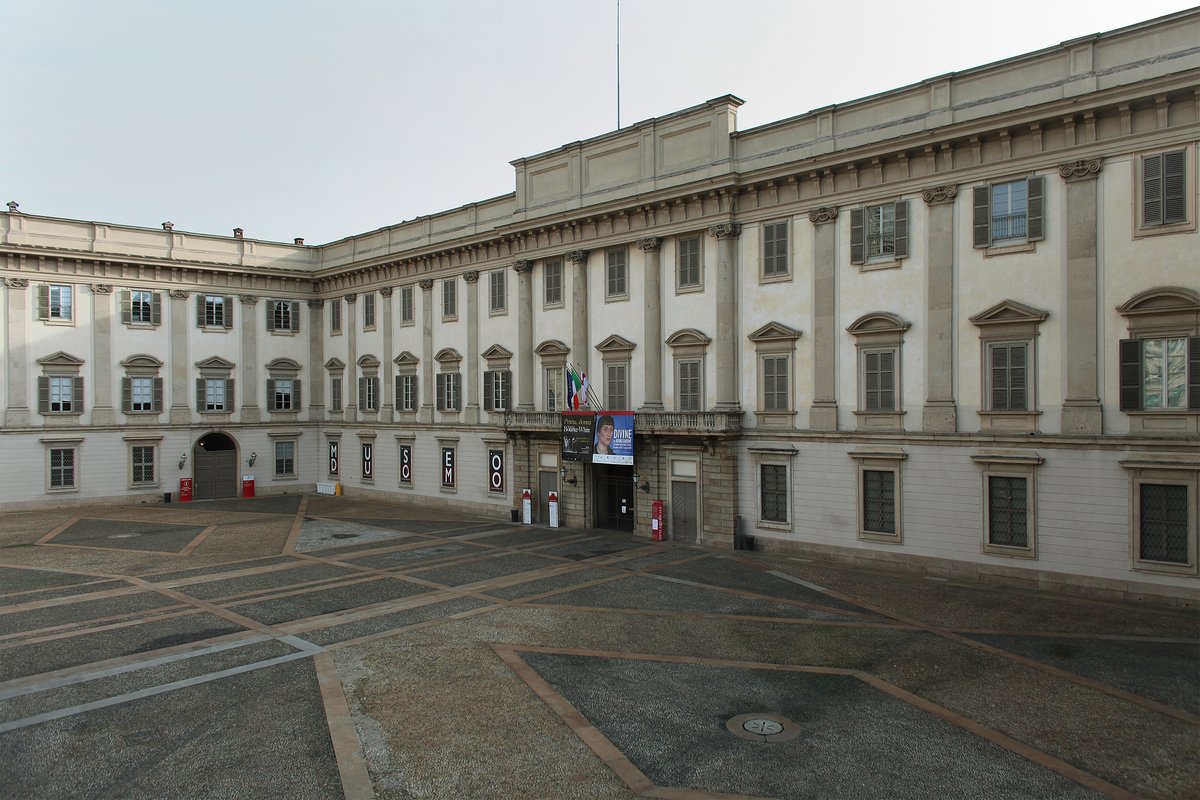
As soon as you enter Piazza Duomo, your gaze is captured by Palazzo Reale: a majestic building that seems to narrate centuries of Milanese history. It’s not just a palace, but a true beating heart of culture, where ancient art converses with the most innovative temporary exhibitions. Its neoclassical facade, with those large windows and the portico, invites you to discover what lies within. If you love art or are simply curious to understand the soul of Milan, this is the perfect starting point. You’ll immediately feel immersed in an elegant and stimulating atmosphere, far from the city’s chaos, yet right in its most vibrant center.

Historical Overview

The history of Palazzo Reale begins in the Middle Ages, when it was the Palazzo del Broletto Vecchio, the seat of the municipal government. In the 18th century, under Maria Theresa of Austria, it became a royal residence and was renovated in the neoclassical style by Giuseppe Piermarini, the same architect who designed La Scala. In the 20th century, after hosting the House of Savoy, it was severely damaged by bombing during World War II. Today, fully restored, it is an internationally renowned exhibition center, known for shows like those on Monet or Caravaggio. Its evolution reflects the transformations of Milan, from a medieval city to a capital of fashion and art.

  • Middle Ages: Originates as Palazzo del Broletto Vecchio
  • 1778: Neoclassical renovation by Piermarini
  • 1943: Damage from wartime bombing
  • Today: World-class exhibition center

Temporary Exhibitions: An Always Surprising Calendar

Palazzo Reale is not a static museum: its true strength lies in the temporary exhibitions that follow one another throughout the year, attracting visitors from all over the world. Here you’ve seen works by artists like Van Gogh, Picasso, or Kandinsky, often displayed in meticulously curated settings. The spacious, bright halls are perfect for immersing yourself in diverse atmospheres, from impressionism to contemporary art. Always check the schedule on the official website: you might find a retrospective on a Renaissance master or a photographic exhibition by an emerging artist. It’s this variety that makes each visit unique and brings you back willingly.

The Representative Apartment: A Dive into Habsburg Luxury

Don’t miss the Representative Apartment, a wing of the palace that transports you directly into the Habsburg 18th century. These rooms, used by Maria Theresa of Austria and later by the House of Savoy, are a triumph of stuccoes, mirrors, and period furniture. Walking between the Hall of Caryatids, with its majestic sculptural supports, and the private rooms, you’ll understand how Milanese nobility lived. The original furnishings and precious wood floors create an intimate and refined atmosphere, far from the large crowds of exhibitions. It’s a corner of authentic history that completes the visit, showing you the most private and opulent side of the palace.

Why Visit It

Visiting Palazzo Reale is worthwhile for at least three concrete reasons. First, the high-level temporary exhibitions always offer something new, even if you’ve already been to Milan. Second, the location is unbeatable: within a two-minute walk, you’re at the Duomo or the Galleria Vittorio Emanuele, ideal for a focused cultural itinerary. Third, the internal architecture, with its majestic halls and the Representative Apartment, gives you a glimpse into Milanese history without needing to travel elsewhere. It’s a complete experience that combines art, history, and practicality in one place.

When to Go

The best time to visit Palazzo Reale is early morning on weekdays, right when it opens. You’ll find fewer crowds and can enjoy the exhibitions at a leisurely pace, without being jostled. If you prefer a more atmospheric experience, try going in the late afternoon during autumn: the light filtering through the large windows creates spectacular shadow plays on the artworks. Avoid weekends and blockbuster exhibition periods, such as those featuring famous artists, if you don’t like queues. In any case, Milan is a vibrant city year-round, so plan according to your specific interests.

In the Surroundings

After Palazzo Reale, continue your cultural tour with two nearby experiences. Just a few steps away, step into the Milan Cathedral: climb to the terraces for a breathtaking view of the city and admire the Gothic spires up close. Then, head to the Ambrosiana Art Gallery, where you can see masterpieces like Leonardo da Vinci’s ‘The Musician’ and Raphael’s ‘Cartoon of the School of Athens’. Both places enrich your visit with complementary art and history, without straying far from the center.

Itineraries nearby


💡 Did You Know…?

Few know that beneath the flooring of some rooms, traces of Roman Milan of Mediolanum have been uncovered, including remains of the circus. Furthermore, during restoration work, medieval frescoes hidden for centuries beneath the plaster were revealed. An interesting fact: the Hall of the Caryatids, severely damaged by the 1943 bombings, was deliberately left unfinished in some parts as a memorial monument to the war, creating a powerful contrast between the original beauty and the wounds of history.