Palazzo Strozzi: Contemporary Art Exhibitions in a Renaissance Palace

Palazzo Strozzi is an active cultural center in the heart of Florence, famous for temporary exhibitions of modern and contemporary art housed in a 16th-century Renaissance palace. It offers a high-quality cultural experience away from the crowds of the busiest museums.

  • Temporary exhibitions by international artists such as Jeff Koons and Marina Abramović
  • Renaissance architecture with an arcaded courtyard and rusticated stonework
  • Central location just steps from Piazza della Repubblica and Via de’ Tornabuoni
  • Managed by the Fondazione Palazzo Strozzi with innovative exhibition programming


Events nearby


Copertina itinerario Palazzo Strozzi: Contemporary Art Exhibitions in a Renaissance Palace
Palazzo Strozzi in Florence combines Renaissance architecture with temporary exhibitions by international artists. Discover the arcaded courtyard, exhibitions by Jeff Koons and Marina Abramović, and the central location with no queues.

Good to know


Introduction

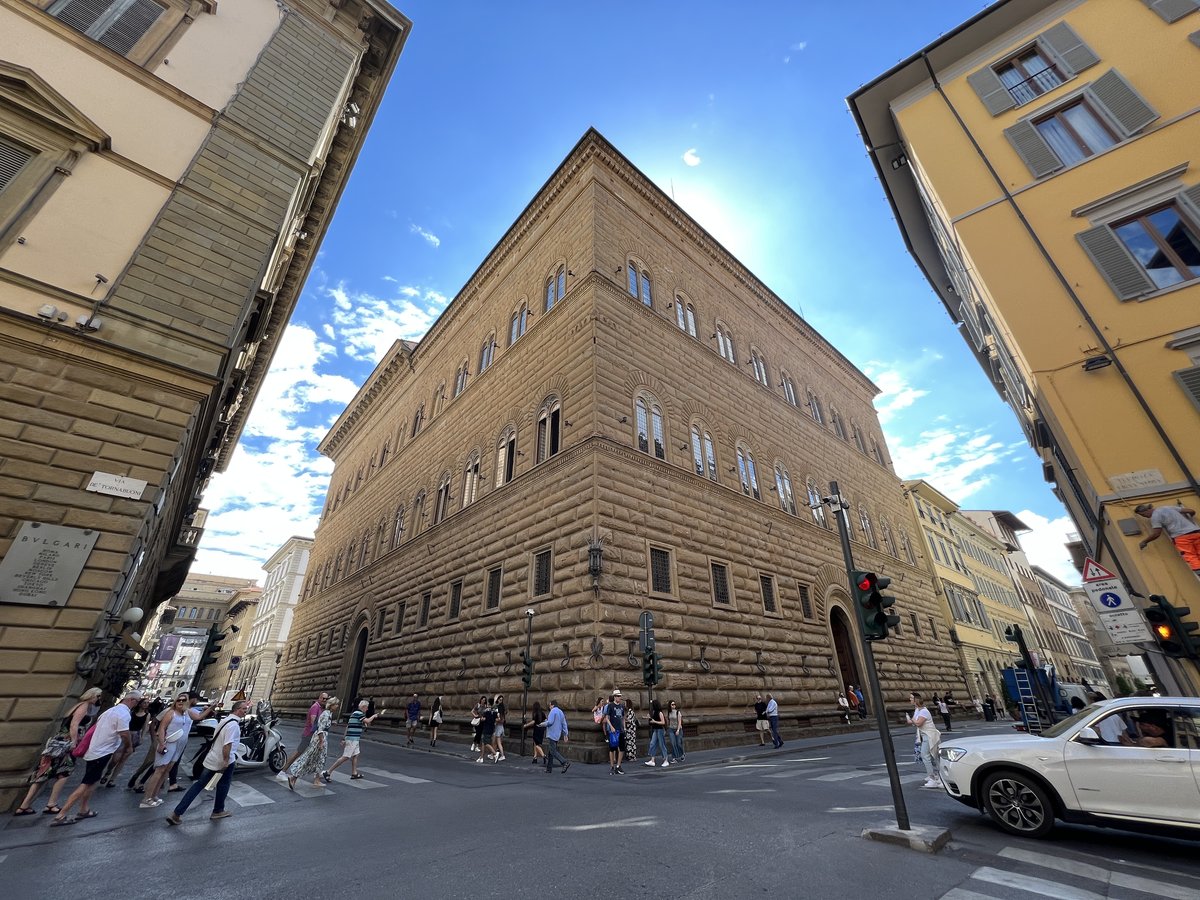
Palazzo Strozzi welcomes you with its imposing facade of pietra forte, a Renaissance masterpiece that dominates the square of the same name. It is not just a historic palace, but a vibrant cultural center where ancient art engages with international-level temporary exhibitions. Entering the courtyard, surrounded by elegant arcades, you breathe in a unique atmosphere: here Florentine history blends with contemporary creativity. It is the perfect place for those seeking a high-quality cultural experience, away from the crowds of the busiest museums, yet in the beating heart of Florence.

Historical Overview

The construction of Palazzo Strozzi began in 1489 at the behest of Filippo Strozzi, a wealthy banker and rival of the Medici family, based on a design by Benedetto da Maiano. Completed in 1538, the palace became a symbol of the Strozzi family’s power. Over the centuries, it has hosted nobles, institutions, and since 2006, it has been managed by the Palazzo Strozzi Foundation, which transformed it into one of Italy’s leading exhibition spaces. Today, it is renowned for temporary exhibitions ranging from ancient to contemporary art, attracting visitors from around the world.

  • 1489: Construction begins at the behest of Filippo Strozzi
  • 1538: Completion of the palace after nearly 50 years of work
  • 2006: Establishment of the Palazzo Strozzi Foundation for cultural management
  • Today: Internationally acclaimed exhibition center

The Courtyard: A Renaissance Living Room

As soon as you cross the threshold, you’ll find yourself in the inner courtyard, a true architectural gem. The symmetrical arcades on three sides create an effect of elegance and harmony, typical of Florentine Renaissance. This space, illuminated by natural light, is not just a passageway, but a place to linger and observe the details: the decorated capitals, the kneeling windows, and the central well tell centuries of history. Temporary installations are often organized here that dialogue with the architecture, making each visit unique. It’s the ideal spot for a break during the day, immersed in beauty without the city’s noise.

Exhibitions: From Classic to Contemporary

Palazzo Strozzi stands out for its exhibition programming, which alternates between major names in classical art and contemporary experiments. The carefully curated exhibitions occupy both the noble floor with its frescoed ceilings and the more modern spaces on the ground floor. Recent exhibitions have brought artists like Jeff Koons or Marina Abramović to Florence, creating a unique bridge between past and present. The installations often extend beyond the rooms, spilling into the courtyard or façade, in a continuous dialogue with the city. This innovative approach makes every visit surprising, even for those already familiar with the palace.

Why Visit

Palazzo Strozzi is worth visiting for three concrete reasons. First, it offers high-quality exhibitions without the endless queues of galleries like the Uffizi, allowing you to enjoy art at a relaxed pace. Second, the architecture itself is a work of art: from the courtyard to the frescoed halls, every corner tells the story of Renaissance Florence. Third, its location is strategic: it’s just steps from Piazza della Repubblica and Via de’ Tornabuoni, making it ideal to include in a day of shopping or cultural discoveries in the historic center.

When to Go

The best time to visit Palazzo Strozzi is early in the morning, right after opening, when natural light illuminates the courtyard and the rooms are less crowded. This way, you can admire the architecture in complete tranquility before immersing yourself in the exhibitions. If you prefer a more atmospheric experience, try late afternoon, when the sun’s rays gently caress the stone facade, creating perfect shadow plays for photos. Avoid midday hours, especially during peak season, to fully enjoy the experience.

In the Surroundings

After your visit, explore the surroundings to enrich your day. Just a few minutes’ walk away is Piazza della Repubblica, with its historic cafes like Giubbe Rosse, perfect for a break. If you love craftsmanship, head to nearby Via de’ Tornabuoni, where you’ll find Florentine leather workshops and traditional jewelry shops. For another dose of culture, walk to the Church of Santa Trinita, which houses frescoes by Ghirlandaio, or spend time browsing the stalls at the Mercato di Sant’Ambrogio, less touristy than San Lorenzo Market.

Itineraries nearby


💡 Did You Know…?

Look carefully at the main door on Via Tornabuoni: you’ll notice two iron rings on the sides. They weren’t for tying horses, but for the “sportelle”, large wooden shutters that were closed at night to protect the palace. A little-known curiosity is the pietra serena stone used for the rustication: it comes from the quarries of Fiesole and its gray-blue color changes tone with the daylight, giving the palace an ever-changing appearance. In the courtyard, look for the Strozzi coat of arms with the three crescent moons: according to legend, they symbolized marital fidelity, but in reality they were an astrological reference to the constellation of Cancer, considered auspicious.