San Giusto Castle: Civic Museum and Panoramic View of the Gulf of Trieste

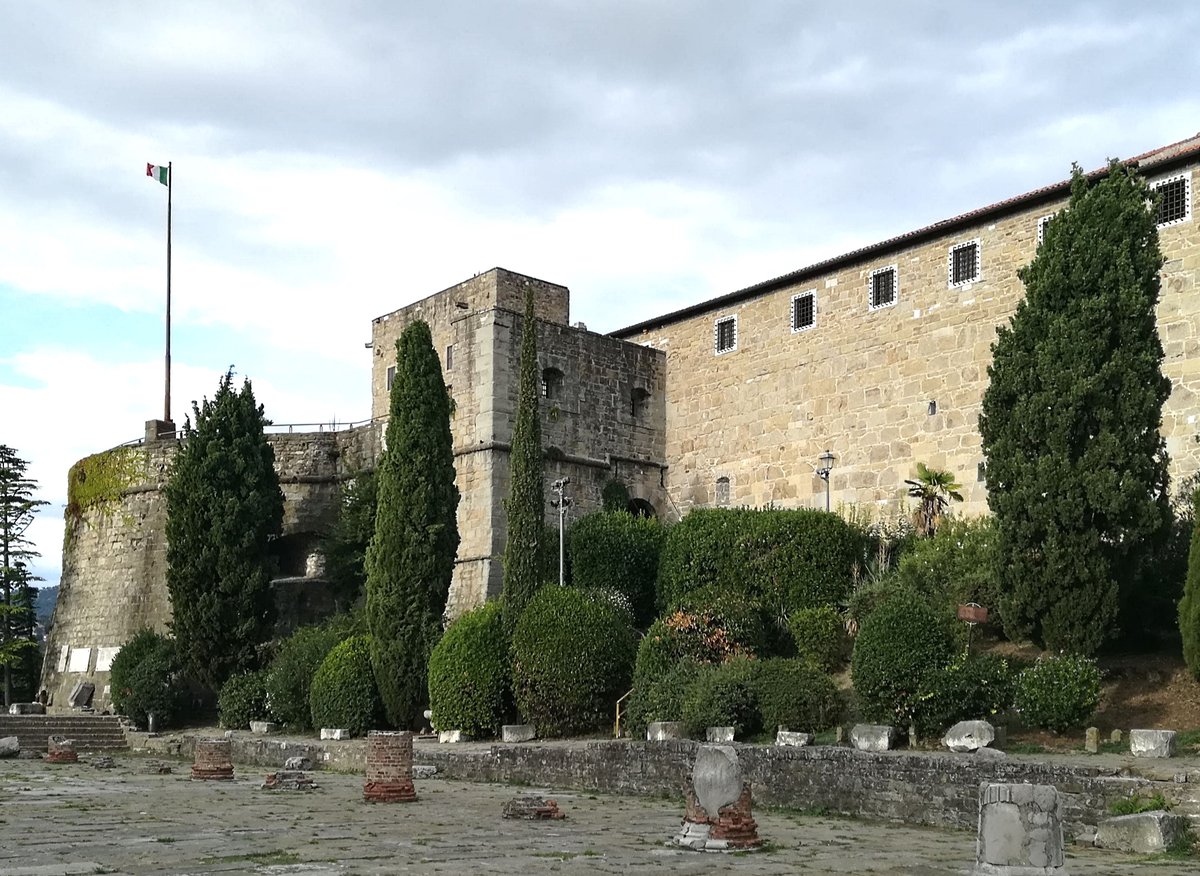
San Giusto Castle, built between the 15th and 17th centuries, overlooks Trieste from its hill. It houses the Civic Museum with armor, ceramics, and Roman artifacts, while the patrol walkways offer unique panoramas of the gulf and Istrian coast. Perfect for immersing yourself in history and capturing unforgettable photos.
• Civic Museum with 16th-century armor, ceramics, and Roman artifacts
• Panoramic view of the Gulf of Trieste and Istrian coast from the ramparts
• Free walks along patrol walkways and medieval courtyards
• Main tower with climb for a 360° view of the city
Copertina itinerario San Giusto Castle: Civic Museum and Panoramic View of the Gulf of Trieste
Medieval fortress housing the Civic Museum, with Roman artifacts and ancient weapons. Stroll along the ramparts for breathtaking views of the gulf reaching the Istrian coast. Easily accessible from the city center.

Good to know


Introduction

Arriving at the Castle of San Giusto is like stepping onto a natural stage overlooking all of Trieste. It’s not just a medieval fortress; it’s the perfect vantage point to understand this border city, where the Adriatic Sea merges with the Karst mountains. The view from the weapons square leaves you breathless: the gulf unfolds before you, ships look like tiny toys, and the red rooftops of the historic center create a living mosaic. Personally, I like to think that every stone in these walls has absorbed centuries of stories, from the struggles between Venice and the Habsburgs to the bora winds that still sweep through today. It’s not a static museum, but a place that breathes with the city below.

Historical Overview

The castle’s history is a tapestry of power and defense. It stands on the remains of a prehistoric hillfort and an early Christian basilica, but the structure we see today began to take shape in the 1400s, when Trieste placed itself under Venetian protection. The Austrians, arriving later, completed the fortifications by adding bastions and gun emplacements. It never witnessed major battles, but its intimidating presence was enough to deter attacks. Today it houses the Civic Museum, with exhibits ranging from armor to local ceramics. An interesting detail: the central keep, the oldest part, contains a small chapel dedicated to Saint Giusto, the city’s patron saint.

  • Prehistory: first settlements on the hill
  • 1470-1630: construction of the Venetian fortress and subsequent Habsburg expansions
  • 1936: opening of the Civic Museum in the castle
  • Today: museum site and iconic panoramic viewpoint

The Museum Within the Walls

Visiting the Civic Museum here is a unique experience, as the rooms are the same ones that once housed soldiers and storage facilities. Don’t expect a high-tech setup, but rather an intimate journey into local history. The 16th-century armor still looks ready to be worn, and the collection of ceramics tells the story of trade that passed through the port. I was particularly struck by the Roman artifacts found during excavations on the hill, which remind us that this was a strategic point already two thousand years ago. The section dedicated to ancient weapons, with halberds and swords, allows you to imagine the life of guards within these thick walls. It’s a museum to be savored slowly, perhaps after admiring the view, as it adds depth to what you’ve seen from above.

Walking on the Fortifications

The true magic of the castle lies in being able to explore it freely, walking along the ramparts and among the bastions. Every corner offers a different perspective on the city: on one side you can glimpse the Old Port with its cranes, on the other the Roman Theatre, and beyond, on clear days, the Istrian coast. I love getting lost in the narrow passages that connect the various parts of the fortress, imagining the sentries who walked the same path centuries ago. Don’t forget to climb the main tower, even if the stairs are a bit steep: from up there, Trieste looks like a model city, and you understand why this hill was so contested. It’s a place that invites you to linger, to sit on a bench and let your gaze wander without haste.

Why Visit It

Three concrete reasons not to skip this visit. First: the view is simply irreplaceable, it’s the best way to orient yourself in the city and understand its geography. Second: the combination of history and scenery, rare in a single site, allows you to immerse yourself in the past while enjoying the present. Third: it’s a versatile place, suitable for both a quick glance and an in-depth visit of a couple of hours, depending on whether you just want to take photos or explore every corner of the museum. Plus, being in the city center, it easily integrates with any Trieste itinerary.

When to Go

The best time? Without a doubt, the autumn sunset, when the sun sets behind the Karst and paints the sea in shades of orange and purple. In summer, it can be crowded and very hot, while in winter, the bora wind makes the climb a windy adventure (but atmospheric, if you’re prepared). I prefer the late afternoon hours, when the light is softer and day-trippers begin to thin out. In spring, on the other hand, the vegetation around the castle blooms, adding a splash of color to the gray stones. Avoid days with thick fog, as you risk missing the panorama that’s the true star of the show.

In the Surroundings

Descending from the hill, it’s worth getting lost in the Roman Theatre, right at the foot of the castle: it’s a well-preserved site that seems to emerge from the urban fabric, and often hosts summer events. Not far away, Caffè San Marco is a Triestine institution perfect for a coffee break in an Art Nouveau atmosphere, where time seems to have stopped in the era of Svevo and Saba. Both places complete the historical experience begun at the castle, showing how the layers of the past coexist with Trieste’s daily life.

💡 Did You Know…?

A fascinating detail: in the castle courtyard lies the Kissing Stone, a stone block where, according to local legend, couples who kiss will have eternal love. Additionally, the keep still houses the original 17th-century cannons, aimed toward the sea as if ready to defend the city. During World War II, the castle was used as an anti-aircraft position, and today, traces of that era can be seen in the underground areas, often overlooked by hurried tourists.