Evocative Introduction
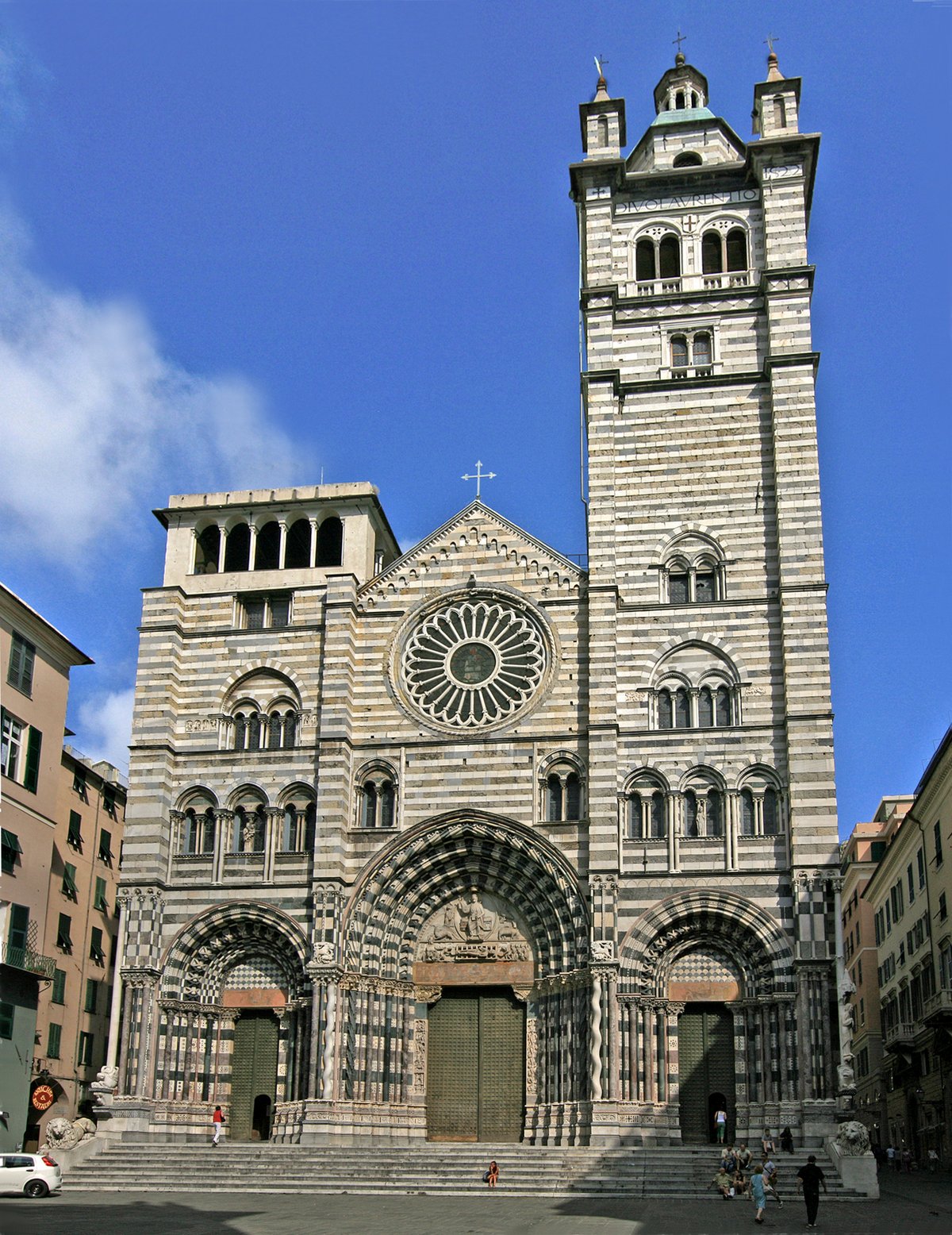
Entering Piazza San Lorenzo is like diving into medieval Genoa. The Cathedral looks at you with its striped black and white facade, asymmetrical and powerful. Two marble lions guard the staircase, and you immediately understand that every stone here has a story. But inside is where the real surprise awaits: in the right nave, inside a case, there is a 381mm shell that pierced the roof in 1941 without exploding. A miracle, they say. And then, in the basement, the Sacro Catino: a green glass dish that legend says is the Holy Grail. Chilling stuff, I assure you.
Evocative Introduction
Entering Piazza San Lorenzo is like diving into medieval Genoa. The Cathedral looks at you with its striped black and white facade, asymmetrical and powerful. Two marble lions guard the staircase, and you immediately understand that every stone here has a story. But inside is where the real surprise awaits: in the right nave, inside a case, there is a 381mm shell that pierced the roof in 1941 without exploding. A miracle, they say. And then, in the basement, the Sacro Catino: a green glass dish that legend says is the Holy Grail. Chilling stuff, I assure you.
Historical Overview
The cathedral stands on a Roman burial ground, but its history truly takes off with the First Crusade. The Genoese led by Guglielmo Embriaco return from Jerusalem, bringing relics and riches. The building was reconsecrated by Pope Gelasius II in 1118. Over the centuries, styles overlapped: Romanesque, Gothic, Renaissance. A fire in 1296 damaged the structure, and the facade was completed in Gothic forms by 1312. The right bell tower was finished in 1522, while the left one remains unfinished. And right in front of the cathedral, in 1941, the miracle of the bomb took place. Here are the key moments:
Historical Overview
The cathedral stands on a Roman burial ground, but its history truly takes off with the First Crusade. The Genoese led by Guglielmo Embriaco return from Jerusalem, bringing relics and riches. The building was reconsecrated by Pope Gelasius II in 1118. Over the centuries, styles overlapped: Romanesque, Gothic, Renaissance. A fire in 1296 damaged the structure, and the facade was completed in Gothic forms by 1312. The right bell tower was finished in 1522, while the left one remains unfinished. And right in front of the cathedral, in 1941, the miracle of the bomb took place. Here are the key moments: