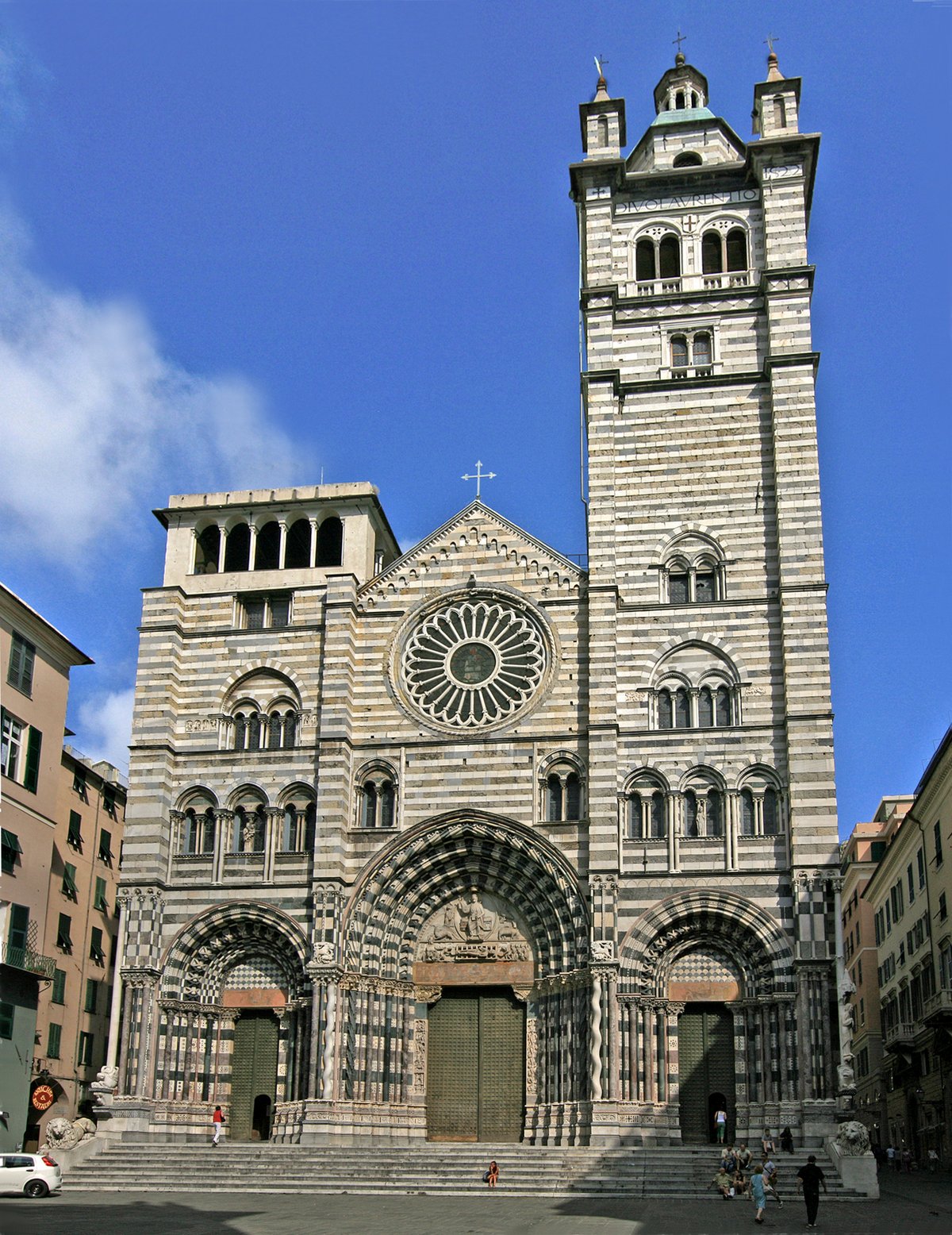
St. Lawrence Cathedral dominates Genoa’s historic center with its unmistakable black and white striped facade, a masterpiece of Ligurian Romanesque-Gothic architecture. Inside, you’ll find the Chapel of St. John the Baptist with its relics and the Treasury Museum, which houses the Sacred Basin. Its central location in Piazza San Lorenzo makes it an ideal starting point for exploring Genoa’s narrow alleyways.
- Black and white striped facade, a unique example of Ligurian Romanesque-Gothic style
- Treasury Museum with the Sacred Basin, a sacred object of immeasurable value
- Chapel of St. John the Baptist, the city’s patron saint, with relics
- Panoramic views over the historic center’s rooftops and the ancient port from the bell tower
Introduction
The Cathedral of San Lorenzo is not just a church; it’s the visual and spiritual landmark of Genoa. As soon as you see it, with those black and white stripes that look like they were drawn with a pencil, you immediately understand you’re looking at something special. It’s located right in the heart of the historic center, among narrow alleys that smell of focaccia, and it seems to have been watching over the city for centuries. Entering here isn’t just a tourist visit: it’s immersing yourself in a place that has seen pilgrims, doges, and sailors pass through, each with their own stories. The Gothic facade, with its carved portals, invites you to pause for a moment before crossing the threshold. Inside, the atmosphere is solemn yet welcoming, with light filtering through the stained glass windows and illuminating the details. Personally, I’m always struck by how this building manages to be majestic without being overwhelming. Perhaps because it’s so integrated into everyday life: people walk past it on their way to the market or to grab a coffee, yet it never loses its charm. If you’re in Genoa, it’s one of those stops you simply can’t miss, even if you’re not a fan of sacred art. It leaves you with something, an impression that lingers.
Historical Notes
The history of the Cathedral is a true Genoese saga. Construction began in the 1100s, but it took centuries to complete, with continuous modifications. It was consecrated in 1118, though it looked very different back then. A tragic event marked its history: during World War II, in 1941, an English bomb struck the nave without exploding, and it is said that this miracle was attributed to the intercession of Saint Lawrence. Today, that shell is preserved as a relic, a tangible reminder of the war. Over the centuries, the cathedral underwent changes, especially after a fire in 1296, which led to its reconstruction in Gothic style. It has been the center of the city’s religious life, linked to the Doges and the great Genoese families who celebrated their splendors here. I sometimes think of all the events it has hosted, from coronations to public ceremonies, while today it welcomes tourists from around the world. Its timeline is a summary of Genoa’s history:
- 1118: Consecration of the first structure
- 1296: Major fire and reconstruction in Gothic style
- 15th-16th centuries: Addition of the Chapel of Saint John the Baptist and the treasury
- 1941: Bombing with the unexploded bomb
- Today: Home to the Treasury Museum and a major tourist attraction
The Treasury Museum: More Than Just Gold
Many visit the Treasury for its splendor, but in my opinion, the true value lies in the details. Yes, there are gold and silver objects that leave you speechless, like the Sacro Catino (which legend claims is the plate used at the Last Supper) or the Cross of the Zaccaria. However, what struck me most were the stories behind these objects. Take the Treasury: it’s not just a collection of riches, but a narrative of Genoa’s power and devotion during the Middle Ages, when the city was a maritime republic rivaling Venice. The objects came from all over the Mediterranean, brought by merchants and crusaders, and each piece has a provenance that speaks of cultural exchanges. The museum is small, taking about half an hour to visit, but it’s well-organized, with clear explanations that avoid an encyclopedic tone. One thing I noticed: the lighting is designed to highlight the reflections of precious metals, creating an almost magical atmosphere. If you’re a history enthusiast, you’ll find insights here into how Genoa managed its relics and prestige. Otherwise, simply admire the craftsmanship of past artisans.
The Lions of San Lorenzo: Silent Guardians
One of the details that fascinates me most about the cathedral are the two marble lions flanking the main staircase. They are not mere decorations: they are symbols of strength and protection, placed there in the 13th century to watch over the entrance. You look at them and they seem alive, with proud expressions and powerful paws. Legend says they represent the might of the Republic of Genoa, but I like to think of them as the silent guardians of this place, witnesses to centuries of history. They have been restored several times, yet retain an ancient aura. I often see them ignored by hurried tourists, who focus on the facade or head straight inside, but it’s worth pausing a moment to observe them. Notice how they differ from each other: one has a calmer expression, the other almost menacing. Perhaps they reflect Genoa’s dual soul—mercantile and warlike. In any case, they exemplify how medieval art could infuse meaning into every element. Next time you pass by, take a look: they’ll make you feel part of a grander story.
Why Visit It
Visiting the Cathedral of San Lorenzo is worthwhile for at least three concrete reasons. First, it’s a perfect example of Ligurian Gothic architecture, with that striped facade you won’t find elsewhere in Italy, and inside, the frescoes and side chapels tell centuries of art. Second, the Treasury Museum offers a concentration of history and beauty in a small space, ideal if you have limited time but want to see something unique, like the Sacro Catino. Third, the location is strategic: it’s in the historic center, so you can combine the visit with a stroll through the caruggi, a stop for focaccia, or an exploration of Piazza De Ferrari. Plus, entry to the cathedral is free (the museum has a modest ticket), making it accessible to everyone. In short, even if you’re not an art expert, here you’ll find an authentic piece of Genoa, without frills.
When to go
The best time? I recommend going early in the morning, right when it opens, when the sunlight hits the facade and creates shadow plays on the black and white stripes. The atmosphere is more peaceful, with few tourists, and you can enjoy the solemnity of the place without the crowds. Alternatively, in the late afternoon of autumn, when the light is warmer and the surrounding alleyways come alive with local life. Avoid peak summer hours, as it can become crowded and lose some of its charm. If possible, try to coincide with a clear-sky day: the black stone of the facade stands out even more. Personally, I’ve noticed that in winter, on clear days, the effect is particularly striking, almost like a postcard.
In the Surroundings
After your visit, explore the surroundings to complete your Genoese experience. Just a short walk away is Palazzo Ducale, the ancient seat of government of the Republic, now hosting exhibitions and events: its Renaissance architecture pleasantly contrasts with the cathedral’s Gothic style. Then, for a thematic experience, take a quick trip to the Museo di Sant’Agostino, which preserves Ligurian medieval sculptures and artworks, perfect for delving deeper into the area’s historical-artistic context. Both sites are reachable on foot within minutes, immersed in the same network of alleys that makes Genoa unique. If you’re in the mood for something lighter, wander among the stalls of the San Lorenzo street market, where you can breathe in the city’s authentic atmosphere.