Haven: The Largest Wreck in the Mediterranean
Imagine diving into the sea off Arenzano and, after just a few minutes, seeing a colossal shape emerge from the blue. It’s the Haven, a supertanker 334 meters long lying at a depth of 80 meters. The largest fully diveable wreck in the Mediterranean. It’s not just a pile of rusty iron: it’s a living ecosystem, a monument to the power of the sea, and a reminder of the fragility of the environment. Here, every dive is a plunge into history and nature.
Haven: The Largest Wreck in the Mediterranean
Imagine diving into the sea off Arenzano and, after just a few minutes, seeing a colossal shape emerge from the blue. It’s the Haven, a supertanker 334 meters long lying at a depth of 80 meters. The largest fully diveable wreck in the Mediterranean. It’s not just a pile of rusty iron: it’s a living ecosystem, a monument to the power of the sea, and a reminder of the fragility of the environment. Here, every dive is a plunge into history and nature.
Historical Background
Launched in 1973, the Haven was one of the largest oil tankers in the world. In 1988, it was hit by a missile in the Persian Gulf but was repaired. On April 11, 1991, while unloading crude oil at the Multedo terminal in Genoa, an explosion tore open the deck. The fire killed 5 crew members and spilled 144,000 tons of oil into the sea. On April 14, the ship, towed off the coast of Arenzano, broke in two: the bow sank to 490 m, the rest settled at 80 m. It was the worst ecological disaster in the Mediterranean. Today the wreck is a dive site, but safety remains at the center of debate.
Historical Background
Launched in 1973, the Haven was one of the largest oil tankers in the world. In 1988, it was hit by a missile in the Persian Gulf but was repaired. On April 11, 1991, while unloading crude oil at the Multedo terminal in Genoa, an explosion tore open the deck. The fire killed 5 crew members and spilled 144,000 tons of oil into the sea. On April 14, the ship, towed off the coast of Arenzano, broke in two: the bow sank to 490 m, the rest settled at 80 m. It was the worst ecological disaster in the Mediterranean. Today the wreck is a dive site, but safety remains at the center of debate.
Dive: What to Expect
The dive on the Haven is reserved for experienced divers, with depths ranging from 33 m at the smokestack to 55-60 m on the deck, and up to 80 m at the propeller. The descent follows a line leading to the aft castle. Here life explodes: gorgonians, sponges, jewel anemones and schools of sardines, seabreams, dentex, and tuna. You explore decks and corridors, with windows filtering an intense blue light. The slow ascent offers continuous spectacles. Attention: only authorized diving operators, Trimix mixes for the deepest parts. The wreck is a fascinating but insidious labyrinth: experience and respect for procedures are required.
Dive: What to Expect
The dive on the Haven is reserved for experienced divers, with depths ranging from 33 m at the smokestack to 55-60 m on the deck, and up to 80 m at the propeller. The descent follows a line leading to the aft castle. Here life explodes: gorgonians, sponges, jewel anemones and schools of sardines, seabreams, dentex, and tuna. You explore decks and corridors, with windows filtering an intense blue light. The slow ascent offers continuous spectacles. Attention: only authorized diving operators, Trimix mixes for the deepest parts. The wreck is a fascinating but insidious labyrinth: experience and respect for procedures are required.
Marine Life and Environment
The 1991 fire burned paints and coatings, promoting the colonization of benthic organisms. Today, the Haven is a biodiversity oasis: oysters, nudibranchs, lobsters, amberjacks, and tuna populate the structure. The walls are covered with jewel anemones and sponges. The wreck also serves as an environmental laboratory: after the disaster, part of the dense oil settled on the seabed, and the site is monitored to study the long-term impact. An example of how nature can recover, but also a warning about human responsibility.
Marine Life and Environment
The 1991 fire burned paints and coatings, promoting the colonization of benthic organisms. Today, the Haven is a biodiversity oasis: oysters, nudibranchs, lobsters, amberjacks, and tuna populate the structure. The walls are covered with jewel anemones and sponges. The wreck also serves as an environmental laboratory: after the disaster, part of the dense oil settled on the seabed, and the site is monitored to study the long-term impact. An example of how nature can recover, but also a warning about human responsibility.
Why Visit It
Three good reasons. First: it’s a dive into history. Exploring the Haven means walking on a piece of living history, among the remains of one of the most serious maritime disasters. Second: the biodiversity is exceptional. Never seen so much life on a wreck? Here you’ll encounter schools of pelagic fish, lobsters, and soft corals. Third: it’s a technical challenge. For experienced divers, it’s a dive that tests preparation and discipline. And let’s face it, it’s the largest wreck in the Mediterranean: a title worth seeing with your own eyes.
Why Visit It
Three good reasons. First: it’s a dive into history. Exploring the Haven means walking on a piece of living history, among the remains of one of the most serious maritime disasters. Second: the biodiversity is exceptional. Never seen so much life on a wreck? Here you’ll encounter schools of pelagic fish, lobsters, and soft corals. Third: it’s a technical challenge. For experienced divers, it’s a dive that tests preparation and discipline. And let’s face it, it’s the largest wreck in the Mediterranean: a title worth seeing with your own eyes.
When to Go
The best time to immerse yourself in Haven is during late spring and early autumn, when the water is warmer and visibility is better. In summer the sea is calmer, but underwater crowding can increase. Winter offers harsher conditions but fewer people. Personally, I would choose September: the sun is still warm, the water is clear, and diver traffic is manageable. Always check the forecast and rely on local dive centers for safety briefings.
When to Go
The best time to immerse yourself in Haven is during late spring and early autumn, when the water is warmer and visibility is better. In summer the sea is calmer, but underwater crowding can increase. Winter offers harsher conditions but fewer people. Personally, I would choose September: the sun is still warm, the water is clear, and diver traffic is manageable. Always check the forecast and rely on local dive centers for safety briefings.
Around Here
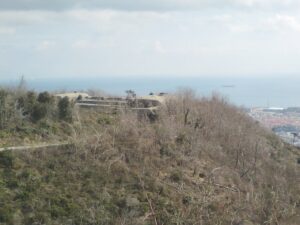
In Arenzano, after your dive, treat yourself to a stroll along the seafront or a stop at one of the seafood restaurants in the center. A few kilometers away, the Beigua Regional Nature Park offers trails through Mediterranean scrub and breathtaking views over the gulf. If you have time, don’t miss Genoa: the Aquarium and the historic center are a half-hour drive away. But even just Arenzano deserves an evening by the sea, thinking back to that steel giant sleeping down below.
Around Here
In Arenzano, after your dive, treat yourself to a stroll along the seafront or a stop at one of the seafood restaurants in the center. A few kilometers away, the Beigua Regional Nature Park offers trails through Mediterranean scrub and breathtaking views over the gulf. If you have time, don’t miss Genoa: the Aquarium and the historic center are a half-hour drive away. But even just Arenzano deserves an evening by the sea, thinking back to that steel giant sleeping down below.