
The Suasa Territory Archaeological Museum in San Lorenzo in Campo preserves artifacts from the ancient Roman city, with a modern and clear layout. Perfect for a brief yet immersive visit, it transports you into daily life two thousand years ago through tangible objects.
- Artifacts of daily Roman life: mosaics, ceramics, lamps, and personal items
- Modern layout with clear explanatory panels and an interactive section for children
- Connection to the Suasa archaeological area, featuring an amphitheater and domus with mosaics
- Located in the medieval village of San Lorenzo in Campo, creating a fascinating historical contrast
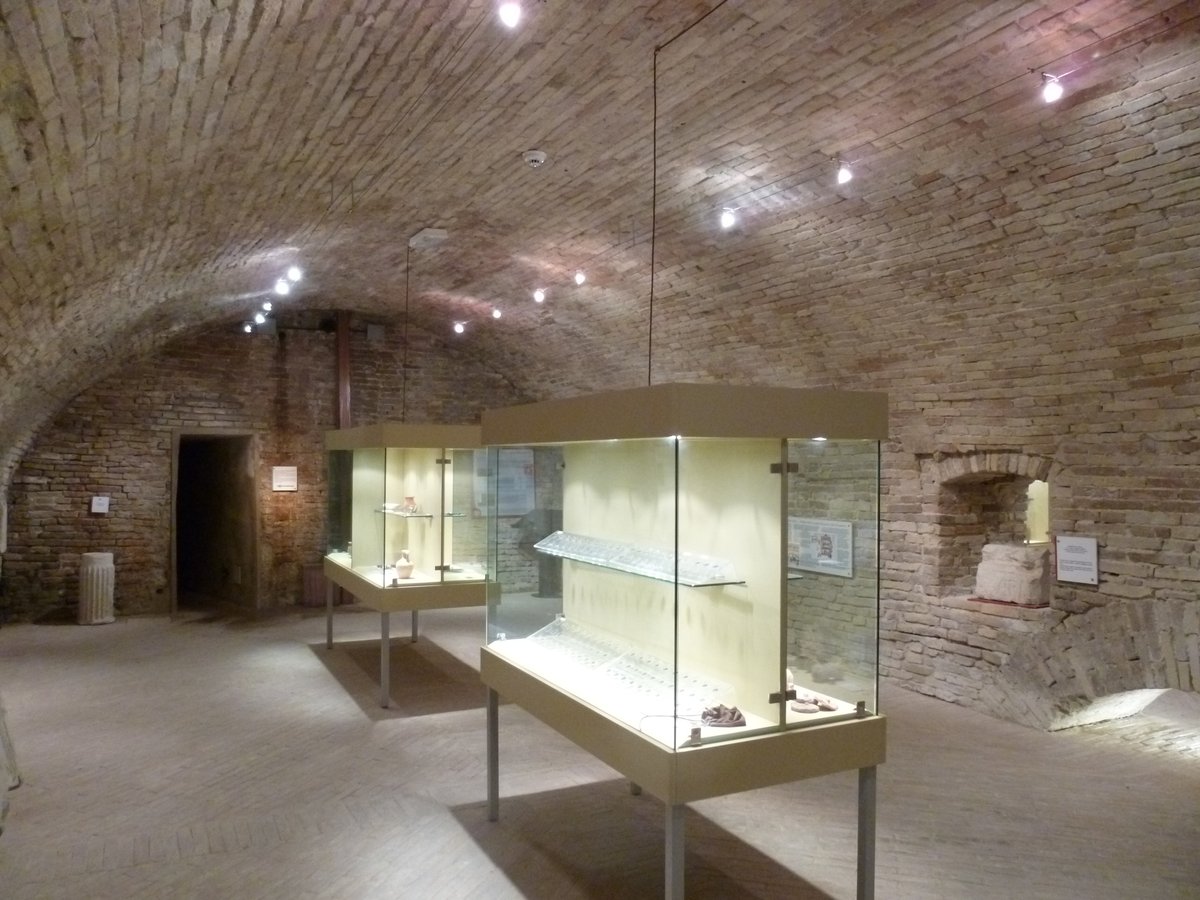
Museum in San Lorenzo in Campo with artifacts from the ancient Roman city of Suasa: mosaics, ceramics, personal items, and funerary objects. Modern layout with clear panels, ideal for families and enthusiasts.
- Via Giuseppe Mazzini 2, Pesaro (PU)
- Open in Google Maps
- View on Google Images Museo archeologico del territorio di Suasa a Pesaro
Good to know
Introduction
The Archaeological Museum of the Suasa Territory in San Lorenzo in Campo is one of those discoveries that surprise you, hidden among the gentle hills of the Marche region. Don’t expect a grand monumental building, but rather an intimate and well-curated place where the history of the ancient Roman city of Suasa comes to life through everyday objects. The feeling is like entering a small treasure chest, where each display case tells a different story. The modern and clear layout allows you to immerse yourself effortlessly, even if you’re not an expert. Personally, I was struck by how one can perceive life from two thousand years ago through such tangible fragments. It’s a place that speaks more to emotions than to reason, perfect for those seeking an authentic experience, far from mass tourism.
Historical Overview
Suasa was not just a simple town, but a Roman municipium of considerable importance, established along the Via Flaminia. Its history is linked to the Coiedii family, whose discoveries can be admired. The museum was created precisely to preserve and enhance the artifacts excavated from the nearby archaeological area, which includes an amphitheater and a domus with mosaics. The collection is the result of systematic excavation campaigns that began after World War II and are still ongoing. It is not merely a list of objects, but the story of a community that lived, traded, and built in this valley. The timeline helps to highlight key moments:
- 3rd century BC: first traces of settlement
- 1st century BC: Suasa becomes a Roman municipium
- 1st-4th century AD: period of greatest splendor
- 6th-7th century AD: decline and abandonment
- 1950s: beginning of modern archaeological excavations
- 2000: opening of the museum in its current location
The Artifacts That Speak
What makes this museum special is its ability to let you experience the everyday life of the past firsthand. It’s not just statues or coins, but objects from daily life. I spent a long time in front of the collection of oil lamps, each with a different design, and the fragments of kitchen pottery. Then there are the epigraphs, those stones with inscriptions that tell stories of real people: a magistrate, a freedman, a family. It’s a detail that gives a face to history. The section dedicated to the necropolis is perhaps the most evocative, with the grave goods that accompanied the deceased. It makes you think about how, deep down, the concerns and hopes of ancient people were similar to our own. The audio guide, if available, adds a lot, but even on its own, the path is very clear.
The Engaging Exhibit
I found it to be a museum designed to avoid boredom. The rooms are not too large, which prevents that feeling of overload that one sometimes experiences in other places. The explanatory panels are brief and direct, with graphic reconstructions that help visualize what Suasa must have been like. There’s also a small interactive section, mainly intended for children, where you can touch reproductions of artifacts. It’s not a playground, but it’s enough to capture the attention of the little ones. The lighting is well thought out, natural where possible, and creates an intimate atmosphere. I appreciated that there was no forced background music, just silence that allows you to observe calmly. It’s a place that invites you to linger, not to rush.
Why Visit It
For at least three concrete reasons. First, it’s a human-scale museum where you won’t feel lost even if you know nothing about Roman archaeology. Second, it allows you to understand an important piece of Marche’s history, often overshadowed by other regions. Third, it’s the perfect complement to visiting the Suasa archaeological area: seeing the artifacts in the museum and then walking among the ruins of the amphitheater and the domus gives a rare sense of completeness. Plus, it’s an excellent option for a rainy day or a cultural break during a tour of the villages. It doesn’t require hours; an hour and a half is more than enough for a satisfying visit.
When to Visit
The museum is open year-round, but in my opinion, the most enchanting time is an autumn afternoon, when warm light filters through the windows and the hills outside turn shades of red and gold. In summer, it can be a pleasant oasis of coolness. I would avoid the midday hours on bright sunny days, preferring early morning or late afternoon when there are fewer people and the atmosphere is more intimate. On weekends, you might encounter some local families, but queues rarely form. In winter, the heating works well, creating a cozy environment. In short, there’s no wrong time to visit, but autumn gives it a special charm.
In the Surroundings
The museum visit pairs perfectly with exploring the surrounding area. Just a stone’s throw away lies the Suasa Archaeological Area, where you can wander among the ruins of the amphitheatre and the domus with its polychrome mosaics. It’s an experience that beautifully complements what you’ve seen at the museum. For a complete change of scenery, I recommend heading to Corinaldo, one of Italy’s most beautiful villages, with its intact walls and impeccable medieval historic centre. It’s just a short drive away and offers a lovely perspective on the later history of this area. Both places enrich your day without requiring long journeys.
💡 Did You Know…?
One of the most fascinating pieces in the museum is the mosaic with hunting scenes, from a Roman domus, which preserves surprisingly vivid colors. But the real surprise is the tomb of a child with an intact funerary set, including small terracotta toys: a detail that moves and humanizes history. Local volunteers often recount how some artifacts were found by farmers during field work, adding a touch of chance to the archaeological discovery.