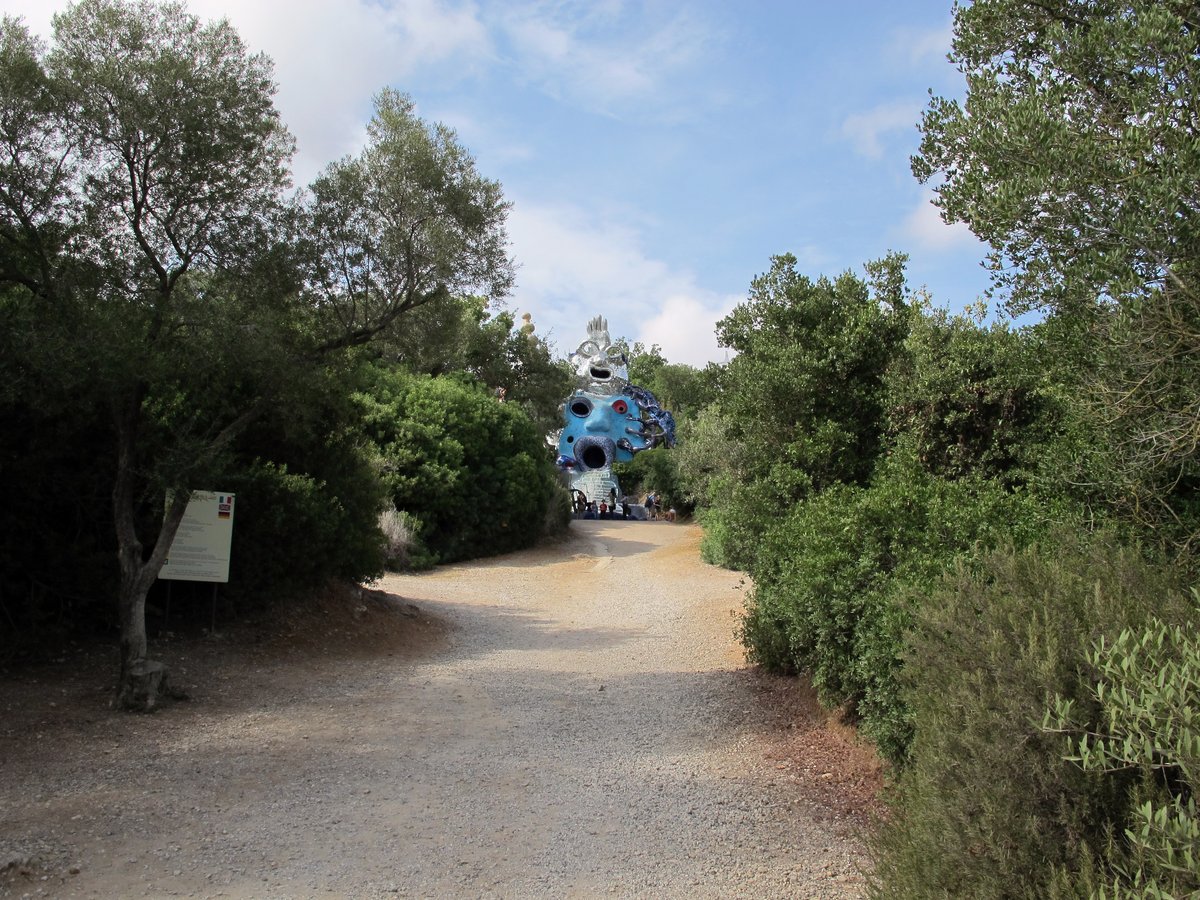
The Tarot Garden in Capalbio is a unique art park created by Niki de Saint Phalle between 1979 and 1996, featuring 22 monumental sculptures representing the major arcana of the tarot. The works, up to 15 meters tall, are covered in glass mosaics, mirrors, and colorful ceramics that shine under the Maremma sun. The path allows visitors to walk among, inside, and around the sculptures, offering an immersive tactile and visual experience.
- 22 monumental sculptures inspired by tarot arcana, up to 15 meters tall
- Works covered in glass mosaics, mirrors, and colorful ceramics
- Opportunity to enter inside some sculptures like the Empress and the High Priestess
- Creation by Franco-American artist Niki de Saint Phalle with collaborators including Jean Tinguely
Introduction
Have you ever felt catapulted into another world? At the Tarot Garden, that’s exactly what happens. It’s not just a park, but an immersive experience where art becomes magic. Imagine 22 giant sculptures, up to 15 meters tall, emerging from the Tuscan countryside like dreams of concrete and ceramics. They are the major arcana of the tarot, transformed into colorful, dreamlike figures by the vision of artist Niki de Saint Phalle. The contrast between the green of the Mediterranean scrub and the sparkling mosaics of glass, mirrors, and ceramics is pure visual poetry. You walk among the High Priestess, the Empress, the Magician, and it feels like stepping into a fairy tale for adults. Personally, the first time I saw the Tower, entirely covered in mirrors reflecting the sky, I was left speechless. It’s an unforgettable place, unique in all of Italy.
Historical Background
It all began in the visionary mind of
Niki de Saint Phalle, a Franco-American artist. After visiting Gaudí’s Park Güell in Barcelona in the 1970s, she conceived the idea of creating her own garden of wonders. She chose the Maremma, a wild land she loved, and in 1979 began work in Capalbio on land donated by friends. For over twenty years, until her death in 2002, she worked tirelessly on it, assisted by artists like her husband Jean Tinguely (who created the metal structures) and many local artisans. The garden opened to the public in 1998 and is now managed by a foundation. It is not just a work of art, but a testament to creativity and determination. Key timeline moments:
- 1979: Work begins on the Garavicchio estate.
- 1998: Official opening to the public.
- 2002: Death of Niki de Saint Phalle.
- Today: The garden is completed and visitable, a living legacy of her art.
A Labyrinth of Symbols
Visiting the Tarot Garden is not just a simple stroll; it’s a symbolic journey. Each statue tells a story. Take the High Priestess: it’s an imposing, inhabitable structure that Niki used as a studio and residence during the work. Inside, the walls are a riot of mosaics, mirrors, and embedded objects. Then there’s the Sun, a joyful golden wheel that seems to radiate energy. But my favorite might be Justice, with its scales and sword, covered in shimmering blue and silver tiles that sparkle in the light. These aren’t sculptures to be viewed from afar: they invite you to come closer, to touch the textures (where allowed), to discover the thousand hidden details. The materials used – ceramics, Murano glass, mirrors, colored stones – create vibrant surfaces that change with the hours of the day. It’s a tactile as well as visual experience, sparking curiosity in both adults and children.
Art You Can Experience
Here, art isn’t on a pedestal—you experience it firsthand. You can step inside some sculptures, like the High Priestess or the Emperor, and discover surprising spaces. Inside the High Priestess, for example, there’s a fantastic bathroom with a snake mosaic that seems straight out of a dream. This aspect makes the place perfect for families: children are captivated by these magical ‘hideaways.’ The path isn’t linear; you happily lose yourself among the unpaved trails, uncovering new corners all the time. Sometimes you come across Tinguely’s mechanical installations, small iron sculptures that move. The atmosphere is relaxed; there’s no rush. I love sitting on a bench near the Wheel of Fortune and watching people’s reactions: some meditate, some laugh, others search for their favorite arcana. It’s a place that inspires connections—with art and with others.
Why Visit It
For at least three concrete reasons. First: it’s an artistic experience without equal in Tuscany, far from the typical museums. Here, art is open-air, integrated with nature. Second: it’s ideal for a day trip that combines culture and relaxation. You don’t need a full day, but time flies between one discovery and the next. Third: it stimulates the imagination of everyone, especially children, who see colorful giants instead of the usual ‘serious’ statues. Plus, it’s a great excuse to explore a less-traveled, authentic, and wild area of Maremma.
When to go
Avoid the midday hours on the hottest summer days: late afternoon or early morning are ideal for enjoying the slanting light that enhances the colors of the ceramics. In spring and autumn, however, you can visit almost any time: the air is fresh and the colors of the surrounding countryside are spectacular. In winter, on clear days, it has a special charm, more intimate and quiet. A personal tip? I love the late September period: the summer crowds have thinned, the light is golden, and you might still find some late flowers among the scrubland.
In the Surroundings
A visit to the Garden pairs perfectly with another gem of the area: the medieval village of Capalbio, perched on a hill just a short drive away. It’s worth a stroll through its narrow streets, walls, and panoramic views over the Maremma. For a thematically connected experience, if you love unusual art, you might consider Fattoria di Celle in Santomato di Pistoia (further away, but still in Tuscany), another place with contemporary art installations amidst nature. Here in the Maremma, after the Garden, a lunch at a local trattoria featuring acquacotta or wild boar is the perfect earthy epilogue.