
The Temple of Hera II, also known as the Temple of Neptune, is the largest and best-preserved of the temples at Paestum. Constructed around 460 BC in local travertine, this peripteral Doric temple with 6×14 columns is a masterpiece of harmony and proportions. The inner cella, divided into three aisles by columns on two levels, is the best preserved in the site. In front, two altars testify to ancient rituals. The temple is part of the Paestum Archaeological Park, a UNESCO World Heritage Site since 1998. Here’s what makes it unmissable:
– Perfect preservation: among the best preserved Greek temples in the world.
– Architectural details: optical corrections such as the convexity of the stylobate.
– Unique atmosphere: the golden light of the travertine changes throughout the day.
– Historical context: in the southern sanctuary, near the Temple of Hera I and the Archaeological Museum.
Events nearby

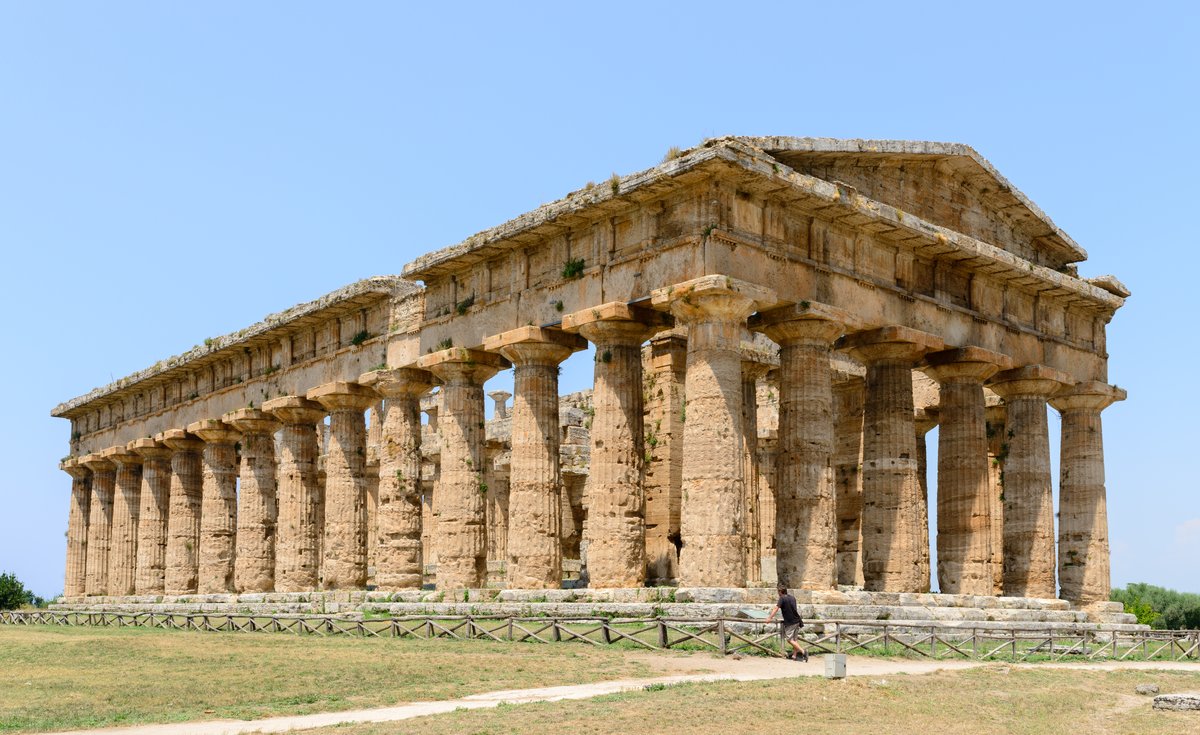
A perfect example of Doric architecture, the Temple of Hera II at Paestum surprises with its integrity and harmonious proportions. Visiting the temple means immersing yourself in Magna Graecia, among mighty columns and unique construction details.
- Via Sacra, Salerno (SA)
- Open in Google Maps
- View on Google Images Tempio di Hera II – di Nettuno a Salerno
Good to know
Introduction
Historical Background
Architecture and Optical Corrections
The Mystery of the Dedication
Why Visit It
When to Go
Nearby
Itineraries nearby



💡 Did You Know…?
According to local tradition, the temple would have been dedicated to Neptune by the fishermen of Poseidonia to ask for protection at sea. In reality, scholars today lean towards Hera Argiva, as indicated by the votive statuettes. A curious anecdote: during the Grand Tours of the eighteenth century, travelers like Goethe were enraptured by its grandeur. Even today, at sunset, when the columns turn gold, you can almost hear the echo of ancient sacrifices.