Torre Lapillo: White Sand Beaches, 16th-Century Tower, and Coastal Bike Path

Torre Lapillo offers white sand beaches and crystal-clear sea in Salento, perfect for families thanks to the shallow waters. The 1568 coastal tower dominates the landscape, while the bike path allows you to explore the surroundings.

  • Long and wide beaches with fine sand and crystal-clear water, ideal for children
  • 16th-century coastal tower visitable with panoramic views of the coast
  • Family-run equipped lidos and stretches of wilder free beach
  • Coastal bike path to explore the surroundings by bicycle


Events nearby


Copertina itinerario Torre Lapillo: White Sand Beaches, 16th-Century Tower, and Coastal Bike Path
Fine sandy beaches with equipped lidos and free stretches, dominated by the 16th-century coastal tower. Ideal for families, with safe shallow waters and proximity to Porto Cesareo for fresh seafood restaurants.

Good to know


Introduction

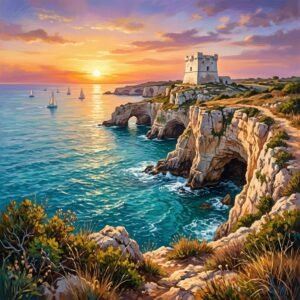
Torre Lapillo is not just a seaside destination; it’s a sensory experience that strikes you as soon as you arrive. The first thing you notice is that incredible contrast between the blinding white of the fine sand and the deep blue of the sea, water so transparent it seems almost unreal. The coastal tower, imposing and silent, has watched over all this for centuries, creating a unique skyline that I found photogenic at any time of day. This isn’t the usual crowded Salento coastline: here, there’s a more intimate, familiar atmosphere, where the rhythm is set by the waves and the wind through the maritime pines. Personally, I fell in love with how the sunset light paints the tower pink, a moment that transforms a simple beach into a living painting.

Historical Notes

That tower dominating the coast is not merely an ornament, but a piece of living history. It was built in 1568 by order of Charles V, as part of the defensive system against the raids of Saracen pirates who terrorized these shores. It is called ‘Torre di San Tommaso’, though everyone knows it as Torre Lapillo, named after the locality. For centuries, it stood guard, using fire signals to communicate with the nearby towers of Torre Chianca and Torre Colimena. Today, restored and accessible, it offers a breathtaking panoramic view that is well worth the small effort of the climb. I like to think that while admiring the sea, I am standing exactly where sentinels once scanned the horizon for enemy sails.

  • 1568: Construction of the tower by order of Charles V
  • 16th-18th centuries: Function as a lookout against pirate incursions
  • Today: Restoration and enhancement as a historical asset and scenic viewpoint

The Beaches: Not All the Same

Here the beaches have distinct characteristics, and this variety is their true strength. To the north, you’ll find the equipped lido with orderly sun umbrellas, convenient services, and shallow water that warms up quickly—perfect for families with young children. But if you walk a few minutes south, the scenery changes completely: the free beach becomes wilder, with sandy dunes covered in spontaneous vegetation and stretches of low cliffs ideal for diving. I’ve noticed that many locals prefer this more natural area, where you can simply lay out a towel under the sun. The water is always that crystal-clear kind that allows you to see the sandy seabed even where it’s deeper, and on calm sea days, it almost feels like a natural swimming pool.

Beach Club Life and Local Flavors

The beach clubs in Torre Lapillo are not your typical anonymous establishments: many have been family-run for generations, and you can feel that welcoming atmosphere typical of Salento. Some offer handwoven straw sunbeds, which are not only comfortable but also have an authentic rustic charm. But the most pleasant surprise for me was discovering that several clubs also have small restaurants or kiosks serving local specialties. Imagine enjoying a plate of orecchiette with turnip tops or tasting friseddhu (the typical Salento frisella) soaked with fresh tomato, just steps from the water. It’s that mix of relaxation and authenticity that makes the difference – though I must admit that during peak season it’s wise to book your sunbed a bit in advance.

Why Visit

Three concrete reasons to choose Torre Lapillo? First: the versatility of the beaches caters to both those seeking comfort and those preferring contact with wilder nature. Second: the tower itself, which is not just a photogenic backdrop but a visitable monument offering a unique perspective on the coastline—climbing it at sunset is an experience you’ll remember. Third: the still authentic atmosphere, less commercial than other nearby locations, where you can still breathe the slow rhythm of Salento coastal life. And there’s a fourth reason, a personal one: here I found one of the most beautiful sunsets along the entire Ionian coast, with the sun seeming to dive directly into the sea in front of the tower.

When to Go

The ideal time? September, without a doubt. The sea has absorbed all the summer heat and is still wonderfully warm, yet the summer crowds have already thinned. September mornings here have a special golden light, the air is pleasantly mild without being muggy, and you can find a spot on the beach without having to wake up at dawn. The beach clubs are more relaxed too, with fewer reservations and more space to enjoy the sun. If you prefer the height of summer, I recommend the early morning hours—around 8:30 a.m.—when the sand is still cool and the water seems clearer than ever. Avoid the midday hours in August, though, unless you enjoy company… a lot of company.

In the Surroundings

If you’re eager to explore beyond the beach, here are two concrete suggestions. The first is Porto Cesareo, the nearby town that comes alive in the evening with its seafront promenade full of little bars and ice cream shops—perfect for a post-dinner stroll. The second is the Porto Cesareo Marine Protected Area, where you can go snorkeling among seagrass meadows and get up close to the submerged statue of the ‘Seahorse,’ an underwater installation that has become a symbol of the area. If you’re looking for a different experience, the surrounding countryside features several farmhouses that organize tastings of local oil and wine—a way to discover Salento away from the water.

Itineraries nearby


💡 Did You Know…?

The tower that gives the village its name was built in 1568 as part of the surveillance system against Saracen pirates. Today, climbing to its summit (when accessible) offers a breathtaking panoramic view of the Salento coast. On summer evenings, you might spot pink flamingos in the nearby salt marshes of Porto Cesareo, a natural spectacle that makes the sunset even more magical. The sand here is so fine that locals call it ‘flour’, and the sea takes on shades of turquoise that seem painted.