Introduction
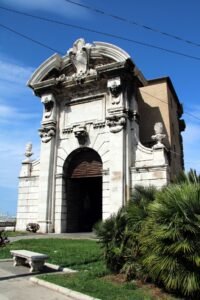
Have you ever walked through a harbor and suddenly felt transported back two thousand years? It happens in Ancona, where the Arch of Trajan stands out against the sky, almost watching over the sea that has seen Roman ships and modern ferries pass by. It’s not just a monument: it’s a visual landmark dominating the north pier, a sight that makes you stop and think. You see it from afar, massive and solitary, and immediately understand that here, history isn’t locked away in a museum—it breathes with the salty wind. For me, it’s one of those places that tells more than a book: just look at its time-worn stones and imagine the triremes passing beneath it. It’s a brief experience—an hour is more than enough—but intense, perfect for those who want to combine a bit of culture with a beautiful view of the harbor. And let’s be honest: seeing a Roman arch so well-preserved among boats and docks has a certain charm, doesn’t it?
Historical Overview
The Arch of Trajan is not just a simple ornament: it was built in
115 AD to celebrate the expansion of the port of Ancona commissioned by Emperor Trajan, which made the city a crucial hub for trade with the East. Made of Proconnesian marble (the white stone that glistens in the sun), it was originally covered in bronze and statues, which have since been lost. In the Middle Ages, it was even incorporated into the city walls as a defensive gate, and only 19th-century restorations returned it to its current form. What stands out, besides its imposing size, is the inscription on the architrave, still legible, which commemorates the dedicators: the Senate and the People of Rome. This is no small detail—it makes you feel part of a centuries-long history.
- 115 AD: Construction of the arch to celebrate the port works.
- Middle Ages: Integrated into the city walls as a defensive gate.
- 19th century: Restorations that restored it to its original appearance.
A Detail Few Notice
While everyone stops to photograph the arch from below, few look up toward the attic, where a curious architectural detail hides: the moldings and friezes, when observed up close, still show traces of the original decoration. I admit it took me a while to notice it, but once seen, it’s unforgettable. Moreover, the location is not random: the arch is aligned with the ancient cardo maximus of the Roman city, and standing right under its vaults, you can imagine how it served as the triumphal entrance to the port. It’s as if past and present meet at that precise point—on one side, the fishermen’s boats; on the other, the millennia-old stones. And if you get closer, you’ll notice the marble has particular veins, marked by sea salt: an effect that no restoration could ever replicate.
The View Worth the Visit
Okay, the arch itself is magnificent, but in my opinion, the real reason to come here is the panorama of the harbor and the sea. By climbing the side stairs (yes, you can do it, though they’re not always open—better check) or simply staying nearby, you get a 360-degree view that stretches from the pier to Monte Conero in the background. At sunset, when the sun tinges the stones and water pink, it’s a spectacle that stays with you. I was there on a windy day, and seeing the waves crash against the docks while the arch seemed to stand unyielding was a powerful emotion. It’s a place where you can sit on a bench, listen to the sound of the harbor cranes, and let yourself be carried away by the atmosphere. It’s not just history: it’s a moment of pure contemplation, offering an unusual calm for such a bustling spot.
Why Visit It
First: because it’s one of the few Roman arches still standing in its original port setting—not many places in Italy offer this combination. Second: it’s perfect for a quick, stress-free visit; you can tour it, snap some photos, and soak in the atmosphere in about an hour. Third: it offers a unique perspective on Ancona, especially if you love contrasts between ancient and modern. And let’s face it, it’s free and always accessible, which is no small thing for a budget-conscious traveler. I found it ideal for a break between exploring the historic center and stopping at one of the waterfront spots. In short, if you’re passing through Ancona, skipping it would be a shame: it’s like ignoring a piece of history staring you right in the face.
When to Go
Avoid the midday hours in summer, when the sun beats down fiercely and the pier’s asphalt turns into an oven—I went in July and regretted it. The best time? Late afternoon, around sunset, when the light is warm and the arch stands out against a sky shifting from yellow to purple. In winter, on the other hand, a clear, windy day offers dramatic atmospheres, with clouds racing swiftly over the stones. Personally, I prefer spring or autumn, when there aren’t too many crowds and you can enjoy it at a leisurely pace. But even at night, when it’s illuminated, it has its charm—it almost seems suspended in the darkness. Ultimately, every moment has its appeal; just dress in layers and bring a bit of patience for the wind, which is never in short supply here.
In the Surroundings
After the arch, don’t miss the State Tactile Museum Omero, just a few minutes’ walk towards the center: it’s a unique experience dedicated to the tactile perception of art, perfect for families or the curious. Alternatively, if you want to stay on a maritime theme, take a quick trip to the Calamo Fountain, also known as the ‘Fountain of the Thirteen Spouts,’ in the heart of Ancona: it’s an ancient water supply point linked to the history of the port. Both places add an extra piece to your visit without taking you too far away. I, for example, combined the arch with a stroll along the dock to see the fishing boats—a simple way to absorb the soul of the city. And if you’re hungry, there are typical trattorias nearby where you can try brodetto, the local fish soup.