Villa Emo, in Fanzolo di Vedelago, is one of the most complete Palladian villas, where Renaissance elegance blends with agricultural functionality. A UNESCO site, it offers an unforgettable journey through art, history, and landscape.
• Frescoes by Zelotti: mythological and rural scenes celebrating the fertility of the land.
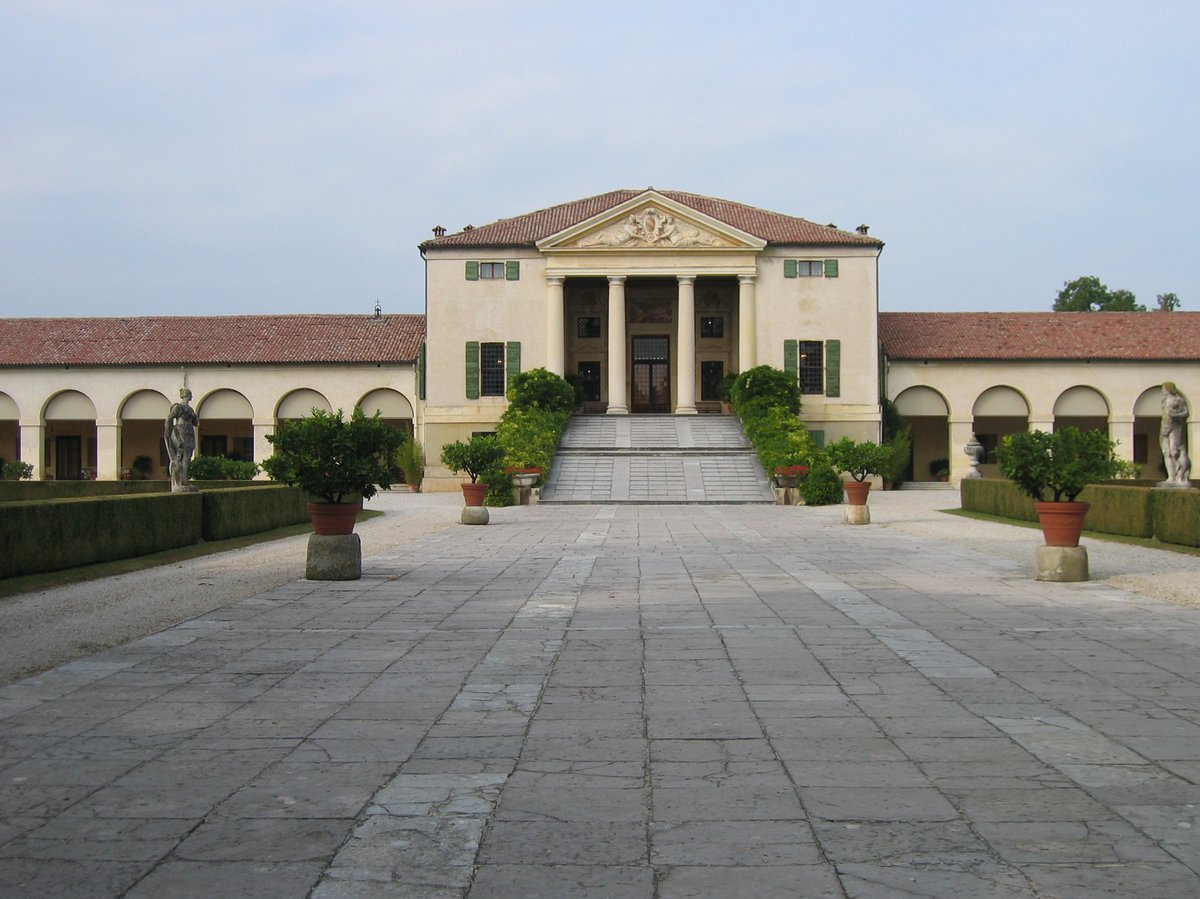
• Barchesse and dovecotes: symmetrical wings uniting residence and farm work.
• Italian garden: geometric paths and statues completing the complex’s harmony.
• Guided tour: 60 minutes to discover interiors, facades, and Borgo Brolo.
Villa Emo: Frescoes and Barchesse in Vedelago
Imagine walking along a long paved avenue, with the barchesse stretching out on either side like open arms. We are in Fanzolo di Vedelago, and before us stands Villa Emo, one of Andrea Palladio’s gems. From the outside, it is almost severe, with no decorations: just the pronaos with four Doric columns and the pediment. Then you step inside and are left speechless: the frescoes by Battista Zelotti surround you, with scenes of agriculture and mythology that seem to speak to you. It is a place that blends the labor of the fields with the elegance of the Renaissance, and you feel it immediately. The villa is set in the Treviso countryside, between the Brenta and Piave rivers, and its harmony with the landscape is perfect. It is worth a visit, if only to breathe in the atmosphere of bygone times.
Historical Notes
Villa Emo was designed by Andrea Palladio around 1558 for the Venetian patrician Leonardo Emo, who wanted a country residence as well as a model farm. Construction began in 1559 and was completed in 1565. The Emo family kept it for nearly 450 years, until 2004, when it passed to the Banca di Credito Cooperativo Trevigiano, which established the Fondazione Villa Emo to manage it. In 1996 it became part of the UNESCO World Heritage Sites. Palladio considered it a perfect example of his architecture: mathematical proportions, lateral wings (barchesse) for agricultural activities, and a treatment of spaces that blends functionality and beauty. Today it is open to visitors and hosts cultural events.
Architecture: The Harmony of Forms
The plan of Villa Emo is a long axis that unites the manor house and the barchesse. The central body is raised on a basement, with a stone ramp connecting the courtyard to the loggia. The barchesse are two symmetrical wings, each with eleven round arches, ending in dovecote towers. Palladio used the Doric order, the simplest, for the columns of the pronaos. The windows are frameless, and the side columns are partially embedded in the wall to create a gradual transition between light and shadow. The façade recalls the pronaos of a Greek temple, with two winged Victories holding the Emo coat of arms on the pediment. Once lined with poplars, the avenue is now cut by the road, but the visual impact remains powerful.
Zelotti’s Frescoes: A Journey into the Renaissance
While the exteriors are sober, the interiors are an explosion of color. The cycle of frescoes is the work of Giovanni Battista Zelotti, a friend and collaborator of Palladio, who also worked at Villa Godi and Villa Malcontenta. The walls of the central hall and side rooms are decorated with scenes celebrating the fertility of the land and agricultural life, mixed with mythological figures. The colors are fresh, well-preserved, and seem to tell a story of prosperity. In the attics, once used as granaries, traces of simpler decorations can still be seen. The guided tour lasts about an hour and includes an explanation of the symbolic meaning of the frescoes, reflecting the Renaissance ideal of harmony between man and nature.
Why Visit
First: it’s one of the most complete and authentic Palladian villas, with original frescoes. Second: you’ll understand how a 16th-century farm-villa worked, with its still-intact barchesse and dovecotes. Third: the atmosphere is peaceful, far from the chaos—you can stroll through the geometric garden and the Brolo hamlet, the rustic houses that were part of the original design. Plus, the ticket costs only €10 and the guided tour is included in the price. If you’re an art or architecture enthusiast, you won’t regret it. And if you’re not, the beauty of the place will win you over anyway.
The Right Time
The villa is open year-round, but I recommend spring or autumn, when the countryside is at its best and temperatures are mild. In summer, the days are long and you can enjoy the garden until late, but sometimes it’s hot. In winter, there are fewer crowds and the frescoes stand out in the cold light. As for the time of day, prefer early morning or late afternoon: the slanting light on the barchesse is spectacular. Check the opening hours on the website, as they change between winter and summer seasons. If in doubt, arrive around 10:30 and take your time.
Around Vedelago
If you have time, take a detour to Castelfranco Veneto (15 km): the historic center is encircled by medieval walls, and the cathedral houses Giorgione’s ‘Pala di Castelfranco’. Alternatively, visit Asolo, one of Italy’s most beautiful villages, with its Rocca and castle. For Palladio enthusiasts, just a few kilometers away lies Villa Barbaro in Maser, adorned with Veronese’s frescoes. In short, the area is brimming with treasures, and Villa Emo can be the starting point for a weekend in the Marca Trevigiana.