Introduction: A Palladian Gem on the Guà
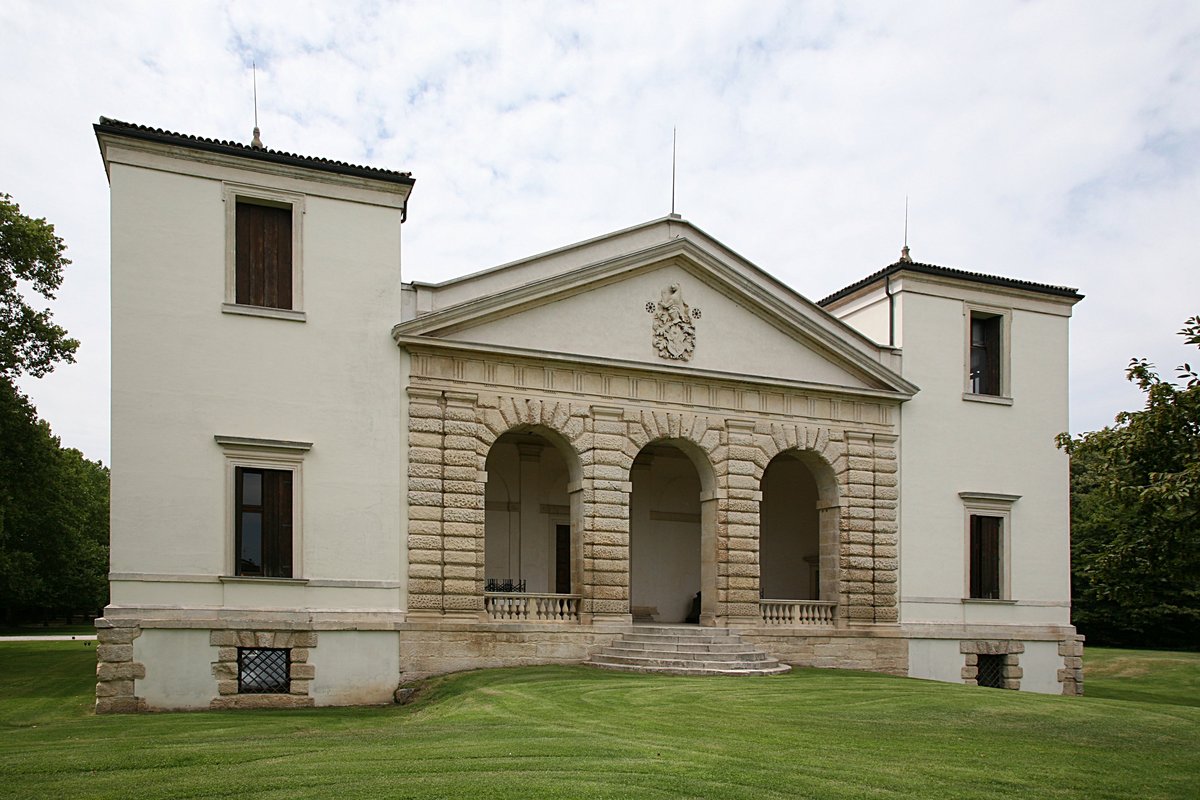
Villa Pisani in Lonigo is one of those places that surprises you even before you step inside. It stands along the Guà stream, immersed in a historic park, and its three-arched facade in Doric rustication, with the two side towers, is pure balance. Designed by Andrea Palladio in 1542 for the Pisani brothers, it is considered his first masterpiece for a Venetian patrician family. Today it’s a UNESCO site and inside it hosts not only frescoes by Francesco Torbido, but also a contemporary art collection curated by the owners. A rare union of Renaissance and modernity. Visitable only by reservation, it offers an intimate and authentic experience.
Historical Notes: From the Pisani Family to UNESCO
In 1542, the Venetians Vittore, Marco, and Daniele Pisani entrusted a young Andrea Palladio with building a villa on their lands in Bagnolo di Lonigo. It was his first commission for a major noble family and marked the beginning of his success. Work proceeded between 1544 and 1545, but the original design – which included a pronaos and a large courtyard – remained unfinished. The villa was nonetheless completed with the façade facing the river and its characteristic turrets. Passing through various hands, it suffered damage during World War II, but was restored. Since 1994 it has been part of the UNESCO World Heritage site “City of Vicenza and the Palladian Villas”. Today it is privately owned and open by appointment.
Palladian Architecture and Details
The villa appears as a compact two-story block with a raised base. The main facade (now facing the river) features a three-arcaded loggia in Doric rustication, surmounted by a tympanum bearing the Pisani coat of arms. The two corner turrets are unique in Palladio’s repertoire. Inside, the central hall has a T-shaped plan and a barrel vault, frescoed by Francesco Torbido with scenes from Ovid’s Metamorphoses. The side rooms have cross vaults and large fireplaces. The rustic wing, the Barchessa, was added in the 19th century. The original design included a pronaos and a porticoed courtyard that were never built, replaced today by an avenue of plane trees.
Contemporary Art and Hospitality
Since 2000, the villa has also been a space for contemporary art. The owners, Manuela Bedeschi and Carlo Bonetti, have set up a permanent collection that integrates with the Renaissance frescoes, creating a dialogue between eras. A temporary exhibition is organized every year. In addition to the villa, the Barchessa (the former rural building) has been transformed into a boutique relais with a sauna, gym, and summer pool. Inside, you’ll find the Osteria del Guà, offering contemporary cuisine inspired by local flavors. Thus, it combines history, art, and relaxation in a single experience.
Three Good Reasons Not to Miss It
1. Authentic Masterpiece, Rarely Crowded: Unlike other Palladian villas, this one is visited by appointment, without the rush. 2. Ancient and Contemporary Art: Torbido’s frescoes coexist with modern works, a unique contrast. 3. Exclusive Stay or Dinner: You can sleep in the Barchessa or dine at the Osteria del Guà, immersed in the park. Ideal for a romantic getaway or a cultural day out. Don’t forget to book well in advance.
The Best Time to Visit
The villa is open year-round by reservation, but the best time is spring or autumn, when the park is ablaze with color and the soft light enhances the frescoes. In summer, you can enjoy the pool at the Barchessa. Avoid the midday hours: strong light could spoil the experience. Early morning or late afternoon offer a more intimate atmosphere. Check the official website for hours and book at least a week in advance.
Nearby: Lonigo and its Villas
After the visit, spend a little time in the center of Lonigo: Piazza Garibaldi with the church and the town hall is worth a stop. A few kilometers away is also the Rocca Pisana, another villa designed by Vincenzo Scamozzi, with a circular plan and a dome that recalls the Pantheon. If you love two wheels, the Vicenza-Noventa Vicentina bike path passes right near the villa: a great way to arrive or continue your journey.